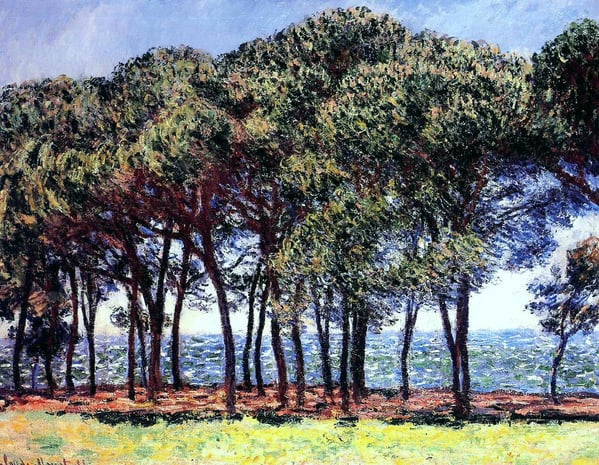
Expert analysis of Claude Monet’s Pine Trees, Cap d'Antibes
Style: Impressionism · Genre: landscape
Expert Analysis: Pine Trees, Cap d'Antibes by Claude Monet
As an Impressionist landscape, this work exemplifies Claude Monet’s radical departure from academic painting. The title itself anchors the scene in a specific location—Cap d’Antibes on the French Riviera—but Monet’s treatment dissolves rigid topographical accuracy in favor of sensory immediacy.
Significance within Impressionism:
- Light and Atmosphere: True to the Impressionist ethos, Monet prioritizes the transient effects of sunlight over precise detail. The pine trees are rendered not as static botanical forms but as vessels for shimmering Mediterranean light, their needles and branches suggested by rapid, broken brushstrokes.
- Color as Structure: Rather than using local color, Monet employs juxtaposed hues—cool blues and greens alongside warm ochres and pinks—to evoke the hazy, heat-laden air of the coast. This optical mixing creates a vibrancy that conventional glazing could not achieve.
- Rejection of Traditional Composition: The framing is deliberately informal: the pines may rise asymmetrically, leading the eye across a sparkling sea or sky, challenging the balanced, idealized landscapes of the Salon.
Why It Matters:
Pine Trees, Cap d'Antibes captures a pivotal moment when Monet and the Impressionists redefined landscape painting as a record of perception itself. The work demonstrates how a familiar, everyday subject—trees by the shore—could be transformed into a study of atmosphere, motion, and the artist’s own fleeting encounter with nature. This piece is thus not merely a view of Antibes, but a testament to the Impressionist revolution: the belief that art should convey how we see, not just what we see.
Visually similar
20 works with related composition and palette
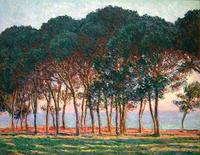
Under the Pine Trees at the End of the Day
Claude Monet
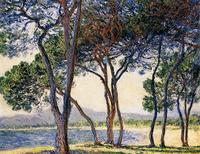
Trees by the Seashore at Antibes
Claude Monet
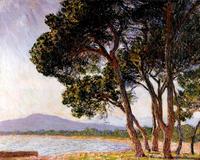
Beach in Juan-les-Pins
Claude Monet
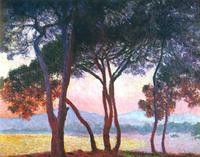
Juan-les-Pins
Claude Monet
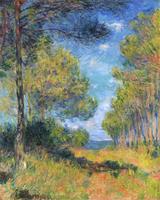
Path at Varengeville
Claude Monet
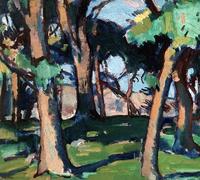
Douglas Hall
Samuel Peploe
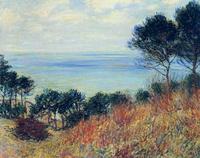
The Coast of Varengeville
Claude Monet
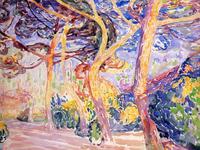
Under the Pines
Henri-Edmond Cross
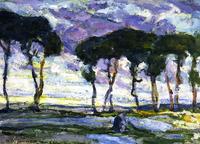
Landscape with Irises
Henry Ossawa Tanner
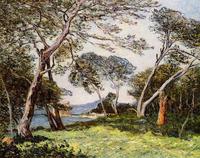
The Pines of the Ile St. Morah
Maxime Maufra
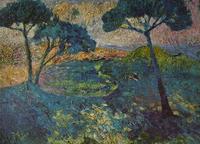
The Three Pines
Salvador Dali
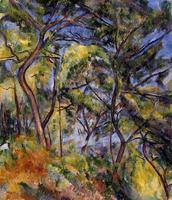
Forest
Paul Cezanne
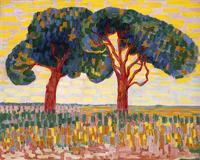
Twee bomen, olieverf op doek
Jacoba van Heemskerck
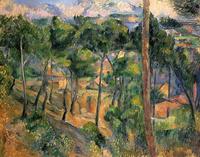
L'Estaque View Through The Pines
Paul Cezanne
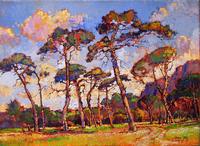
Trees
James Yates
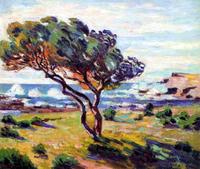
Rafales de vent, Le Brusc
Armand Guillaumin
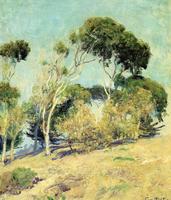
Windswept Trees, Laguna
Guy Rose
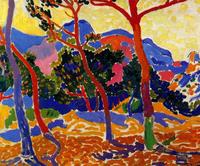
The Trees
Andre Derain
The Church at Varengeville
Claude Monet
Landscape
Konstantinos Parthenis