
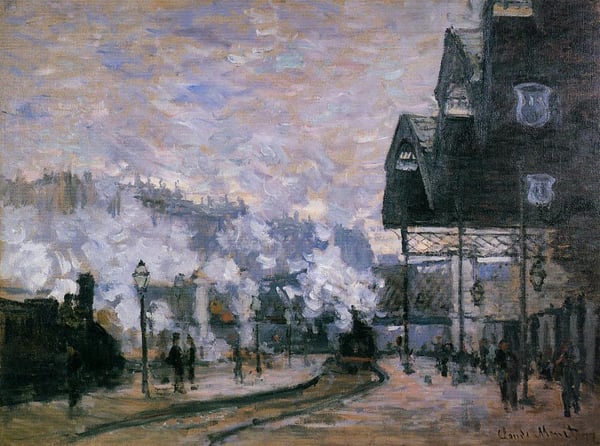
Saint-Lazare Station, the Western Region Goods Sheds
Details
Expert analysis of Claude Monet’s Saint-Lazare Station, the Western Region Goods Sheds
Style: Impressionism · Genre: cityscape
Analysis of "Saint-Lazare Station, the Western Region Goods Sheds" by Claude Monet
This cityscape by Claude Monet stands as a quintessential example of Impressionism’s revolutionary approach to modern life. Painted in 1877, it captures a transitional moment in urban Paris, focusing not on the elegant grand hall of the station but on the functional, industrial goods sheds—a subject that elevates the mundane infrastructure of the railway age to the realm of high art.
Significance within Impressionism:
- Rejection of traditional subjects: Monet deliberately chose the gritty, industrial reality of a railway depot over historical, mythological, or pastoral scenes. The Saint-Lazare Station series (of which this is a part) declared that the steam engine, iron girders, and glass canopies were worthy of painterly attention, reflecting the Impressionist credo to depict "modern life" in all its forms.
- Atmospheric effects over detail: Monet dissolves the solid forms of trains, sheds, and crowds into a shimmering veil of color and light. Smoke and steam become the true subject—their billowing clouds rendered in loose, broken brushstrokes of white, gray, and blue that merge with the hazy light filtering through the station’s glass roof. This emphasis on transient atmospheric conditions (the "envelope" of air and light) is a hallmark of Impressionist practice.
- Color and perception: The palette is subdued yet luminous—ochres, muted blues, and steely grays—chosen to capture the fleeting interplay of natural and artificial light. Shadows are not black but composed of complementary colors, and the hard edges of architecture are softened, suggesting the vibration of air and the ephemeral quality of a single moment.
Significance as a cityscape:
- Industrial sublime: Monet transforms the goods sheds into a cathedral of modern commerce. The soaring ironwork and massive locomotive engines are depicted with a sense of grandeur, elevating the everyday urban scene to something monumental. The painting records the physical transformation of Paris under Haussmannization, where railways were reshaping the city’s geography and social life.
- Dynamic composition: The diagonal thrust of the train tracks and the imposing volume of the locomotive draw the viewer into the scene, while the figures of workers and travelers are merely suggested through quick dabs of paint. This composition prioritizes the energy and movement of the station over static description, aligning with the Impressionist interest in capturing the speed and flux of modern existence.
In summary, Monet’s Saint-Lazare Station, the Western Region Goods Sheds is significant for boldly asserting that the industrial cityscape—with its smoke, steel, and restless activity—could be as poetic and worthy of artistic investigation as any landscape or historical tableau. It exemplifies how Impressionism freed painting from the studio to embrace the transient, sensory reality of the contemporary world.
Visually similar
20 works with related composition and palette
Saint-Lazare Gare, Normandy Train
Claude Monet
Saint-Lazare Station
Claude Monet
Saint-Lazare Station, Exterior View
Claude Monet
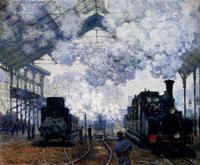
Saint-Lazare Station, Exterior
Claude Monet
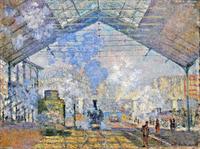
Saint-Lazare Station, Exterior View
Claude Monet
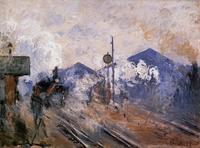
Saint-Lazare Station, Track Coming out
Claude Monet
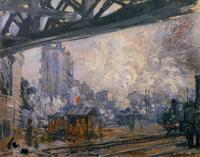
Saint-Lazare Station, Exterior View
Claude Monet
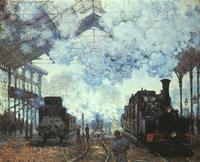
Gare St.-Lazare: Arrival of a Train
Claude Monet
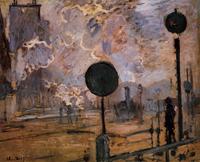
Saint-Lazare Station, Exterior
Claude Monet
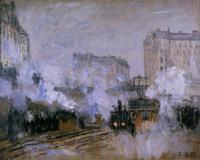
Saint-Lazare Station, Arrival of a Train
Claude Monet
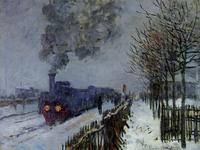
Train in the Snow or The Locomotive
Claude Monet
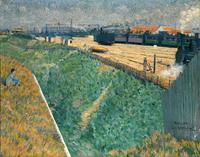
The Western Railway at its Exit from Paris
Charles Angrand
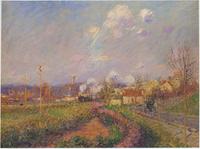
Landscape in Autumn
Gustave Loiseau
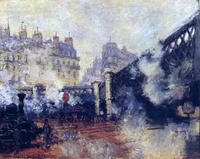
The Pont de l'Europe, Gare Saint-Lazare
Claude Monet
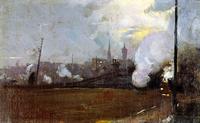
Evening Train to Hawthorn
Tom Roberts
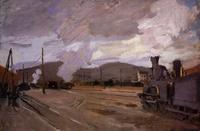
The Railroad Station at Argenteuil
Claude Monet
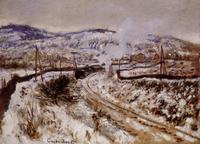
Train in the Snow at Argenteuil
Claude Monet
Trouville, the Ferry to Deauville
Eugene Boudin
Sunset, The Port of Rouen (Steamboats)
Camille Pissarro
Impression, sunrise
Claude Monet