
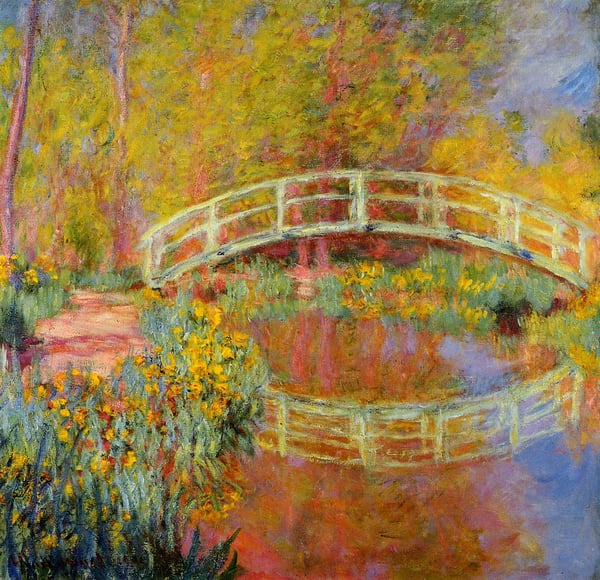
The Japanese Bridge (The Bridge in Monet's Garden)
Details
Expert analysis of Claude Monet’s The Japanese Bridge (The Bridge in Monet's Garden)
Style: Impressionism · Genre: landscape
Expert Analysis of "The Japanese Bridge (The Bridge in Monet's Garden)" by Claude Monet
Artwork: The Japanese Bridge (The Bridge in Monet's Garden)
Artist: Claude Monet
Style: Impressionism
Genre: Landscape
Significance within Impressionism
As a quintessential Impressionist landscape, this painting embodies the movement’s core principles: the pursuit of fleeting atmospheric effects, the primacy of light and color over precise form, and a deeply personal, subjective response to nature. Monet painted the Japanese bridge in his own garden at Giverny repeatedly between 1899 and the early 1920s, creating a series that examines how the same subject transforms under different conditions of light, season, and time of day. The work is significant for several reasons:
-
Japonisme and Cultural Synthesis – The arched wooden bridge, inspired by Japanese prints (ukiyo-e) that Monet collected, directly reflects the cross-cultural dialog that revitalized Western art in the late 19th century. Impressionists admired the flattened perspective, asymmetrical compositions, and bold decorative patterns of Japanese art. Monet’s bridge becomes a symbol of this synthesis—a Western oil painting that borrows Eastern spatial logic and a feeling of intimate, garden-based harmony.
-
The Garden as an Artistic Laboratory – Monet designed his water lily pond and the Japanese bridge specifically as a living studio subject. This painting is not merely a record of a place but an investigation into how water, reflections, and vegetation dissolve into pure color sensation. The bridge serves as a stable structural element against the fluid, shimmering environment, highlighting Impressionism’s tension between the tangible and the ephemeral.
-
Seriality and the Natural Cycle – While Monet’s earlier series (Haystacks, Rouen Cathedral) focused on shifting light, the bridge series extends the concept to include the changing seasons and his own evolving vision. Later versions become increasingly abstract, with dense strokes of color that verge on all-over pattern. This trajectory foreshadows 20th-century abstraction, cementing the work’s importance as a bridge (in both senses) between Impressionism and modern art.
-
Emotional and Subjective Landscape – The garden was a private retreat for Monet, and the bridge represents a tranquil, almost meditative space. In Impressionism, landscape is never neutral; it is filtered through the artist’s momentary perception. The painting’s soft, dappled brushwork and high-key palette convey a sense of immediate sensory pleasure, inviting the viewer to experience Monet’s own wonder at the interplay of light on green foliage and blue water.
Description of the Work
In this composition, the gracefully curving wooden bridge spans the pond, its deep green or blue-gray form contrasting with the lush greenery of willows, irises, and weeping branches that frame the scene. The water below is not a uniform surface but a mosaic of reflected sky, lily pads, and the bridge’s own shadow, painted with short, broken strokes of blue, green, pink, and yellow. There is no single focal point—the eye travels across the canvas, following the bridge’s arch and the scattered reflections. The brushwork is loose and expressive, building texture with thick impasto in the foliage and softer feathery touches in the water. The overall effect is that of a vibrant, shimmering world where the boundary between real forms and their reflections dissolves—a hallmark of Monet’s late Impressionist style.
Why It Matters
The Japanese Bridge is emblematic of Impressionism’s greatest achievements: it captures a specific, private moment of natural beauty while simultaneously expanding the boundaries of painting. Its significance lies in how Monet transforms a simple garden feature into a vehicle for exploring perception, memory, and the passage of time. The work represents not just a record of a place, but a document of the artist’s own sensory experience, making it a foundational statement of the Impressionist belief that the essence of a landscape is found in the ever-changing light that brings it to life.
Visually similar
20 works with related composition and palette
The Japanese Bridge (The Water-Lily Pond, Water Irises)
Claude Monet
The Japanese Bridge (The Water-Lily Pond and Path by the Water)
Claude Monet
The Japanese Bridge (The Water-Lily Pond)
Claude Monet
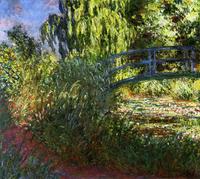
The Japanese Bridge (The Water-Lily Pond and Path by the Water)
Claude Monet
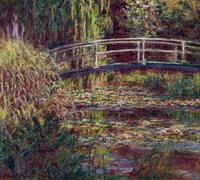
The Japanese Bridge (The Water-Lily Pond, Symphony in Rose)
Claude Monet
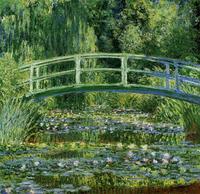
The Japanese Bridge (The Water-Lily Pond)
Claude Monet
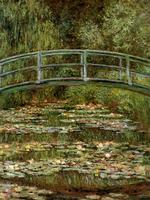
The Japanese Bridge
Claude Monet
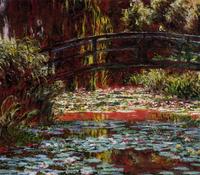
The Japanese Bridge (The Bridge over the Water-Lily Pond)
Claude Monet

The Japanese Bridge 5
Claude Monet
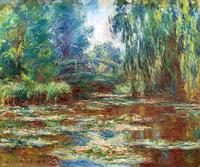
Water Lily Pond and Bridge
Claude Monet
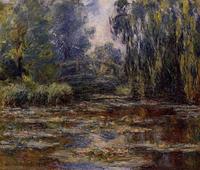
The Water Lily Pond and Bridge
Claude Monet
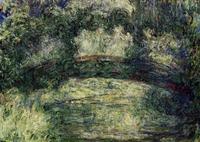
The Japanese Bridge 10
Claude Monet
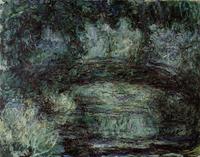
The Japanese Bridge
Claude Monet
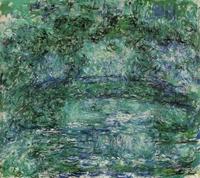
The Japanese Bridge 6
Claude Monet
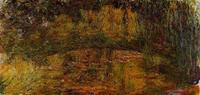
The Japanese Bridge
Claude Monet
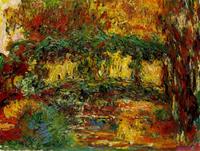
The Japanese Bridge
Claude Monet
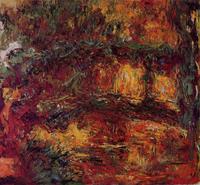
The Japanese Bridge at Giverny
Claude Monet
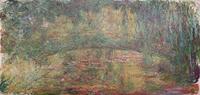
The Japanese Bridge
Claude Monet
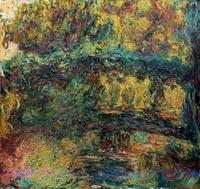
The Japanese Bridge
Claude Monet
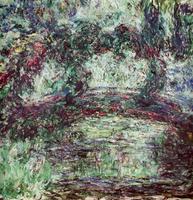
The Japanese Bridge 2
Claude Monet