
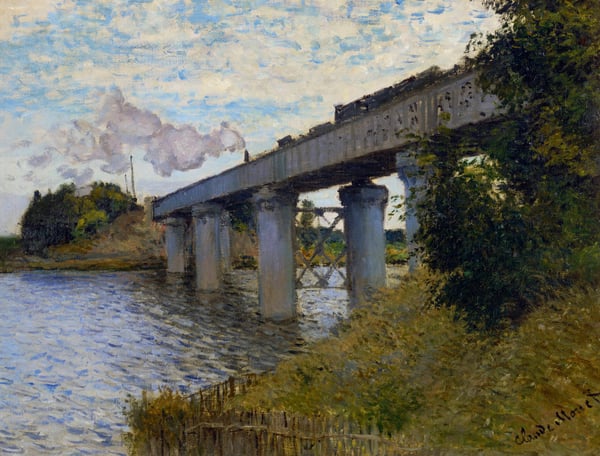
Claude Monet の The Railway Bridge at Argenteuil の専門的な分析
スタイル:Impressionism · ジャンル:landscape
Expert Analysis: "The Railway Bridge at Argenteuil" by Claude Monet
Claude Monet’s The Railway Bridge at Argenteuil is a quintessential Impressionist landscape that captures the movement of modern life and the transient effects of light. Painted during his prolific stay in Argenteuil (a suburb of Paris that became a hub for Impressionist experimentation), the work embodies the movement’s core principles: plein-air spontaneity, broken color, and an emphasis on atmospheric conditions.
Significance within Impressionism:
-
Modern Subject with Classical Motif: Monet chooses a railway bridge—a symbol of industrialization and contemporary leisure—as the focal point. This aligns with the Impressionist goal of painting modern life rather than historical or mythological scenes. The bridge itself is not a static structure; its iron framework is animated by reflections in the water and the play of sunlight.
-
Mastery of Light and Atmosphere: The painting is a study in shifting light. Monet applies short, visible brushstrokes of pure color (blues, greens, pinks, and yellows) to simulate the dappled effect of sunlight on water and metal. The sky and river merge in a haze of pale blues and soft whites, demonstrating his interest in capturing the “envelope” of air and moisture surrounding the scene.
-
Color and Perception: Rather than using local colors, Monet relies on optical mixing. The bridge’s shadow is not black but a vibrant mix of violet and blue, while the water reflects the sky and foliage in broken patches. This technique forces the viewer’s eye to blend the colors from a distance, creating a luminous, vibrating surface.
-
Composition and Depth: The diagonal of the bridge leads the eye from the busy foreground (where small sailboats and leisure craft appear) to the distant suburban bank. This framing emphasizes the coexistence of nature and industry—a hallmark of Argenteuil’s landscape during the 1870s.
Why This Work Matters:
The Railway Bridge at Argenteuil is significant because it encapsulates the Impressionist revolution in both subject and technique. Monet transforms an everyday industrial structure into a shimmering, atmospheric vision, proving that modern subjects could achieve the same poetic intensity as traditional landscapes. The painting is a testament to his relentless pursuit of capturing fleeting moments—the exact hour, the changing weather, the ripples of a river—and solidifies his role as a leader of the Impressionist movement.
Museum / Gallery
視覚的に類似
構図やパレットが近い作品 20 件
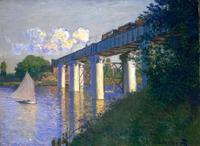
The Railway Bridge at Argenteuil
Claude Monet
Railway Bridge at Argenteuil
Claude Monet
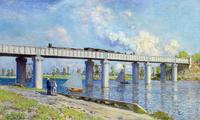
Railway Bridge at Argenteuil
Claude Monet
The Bridge at Argenteuil
Gustave Caillebotte
The Promenade near the Bridge of Argenteuil
Claude Monet
Bougival
Alfred Sisley
Railway guard. Hotkovo.
Ilya Repin
The Bridge at Trinquetaille
Vincent van Gogh
Bridge in London
Jan Toorop
Meadow Bridge at Argenteuil
Gustave Caillebotte
Winter Morning after Rain, Gardiner's Creek
Tom Roberts
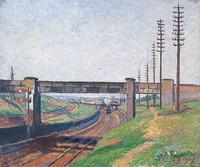
Wells Farm Railway Bridge, Acton, London
Lucien Pissarro
Boy with horse
Georges Seurat
Under the bridge at Hampton Court
Alfred Sisley
Iron Bridges at Asniéres
Emile Bernard
The Bridge at Argenteuil
Alfred Sisley
Old Lyme Bridge
Childe Hassam
Clothes on the Grass
Georges Seurat
The Pont de Vernon
Pierre Bonnard
The Black Horse
Georges Seurat