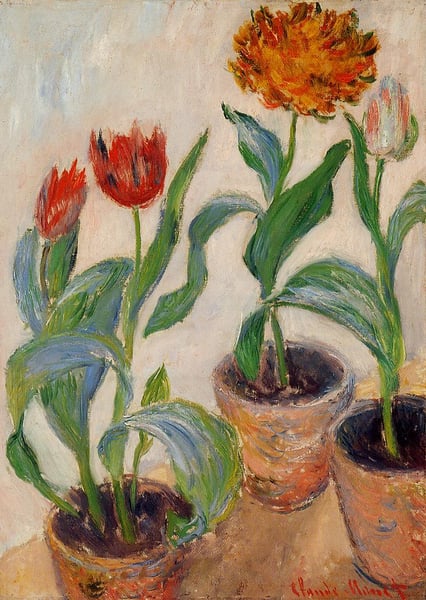
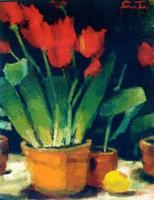
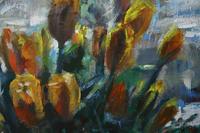
Analysis of "Three Pots of Tulips" by Claude Monet
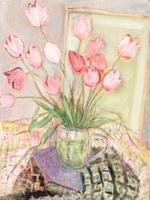
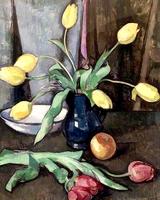
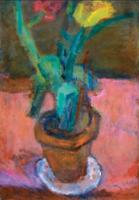
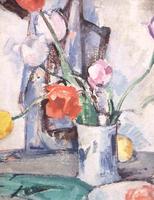
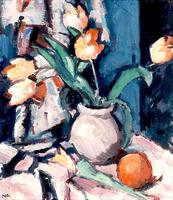
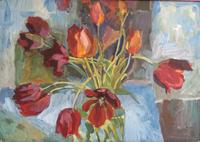
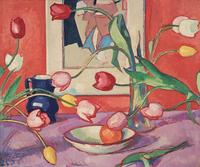
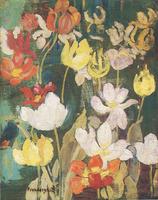
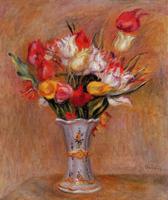
As an Impressionist flower painting, Three Pots of Tulips exemplifies Monet’s dedication to capturing fleeting light and atmospheric effects through vibrant, broken brushwork. The work’s significance lies in its departure from traditional still-life conventions: rather than emphasizing precise botanical detail or symbolic composition, Monet prioritizes the sensory experience of color and luminosity. The three pots likely serve as a framework for exploring how light interacts with petals, leaves, and shadows, dissolving form into patches of pure hue. This approach aligns with Impressionism’s broader goal of conveying the immediacy of visual perception, making the painting a quintessential example of the movement’s radical rethinking of genre painting—where ordinary floral subject matter becomes a vehicle for optical innovation.