
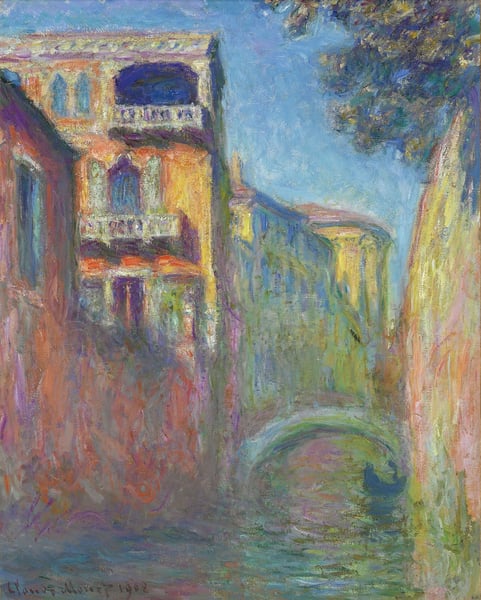
Analisi esperta di Venice, Rio de Santa Salute di Claude Monet
Stile: Impressionism · Genere: cityscape
Expert Analysis: "Venice, Rio de Santa Salute" by Claude Monet
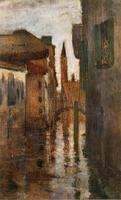
Claude Monet’s Venice, Rio de Santa Salute (1908) is a quintessential example of late Impressionism, demonstrating the artist’s mature mastery of capturing transient light and atmospheric effects. Painted during his only trip to Venice, this cityscape belongs to a celebrated series of views that mark a pivotal moment in Monet’s career, where his brushwork becomes increasingly liberated and his color palette more daring.
Significance within Impressionism and Monet’s Oeuvre
-
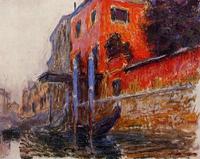
Dissolution of Form Through Light: Unlike earlier Venetian vedute that emphasized architectural precision, Monet dissolves the solidity of the church of Santa Maria della Salute and the surrounding palazzi into shimmering patches of color. The rippling canal water, painted with swift, broken brushstrokes, reflects the sky and buildings in a kaleidoscope of blues, pinks, and golds. This technique epitomizes the Impressionist goal of recording the fleeting sensation of a scene rather than its static documentation.
-
Late Period Experimentation: Created nearly 30 years after the height of Impressionism, this work showcases Monet’s shift toward a more subjective, almost abstracted vision. The blurring of boundaries between water, sky, and architecture anticipates the radical color harmonies of his famous Water Lilies series. The painting’s emphasis on atmosphere over structure underscores Monet’s belief that an object’s true nature is revealed through the ever-changing light that envelops it.
-
Unique Venetian Subject: While Monet painted numerous series of the same motif (haystacks, Rouen Cathedral, the Thames), his Venetian series is exceptional for its focus on a city defined by water and reflections. In Venice, Rio de Santa Salute, the canal itself becomes the primary subject, with the architecture serving as a luminous, mirrored presence. The composition’s lack of a strong horizon line and the flattening of depth create a dreamy, immersive quality that captures the ethereal beauty of Venice at a specific moment of the day—likely late afternoon, when warm light suffuses the scene.
Conclusion
Venice, Rio de Santa Salute is significant not only as a sublime rendering of one of the world’s most painted cities but as a testament to Monet’s lifelong pursuit of capturing the ephemeral. It bridges the sensory immediacy of Impressionism with the expressive abstraction that would define the next generation of modern art, making it a vital work in understanding the evolution of Monet’s late style and the enduring legacy of Impressionist cityscapes.
Museum / Gallery
Genere
Stile
Visivamente simili
20 opere con composizione e palette affini
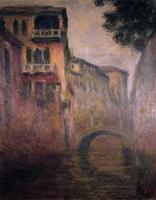
Rio della Salute 02
Claude Monet
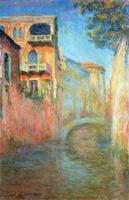
Rio della Salute
Claude Monet
Venice
Vincenzo Caprile
Venezia
Rubens Santoro
A Canal in Venice
Martín Rico y Ortega
View of Venice
Pascal Dagnan-Bouveret
Venice
Konstantin Gorbatov
Rio Santa Barnaba, Venice
Franz Richard Unterberger
Veneza (Canaleto)
Anita Malfatti
On a Venetian canal
Rubens Santoro
The San Giovanni Crisostomo canal, Venice
Martín Rico y Ortega
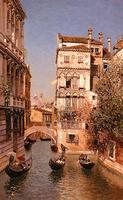
The Canal Venice
Martín Rico y Ortega
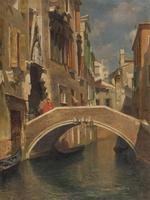
Bridge in Venice with figures
Rubens Santoro
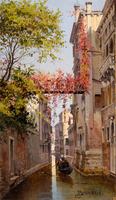
Palazzo Albrizzo
Antonietta Brandeis
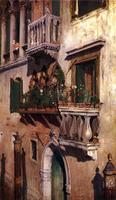
Venice
William Merritt Chase
The Red House
Claude Monet
Canal Dona Onesta, Venice
Rubens Santoro
San Lorenzo River with the Campanile of San Giorgio Dei Greci, Venice
Martín Rico y Ortega
The Sunny Canal
Martín Rico y Ortega
The Campanile, Late Afternoon
John Henry Twachtman