Claude Monet sanatçısının Vetheuil eseri hakkında uzman analizi
Tarz: Impressionism · Tür: landscape
Expert Analysis of "Vetheuil" by Claude Monet
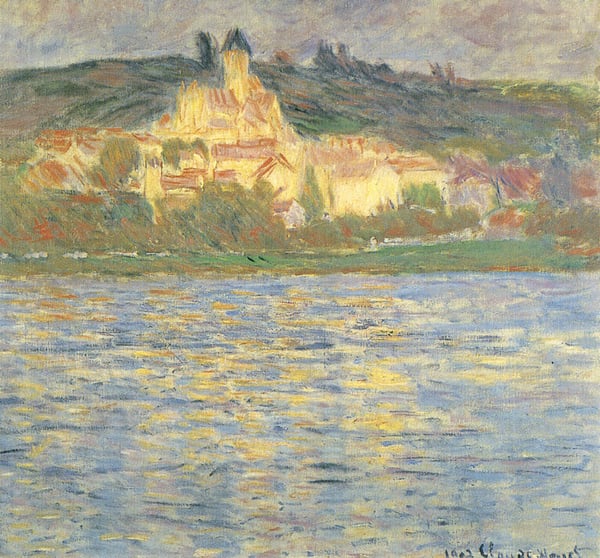
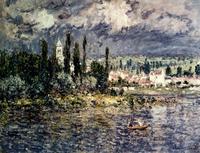
Claude Monet’s Vetheuil (c. 1880) stands as a quintessential example of High Impressionism, capturing the fleeting effects of light and atmosphere that define the movement. Painted during a period when Monet lived in the small town of Vetheuil on the Seine—a locale he returned to repeatedly—this landscape embodies the Impressionist break from academic tradition.
Significance within Impressionism:
-
Light and Color as Subject: Monet dissolves the solid forms of the riverbank, village, and sky into a shimmering tapestry of short, broken brushstrokes. The composition is built not from outlines but from juxtaposed touches of pure color—cool blues and violets for shadows, warm pinks and yellows for sunlit surfaces. This technique, central to Impressionism, prioritizes the artist’s perception of changing light over topographical accuracy.
-
Plein Air Intensity: Painted outdoors, the work captures a specific moment of day—likely late afternoon, when the sun casts elongated reflections on the water. The rippling river surface becomes a vibrant mosaic of dabs and dashes, demonstrating Monet’s obsession with the interplay between sky, water, and land.
-
Atmospheric Unity: Unlike earlier landscapes that separated foreground, middle ground, and background, Monet unifies the scene through a consistent optical vibration. The grayish-violet haze softening the distant hills and the modulation of the blue water into greenish tones near the bank create an enveloping atmosphere—a hallmark of his mature style.
-
Subjective Vision: Vetheuil is significant because it exemplifies Monet’s move away from recording a place to recording his sensation of the place. The village church and houses are barely recognizable, subordinate to the overall harmony of color and light. This subjective approach laid the groundwork for the later, more abstract series paintings (Haystacks, Rouen Cathedral).
In this work, Monet transforms a humble rural scene into a radiant study of optical experience, reaffirming Impressionism’s revolutionary claim that the true subject of art is the act of seeing itself.
Museum / Gallery
Görsel olarak benzer
İlişkili kompozisyon ve renk paletine sahip 20 eser
Vetheuil, Barge on the Seine
Claude Monet
Vetheuil, Pink Effect
Claude Monet
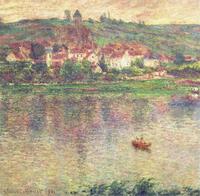
Vetheuil
Claude Monet
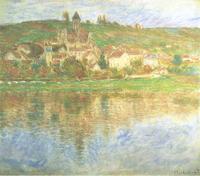
Vetheuil
Claude Monet
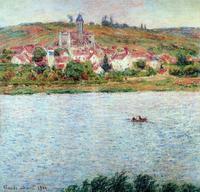
Vetheuil, Morning Effect
Claude Monet
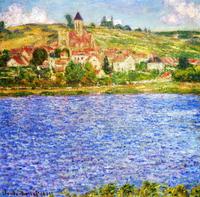
Vetheuil, Afternoon
Claude Monet
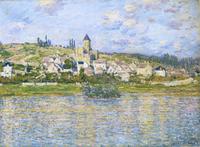
Vetheuil
Claude Monet
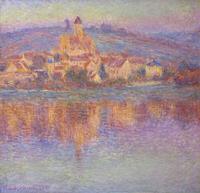
Vetheuil at Sunset
Claude Monet
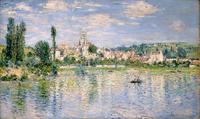
Vetheuil in Summer
Claude Monet
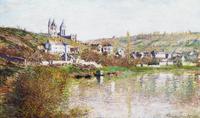
The Hills of Vetheuil
Claude Monet
Poppy Field near Vetheuil
Claude Monet
The Village of Vétheuil
Claude Monet
Late Afternoon in Vetheuil
Claude Monet
The Seine at Vetheuil
Claude Monet
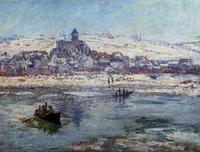
Vetheuil in Winter
Claude Monet
Flood in Pontoise
Camille Pissarro
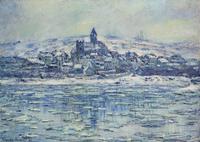
Vetheuil, Ice Floes
Claude Monet
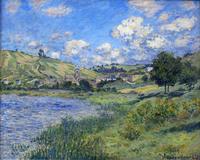
Vetheuil, Paysage
Claude Monet
Landscape With Thunderstorm
Claude Monet
Saint Mammes Evening
Alfred Sisley