
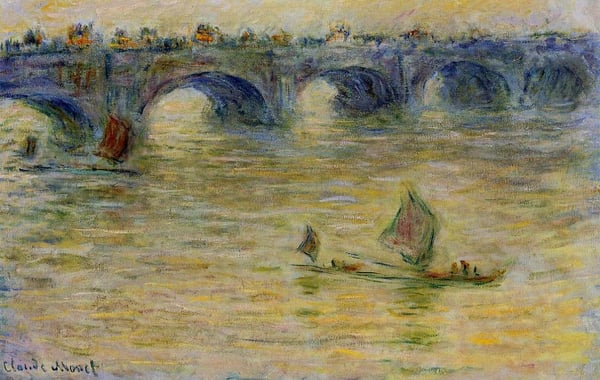
Expert analysis of Claude Monet’s Waterloo Bridge
Style: Impressionism · Genre: cityscape
Expert Analysis: Waterloo Bridge by Claude Monet
Claude Monet’s Waterloo Bridge is a quintessential example of Impressionist cityscape painting, capturing the fleeting interplay of light, atmosphere, and modernity that defined the movement. Executed during Monet’s visits to London in the late 1890s and early 1900s, this work is one of a celebrated series focusing on the Thames and its bridges—a subject that allowed Monet to explore the very essence of Impressionism: the transient effects of weather, time, and ambient light on a single motif.
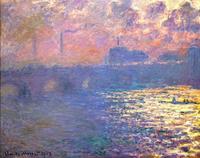
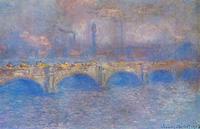
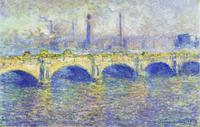
What makes Waterloo Bridge significant within Impressionism and Monet’s oeuvre is its radical departure from traditional cityscape representation. Rather than emphasizing architectural precision or industrial grandeur, Monet dissolves the bridge’s form into a haze of muted blues, purples, and ochres, reflecting the famous London fog. The bridge itself becomes a ghostly silhouette, its arches and uprights barely distinguishable from the mist and river. This deliberate vagueness was not carelessness but a revolutionary technique to capture the perceptual experience of a city enveloped in atmospheric moisture. The painting’s surface is alive with broken brushstrokes, each dab of pigment functioning independently to convey reflected light on water, the glow of distant streetlights, and the shifting density of fog.
The significance also lies in Monet’s serial approach. By painting the same subject (Waterloo Bridge) dozens of times under varying conditions, he elevated the ephemeral to a central theme. This series, alongside those of Rouen Cathedral and Haystacks, demonstrated that a single landmark could yield infinite visual truths, each version distinct in its emotional and chromatic resonance. Waterloo Bridge thus embodies Impressionism’s core ambition: to render not the object itself, but the sensation of seeing it in a particular moment. Monet’s London canvases also reflect the modern urban environment—smog, industry, and rapid change—transforming these elements into subjects of sublime beauty. In this work, the fog is not an obstacle but a medium, and the bridge becomes a symbol of how Impressionism redefined reality as a matter of light, mood, and immediate perception.
Genre
Style
Visually similar
20 works with related composition and palette

Waterloo Bridge, Sunlight Effect
Claude Monet
Waterloo Bridge
Claude Monet
Waterloo Bridge, Grey Weather
Claude Monet
Waterloo Bridge, London
Claude Monet
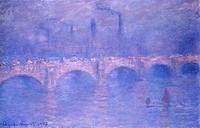
Waterloo Bridge, Hazy Sunshine
Claude Monet
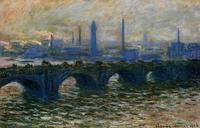
Waterloo Bridge
Claude Monet
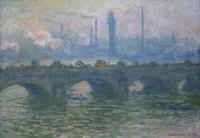
Waterloo Bridge
Claude Monet
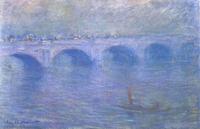
Waterloo Bridge in the Fog
Claude Monet
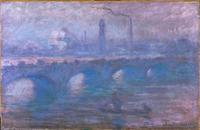
Waterloo Bridge, Misty Morning
Claude Monet
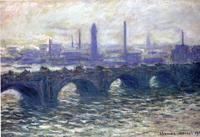
Waterloo Bridge
Claude Monet
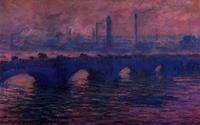
Waterloo Bridge, Overcast Weather
Claude Monet
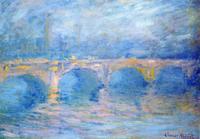
Waterloo Bridge at Sunset, Pink Effect
Claude Monet
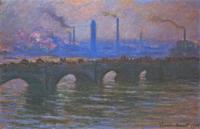
Waterloo Bridge, Overcast Weather
Claude Monet
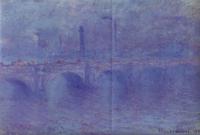
Waterloo Bridge, Effect of Fog
Claude Monet
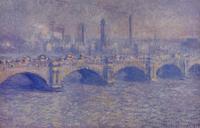
Waterloo Bridge, Sunlight Effect
Claude Monet
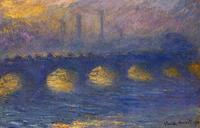
Waterloo Bridge, Overcast Weather
Claude Monet
Waterloo Bridge, Sunlight Effect
Claude Monet
Waterloo Bridge, Sunlight Effect
Claude Monet

Waterloo Bridge, Fog
Claude Monet
Waterloo Bridge, Effect of the Sun
Claude Monet