
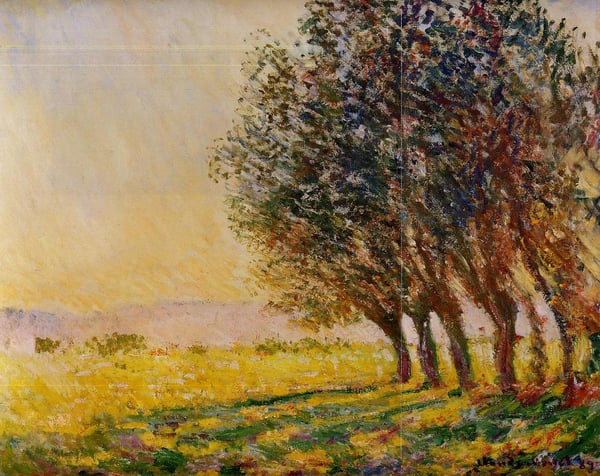
Analyse experte de Willows at Sunset de Claude Monet
Style : Impressionism · Genre : landscape
Expert Analysis: "Willows at Sunset" by Claude Monet
As an Impressionist landscape, Willows at Sunset exemplifies Claude Monet’s pioneering focus on capturing ephemeral light and atmospheric conditions. The painting’s significance lies in its radical departure from traditional landscape composition: rather than delineating precise botanical forms, Monet uses broken, rapid brushstrokes and a warm, sunset-infused palette to evoke the shimmering interplay of golden and violet light filtering through the willow branches. The artist treats the willows not as static, solid objects but as living, dissolving forms that merge with the sky and water, blurring the boundary between earth and atmosphere. This technique—prioritizing sensation over detail—is a hallmark of Impressionism, and here it transforms a simple rural scene into a study of color perception and temporal change. The sunset setting further emphasizes the movement of light across the canvas, a key concern of Monet’s practice, and underscores his belief that a landscape exists only as a momentary visual impression.
Visuellement similaire
20 œuvres à la composition et à la palette proches
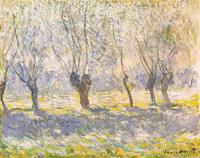
Willows, Giverny
Claude Monet
Landscape
Henri Martin
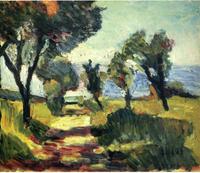
Olive Trees
Henri Matisse
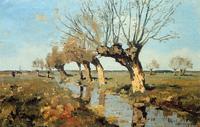
Pollard Willow At The Side Of The Broo
Cornelis Vreedenburgh

Morning Mist
Guy Rose
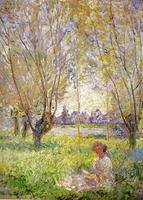
Woman Sitting under the Willows
Claude Monet
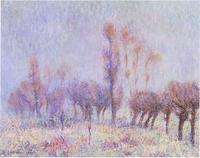
Willows in Fog
Gustave Loiseau
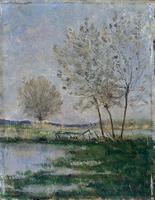
Flooded meadows
Maxime Maufra
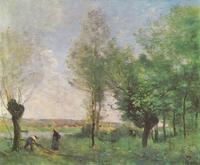
Recollections of Coubron
Camille Corot
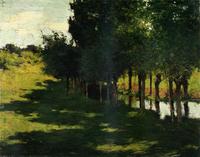
Sunlight and Shadow
Willard Metcalf
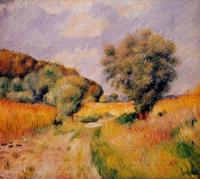
Fields of Wheat
Pierre-Auguste Renoir
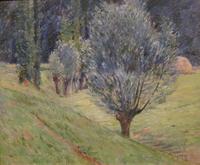
The Edge of the Forrest
Theodore Robinson
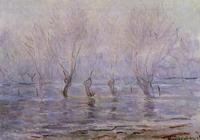
Flood at Giverny
Claude Monet
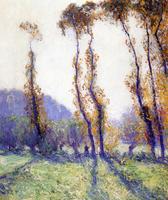
October Morning
Guy Rose
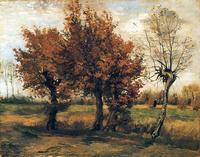
Autumn Landscape with Four Trees
Vincent van Gogh
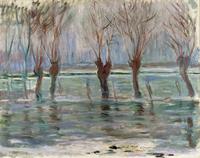
Flood Waters
Claude Monet
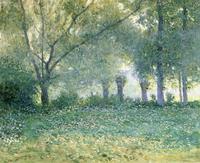
Morning Mist (also known as Late Spring)
Guy Rose
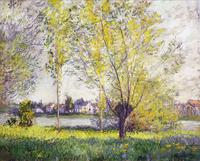
The Willows
Claude Monet
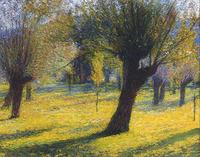
Willows in the Vert
Henri Martin
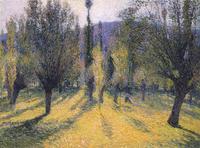
Sun through the Poplar
Henri Martin