Expert analysis of Diego Rivera’s Sailor at Breakfast
Style: Cubism · Genre: genre painting
Expert Analysis: "Sailor at Breakfast" by Diego Rivera
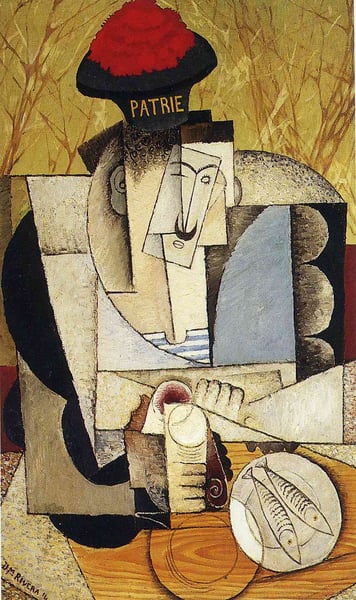
Diego Rivera’s Sailor at Breakfast stands as a pivotal work within his early career, demonstrating his engagement with the Cubist movement before his later, internationally acclaimed muralist period. Executed in the Cubist style, the painting is a genre scene that transforms an ordinary, everyday moment—a sailor having breakfast—into a sophisticated exercise in formal innovation.
Significance within Cubism:
Rivera, while living in Paris during the 1910s, fully absorbed the lessons of Cubism, particularly from Picasso and Braque. However, Sailor at Breakfast distinguishes itself by applying Cubist analytical fragmentation to a subject rooted in working-class life. The sailor’s figure is deconstructed into intersecting planes, faceted forms, and a muted palette of grays, browns, and ochres—hallmarks of Cubist structure. Yet Rivera imbues the scene with a narrative clarity unusual for the style: the sailor’s posture, the table, and the breakfast objects remain legible, suggesting a bridge between avant-garde abstraction and accessible storytelling.
Significance as a Genre Painting:
By choosing a genre subject—a sailor at breakfast—Rivera elevates a humble, non-heroic moment into the realm of high art. This aligns with Cubism’s interest in depicting everyday objects (bottles, glasses, newspapers), but Rivera expands that focus to include the human figure engaged in a mundane ritual. The painting thus prefigures his later commitment to representing the dignity of common people, a theme that would dominate his mural work. The sailor, partially obscured by Cubist planes, becomes a symbol of the modern worker within the urban environment—a subtle social commentary embedded within a rigorous formal language.
What Makes It Significant:
Sailor at Breakfast is significant for its synthesis of Cubist technique and humanist subject matter. It demonstrates Rivera’s ability to absorb European avant-garde innovations while retaining his own narrative impulses. This work occupies a crucial transitional moment in Rivera’s evolution, showing how Cubism could be used not only for still lifes or portraits but for genre scenes that resonate with the everyday life of the common person. In the broader history of Cubism, it represents one of the few major examples where the style is applied to a genre scene with such explicit narrative and social underpinnings, making it a key artwork in understanding the global reach and adaptability of the Cubist movement.
Genre
Style
Visually similar
20 works with related composition and palette
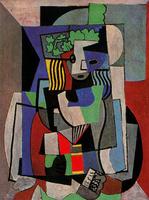
The student
Pablo Picasso
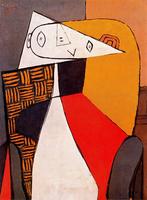
Seated Woman
Pablo Picasso
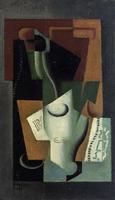
Glass and Bottle
Juan Gris
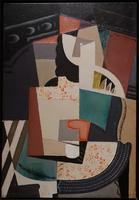
Seated Woman
Maria Blanchard
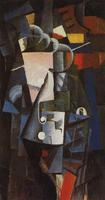
Vanity Box
Kazimir Malevich
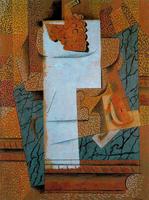
Fruit vase and bunch of grapes
Pablo Picasso
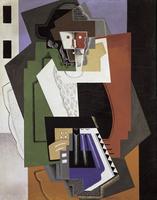
The Accordion Player
Gino Severini
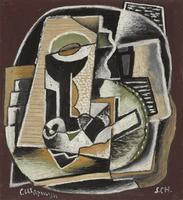
Composition, cubisme ornemental
Serge Charchoune
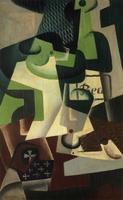
Bottle of Beaune and a Fruit Dish
Juan Gris
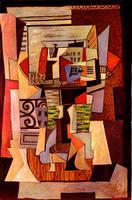
Window opened to the street Penthieure
Pablo Picasso
Composition
Georges Valmier
Concert
Louis Marcoussis
Untitled
Albert Gleizes
Woman sitting in an armchair
Pablo Picasso
Blue Figure in a Chair
Arshile Gorky
Skull and leeks
Pablo Picasso
Man with guitar
Pablo Picasso
The Musician
Georges Braque
Figure with fruit dish
Pablo Picasso
Still Life with Bottle and Glass
Juan Gris