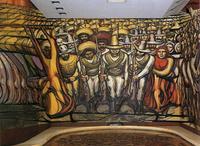
Expert Analysis: "The Perpetual Renewal of the Revolutionary Struggle" by Diego Rivera
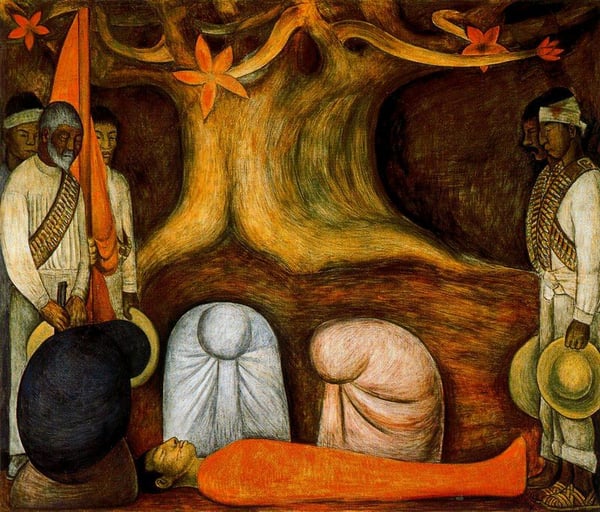
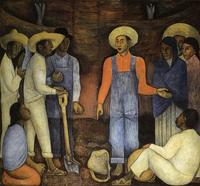
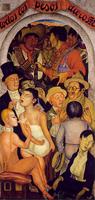
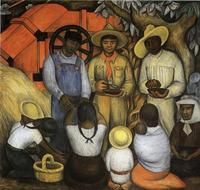
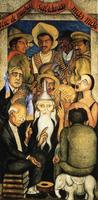
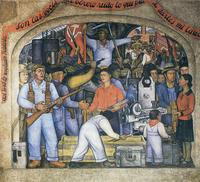
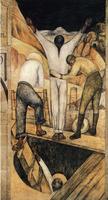
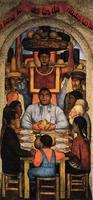
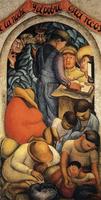
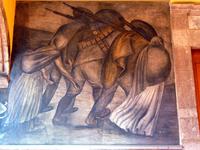
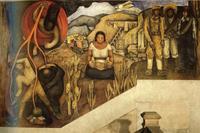
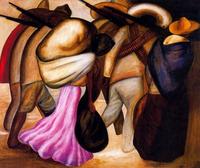
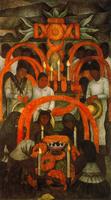
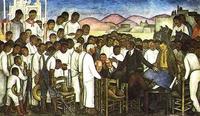
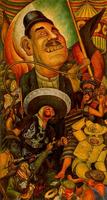
This work is a quintessential example of Mexican Muralism, a style that emerged after the Mexican Revolution as a public, politically charged art form. Rivera, a leading figure of the movement, used murals to narrate history and inspire social change. Although we only have the title and genre (genre painting) to work with, the title itself—“The Perpetual Renewal of the Revolutionary Struggle”—encapsulates Muralism’s core mission: to depict revolution not as a finished event, but as an ongoing, cyclical force that shapes everyday life.
As a genre painting, the work likely situates revolutionary themes within scenes of ordinary people—workers, peasants, or soldiers—engaged in moments of collective action or resilience. This blending of the monumental and the mundane is a hallmark of Rivera’s approach: he elevates daily struggle to epic status, making the political immediate and accessible. The significance lies in how the painting reinforces Muralism’s central tenet: art must serve the people, narrate their history, and empower them to continue the fight. Rivera’s title suggests that revolution is never complete; it must be perpetually renewed through the labor and solidarity of common folk. In this, the work stands as a powerful statement of social realism, connecting the personal to the political and asserting that art is a tool for liberation.