Expert analysis of Diego Rivera’s The Pinole Seller
Style: Naïve Art (Primitivism) · Genre: portrait
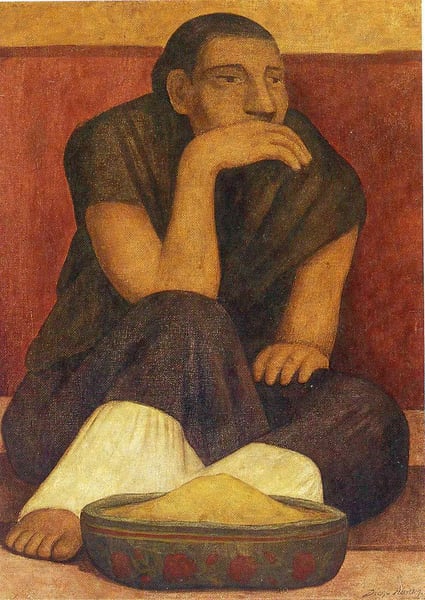
Diego Rivera’s The Pinole Seller occupies a fascinating early moment in the artist’s career, where his engagement with Naïve Art (Primitivism) merges with the portrait genre to produce a work of quiet but profound cultural significance. While Rivera is best known for his monumental modernist murals, this painting reveals his deliberate turn toward a simplified, direct visual language—one that echoes the untutored simplicity of folk art and the formal lessons of post-impressionist primitivism.
What makes it significant within its style and period:
-
Primitivism as a political and cultural statement: In the early 20th century, Mexican artists sought to reclaim pre-Columbian and popular indigenous traditions. Rivera’s adoption of a naïve style—flattened forms, unmodulated color, and childlike perspective—deliberately rejects European academic polish to honor the everyday dignity of Mexico’s working classes. The pinole seller (a vendor of a traditional maize-based drink) is not a caricature but a monumental, serene figure, elevated by the very simplicity of the rendering.
-
Portrait as social document: Though a portrait, the work functions as a tipo (type) study, common in Latin American primitivism, which documented indigenous trades. Rivera’s subject is both an individual and a symbol of living national heritage. The frontal pose, wide-set eyes, and static composition recall earlier colonial ex-votos and retablos, anchoring the work in a specifically Mexican visual lineage.
-
Naïve aesthetic and modernist convergence: Rivera’s use of compressed space, strong outlines, and bold local color aligns with European primitivism (e.g., Gauguin, Rousseau), yet it is grounded in local realities. The rough, almost clumsy handling of the figure’s hands and the patterned textiles highlights the artist’s intentional rejection of virtuoso technique in favor of emotional authenticity—a core tenet of the Naïve movement.
In The Pinole Seller, Rivera demonstrates that primitivism need not be exoticizing; instead, it becomes a tool for cultural affirmation. The work stands as an essential example of how early-20th-century Mexican modernism used a deliberately “unschooled” style to reframe the portrait—not as a record of status, but as a testament to the enduring dignity of everyday life.
Museum / Gallery
Genre
Visually similar
20 works with related composition and palette
The Bread Maker
Louay Kayyali
Farm woman
Pablo Picasso
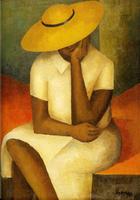
Girl With Yellow Hat
Norman Lewis
Nina Hamnett
Roger Fry
Annie Bjarne
Amedeo Modigliani
Portrait of Jeanne Hebuterne
Amedeo Modigliani
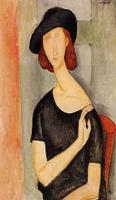
Jeanne Hebuterne in a Hat
Amedeo Modigliani
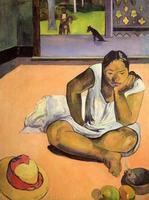
Brooding Woman
Paul Gauguin
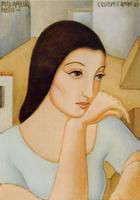
La Chica De La Azotea
Carlos Quizpez Asín
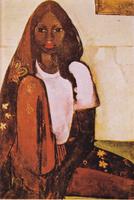
The Child Bride
Amrita Sher-Gil
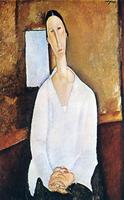
Madame Zborowska with clasped hands
Amedeo Modigliani
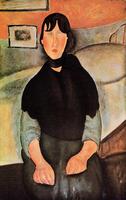
Dark Young Woman Seated by a Bed
Amedeo Modigliani
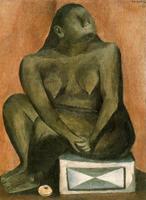
Mujer en gris
Rufino Tamayo
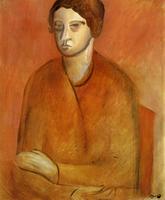
Portrait of a Woman
Andre Derain
Girl on a Hill
Prudence Heward
The Two Sisters
Andre Derain
Lunia Czechowska with her left hand on her cheek
Amedeo Modigliani
The Laundrette
Louay Kayyali
Bust of a Young Woman (Mademoiselle Marthe)
Amedeo Modigliani
Portrait of Anna Zborowska
Amedeo Modigliani