Expert analysis of Diego Rivera’s Wall Street Banquet
Style: Muralism · Genre: allegorical painting
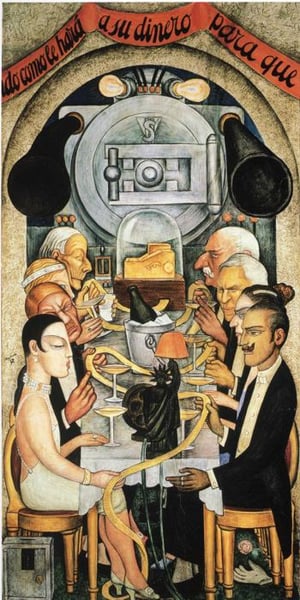
Diego Rivera’s Wall Street Banquet is a powerful example of Muralism’s capacity for political allegory, a hallmark of the Mexican muralist movement that sought to bring revolutionary social critique into public visual culture. Created during Rivera’s period of heightened engagement with Marxist ideology, the work uses the allegorical genre to transform a simple scene of capitalist indulgence into a sweeping indictment of economic inequality.
Significance within Muralism and allegorical painting:
-
Public-scale political commentary: As a Muralist, Rivera believed art should be accessible and didactic. Wall Street Banquet fulfills this by translating complex critiques of finance capitalism into a clear, monumental narrative. The banquet setting—replete with opulent figures gorging while symbols of exploitation lurk in the background—functions as a modern morality play, using allegory to reveal the moral rot beneath wealth’s surface.
-
Synthesis of form and ideology: Rivera’s style marries Renaissance compositional clarity with Post-Revolutionary Mexican visual traditions. The banquet table serves as a stage for hierarchical portraits of bankers and industrialists, their exaggerated features and crass gestures pushing the allegory toward satire. This blend of realism and symbol is a signature Rivera technique, allowing the viewer to read the scene both as a literal event and as a universal warning.
-
Relevant to its period: Created during the Great Depression, Wall Street Banquet resonates with contemporary critiques of the 1929 crash and the ensuing suffering of the working class. Rivera’s decision to set the allegory in the very heart of American capitalism—Wall Street—underscores Muralism’s role as an international tool for social justice, not merely a Mexican national art form.
In essence, Wall Street Banquet is significant because it mobilizes the monumental, narrative power of Muralism to turn allegory into a weapon of critique. Rivera strips the banquet of its innocence, presenting it as a ritual of exploitation, and thus cements his position as an artist who saw the mural not only as a decoration but as a site of ideological struggle.
Visually similar
20 works with related composition and palette
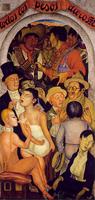
Night of the Rich
Diego Rivera
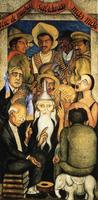
The Learned
Diego Rivera
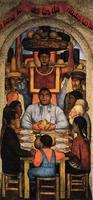
Our Bread
Diego Rivera
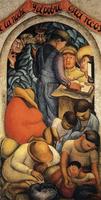
Night of the Poor
Diego Rivera
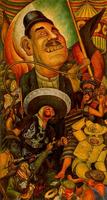
Carnival of Mexican Life. Dictatorship
Diego Rivera
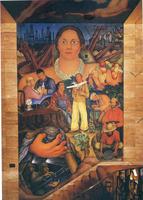
Allegory of California
Diego Rivera
Death of the Capitalist
Diego Rivera
The Arsenal
Diego Rivera
The Sacrificial Offering Day of the Dead
Diego Rivera
The Day of the Dead
Diego Rivera
Good Friday on the Santa Anita Canal
Diego Rivera
Partition of the Land.
Diego Rivera
Panel 4. Aztec Warriors - The Epic of American Civilization
Jose Clemente Orozco
The Mechanization ofThe Country
Diego Rivera
The Exploiters
Diego Rivera
The World of Today and Tomorrow
Diego Rivera
Triumph of the Revolution
Diego Rivera
Exit from the Mine
Diego Rivera
The Psychologist
Paul Feeley
The Fair
Maruja Mallo