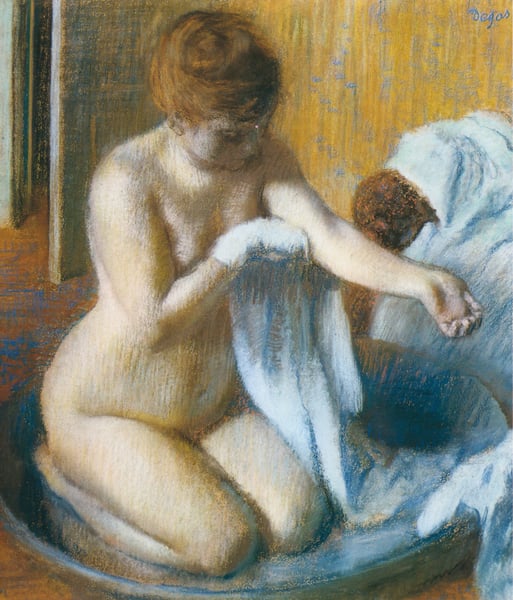
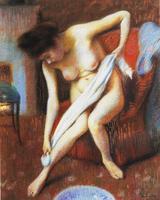
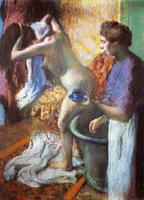
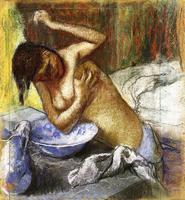
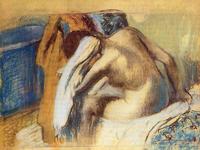
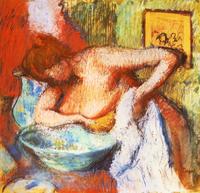
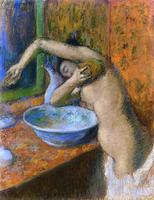
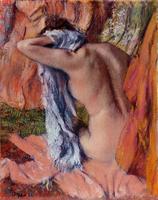
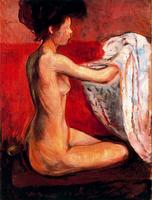
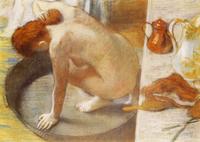
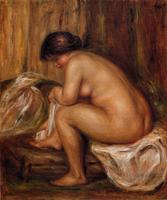
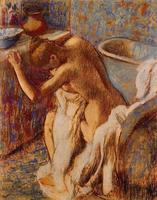
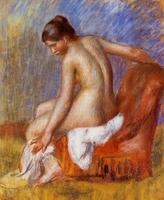
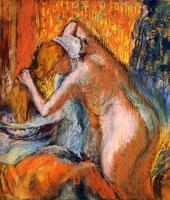
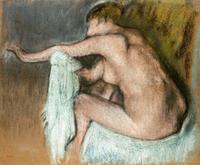
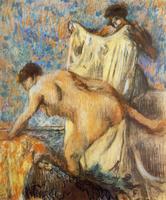
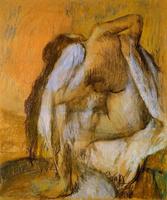
Edgar Degas’s After the Bath exemplifies a radical departure from traditional nude painting within the Impressionist movement. Unlike the idealized, mythological figures of academic art, Degas captures a candid, unposed moment—a woman drying herself after bathing. The work’s significance lies in its unflinching observation of the female form from a voyeuristic, often awkwardly cropped perspective, emphasizing the mundane reality of the act. Degas’s use of pastel—a medium he championed—allows for soft, luminous touches that both define and dissolve the figure, mirroring the fleeting effects of light and the intimate, private nature of the scene. This painting thus redefines the nu genre by stripping away artifice, focusing instead on the physicality and vulnerability of the body in motion, a hallmark of Degas’s modern vision.