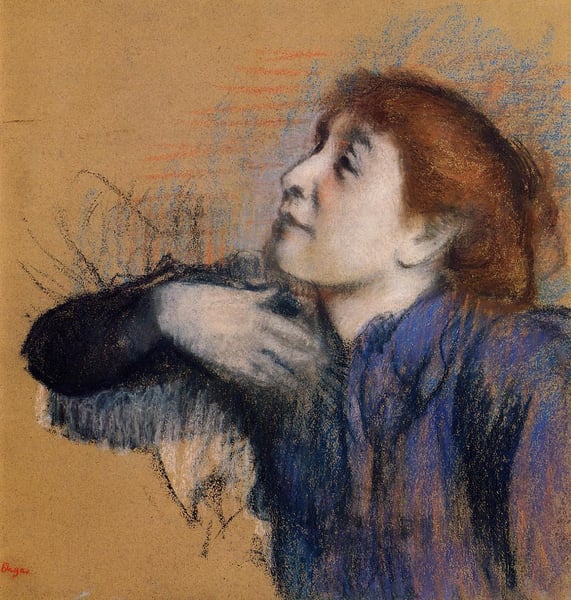
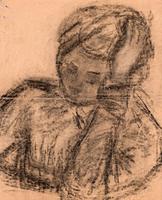
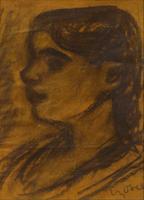
"Bust of a Woman" by Edgar Degas is significant within the Impressionist style and the genre of sketch and study for its demonstration of the movement’s core emphasis on capturing the fleeting, unpolished essence of a subject. As a sketch, it prioritizes spontaneity and the artist’s immediate response over precise finish, revealing Degas’s process of observation. Within Impressionism, such studies were crucial for exploring light, form, and the nuanced character of everyday life, and this bust exemplifies how Degas used rapid, evocative marks to distill the sitter’s presence, highlighting the Impressionist commitment to direct perception and the beauty of the unfinished.