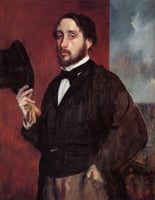
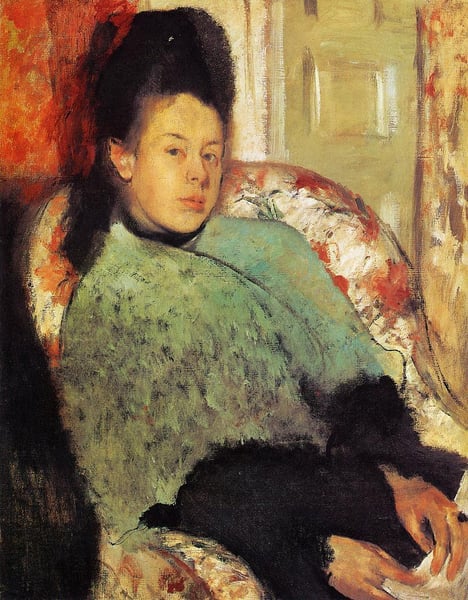
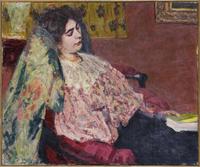
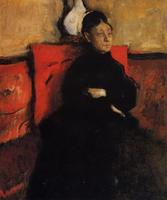
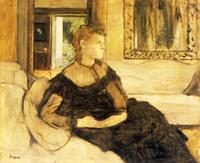
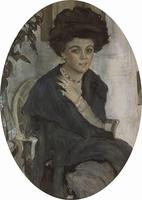
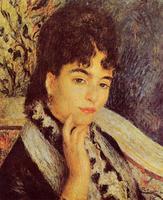
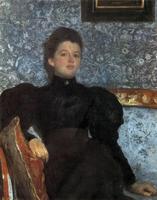
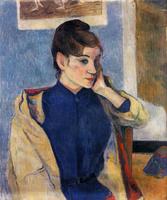
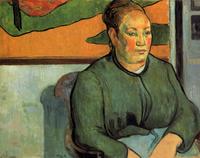
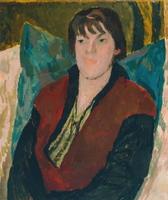
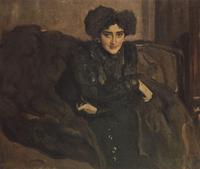
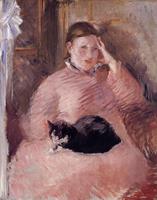
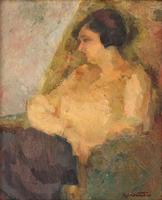
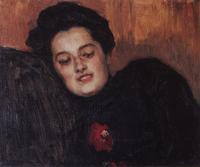
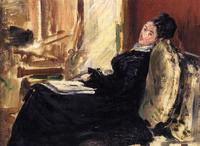
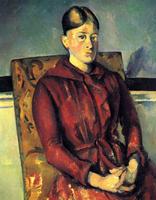
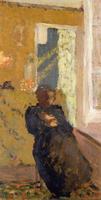
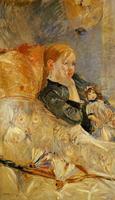
As an Impressionist portrait, Edgar Degas's Elena Carafa is significant for its departure from the formal, idealized conventions of academic portraiture. The work exemplifies the Impressionist ethos of capturing a fleeting, candid moment of modern life. Degas's approach focuses on psychological presence and informal composition, prioritizing the sitter's natural posture and expression over rigid detail. This aligns with the movement's broader shift toward contemporary subjects and spontaneous observation, marking a key evolution in the genre of portraiture within the late 19th century.