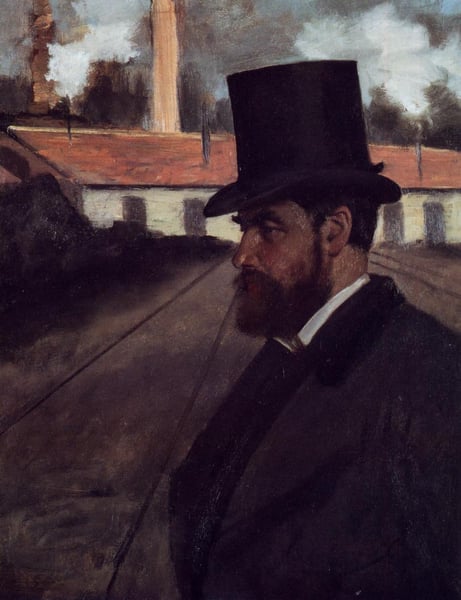
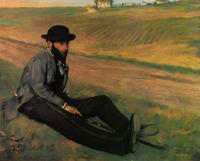
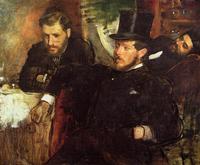
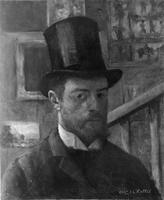
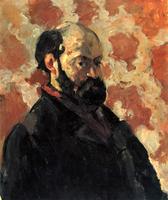
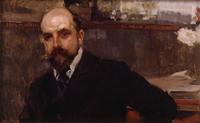
This portrait by Edgar Degas, an Impressionist work, is significant for its unconventional blend of personal identity and industrial modernity. As a portrait, it moves beyond traditional aristocratic or domestic settings by placing Henri Rouart—a friend and industrialist—directly before his factory. This choice reflects Impressionism’s commitment to depicting contemporary life, capturing not only the sitter’s likeness but also his role in the burgeoning industrial era. Degas’s treatment of the scene likely emphasizes light, atmosphere, and fleeting visual effects, hallmarks of the style, while the factory backdrop challenges the genre’s expected intimacy, instead asserting a modern, professional identity. The work thus stands as a key example of Impressionist portraiture engaging with the social and economic transformations of late 19th-century France.