Edgar Degas の Ludovic Halevy Speaking with Madame Cardinal の専門的な分析
スタイル:Impressionism · ジャンル:portrait
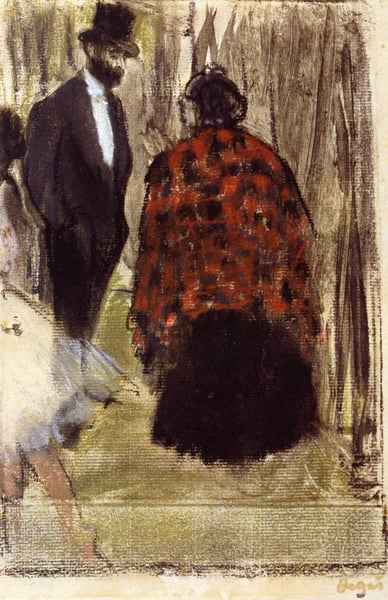
This painting by Edgar Degas, Ludovic Halévy Speaking with Madame Cardinal (circa 1884), is a striking example of how Impressionism—and Degas in particular—transformed the traditional portrait into a slice of modern life. While the genre is listed as a portrait, Degas subverts the conventions by presenting a candid, almost voyeuristic scene of conversation rather than a formal, posed likeness.
Composition and Candid Modernity: The work’s significance lies in its radical use of asymmetrical framing and cropping—hallmarks of Degas’s style, influenced by photography and Japanese ukiyo-e prints. Halévy and Madame Cardinal are not centered hierarchically; instead, they occupy a compressed, shallow space that suggests a fleeting moment caught from the corner of a room. The viewer becomes an unseen observer, peering into a private exchange. This approach reveals Degas’s fascination with the unguarded, everyday interactions of Parisian society, a core tenet of Impressionist subject matter.
Character and Context: Ludovic Halévy, a celebrated librettist and close friend of Degas, is shown mid-gesture, leaning in toward Madame Cardinal. She, in turn, appears to be listening intently. The painting thus transcends simple portraiture by prioritizing psychological immediacy and social dynamics over static representation. Degas captures the rhythm of conversation—the tilt of a head, the direction of a glance—making the work a study in modern sociability.
Technique and Color: Characteristic of Degas’s Impressionist palette, the colors are muted yet punctuated by warm skin tones and dark, expressive brushstrokes that define the sitters’ features. The background is deliberately vague, drawing focus to the interplay between the two figures and the subtle play of light across their faces and clothing. Degas’s handling of pastel or oil here (the medium is often debated) demonstrates his mastery of blending line and color, a technique that adds a sense of immediacy and spontaneity.
Significance within Impressionism: While many Impressionists focused on landscapes or outdoor leisure, Degas championed interior scenes of urban life—the theater, rehearsal rooms, cafes, and private drawing-rooms. Ludovic Halévy Speaking with Madame Cardinal exemplifies this niche, offering an intimate, unposed glimpse into the intellectual and artistic circles of late 19th-century Paris. It is a testament to Degas’s ability to infuse a conventional portrait with the fleeting energy and observational acuity that define Impressionism at its most psychologically penetrating.
Museum / Gallery
視覚的に類似
構図やパレットが近い作品 20 件
Three Dancers behind the Scenes
Edgar Degas
Backstage
Boyukagha Mirzazade
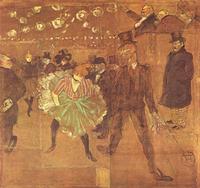
Booth of La Goulue at the Foire du Trone (Dance at the Moulin Rouge)
Henri de Toulouse-Lautrec
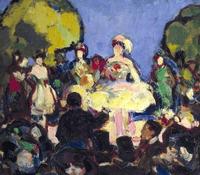
Café-Concert des Ambassadeurs
John Duncan Fergusson
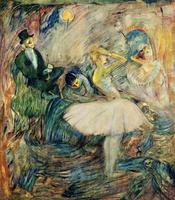
The Dancer in Her Dressing Room
Henri de Toulouse-Lautrec
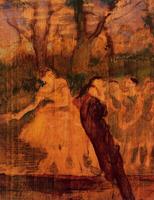
Dancers on the Scenery
Edgar Degas
Before leaving
Boyukagha Mirzazade
Behind the Scenes
Henri de Toulouse-Lautrec
Dancers Backstage
Edgar Degas
The Mante Family
Edgar Degas
Ballet Scene
Edgar Degas
Dancers
Edgar Degas
A l Elysee Montmartre
Henri de Toulouse-Lautrec
Ballet Scene
Edgar Degas
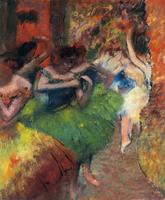
Dancers in the Wings
Edgar Degas
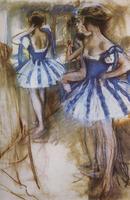
Two dancers
Zinaida Serebriakova
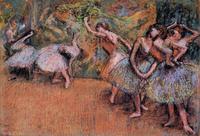
Ballet Scene
Edgar Degas
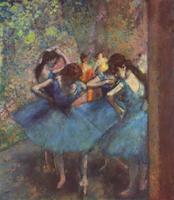
Dancers in Blue
Edgar Degas
Two Dancers in Their Dressing Room
Edgar Degas
Before the Performance
Edgar Degas