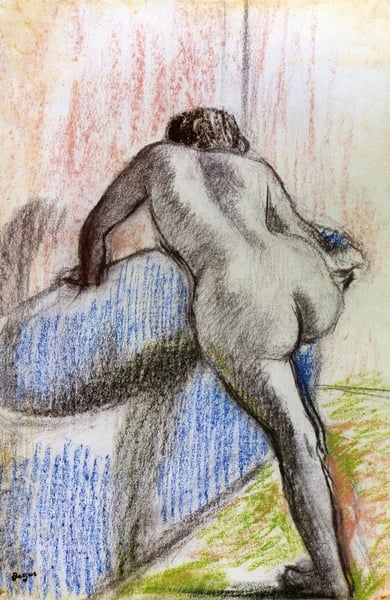
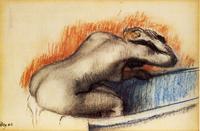
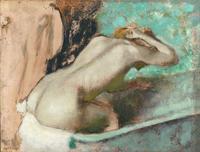
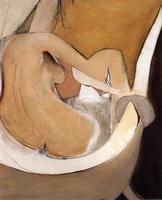
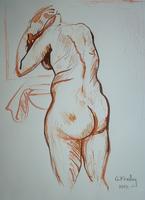
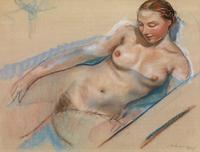
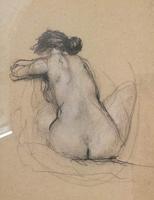
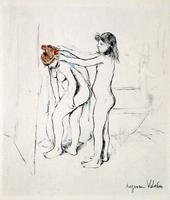
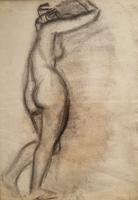
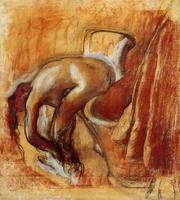
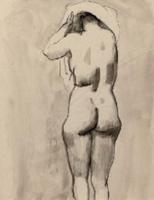
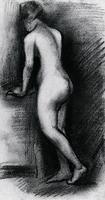
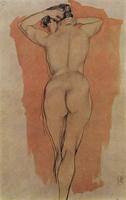
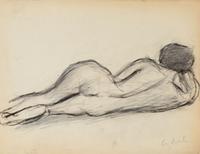
"The Bath" by Edgar Degas is a quintessential example of how Impressionism revolutionized the traditional nude painting genre (nu). While academic art typically presented idealized, mythological, or allegorical nudes in classical poses, Degas’s treatment is radically modern and intimate. The work captures a private, unposed moment—a woman bathing—seen from an unconventional, almost voyeuristic angle. This perspective, often characterized by abrupt cropping and asymmetrical composition, reflects the Impressionist interest in capturing fleeting, spontaneous glimpses of contemporary life. Degas further subverts convention by focusing on the figure’s back and the mundane act of bathing, emphasizing naturalism over idealization. His use of pastel (a medium he favored) and loose, visible brushwork conveys the play of light on skin and water, hallmarks of Impressionist technique. The significance of "The Bath" lies in Degas’s ability to synthesize the genre’s established subject (the female nude) with the Impressionist commitment to modern, everyday reality, thereby challenging the hierarchy of painting and expanding the boundaries of what a nude could represent.