Expertenanalyse zu Edgar Degass Vesuvius
Stil: Impressionism · Genre: landscape
Analysis of "Vesuvius" by Edgar Degas
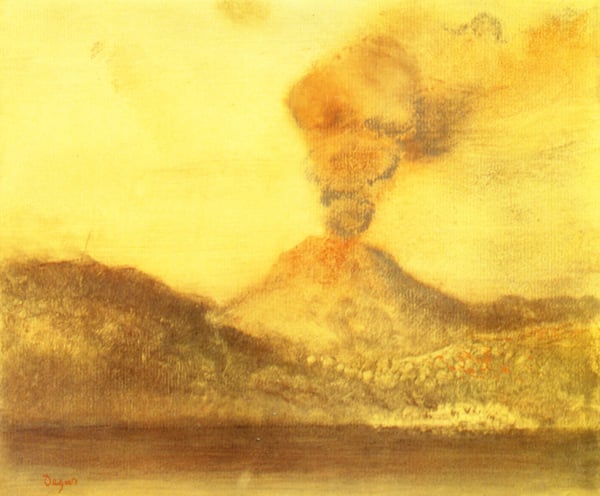
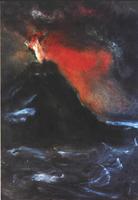
Edgar Degas’s Vesuvius is a striking example of Impressionist landscape painting, yet it stands apart from the movement’s typical emphasis on rural or urban scenes of modern life. While Degas is celebrated for his depictions of ballet dancers, racehorses, and intimate domestic interiors, this work reveals his engagement with natural forces and his mastery of atmospheric effects.
Significance within Impressionism and Degas’s Oeuvre:
-
A Rare Landscape by a Figure-Focused Artist: Degas is known primarily for his figural compositions, but Vesuvius demonstrates his ability to translate the Impressionist concern with light and fleeting sensation onto a dramatic natural subject. The choice of an active volcano—a symbol of raw, untamed nature—adds a sense of sublime power that contrasts with the more placid fields and gardens favored by his contemporaries.
-
Color and Atmosphere: The painting likely captures the volcanic glow and the hazy quality of the Neapolitan air. Degas uses short, broken brushstrokes (a hallmark of Impressionism) to depict the smoke, steam, and shifting light. Instead of outlining the volcano sharply, he dissolves the form into patches of color, emphasizing the transient effects of sunlight and the eruption’s vapor. This aligns with the Impressionist goal of recording a specific moment of perception.
-
Classical and Modern Synthesis: Degas trained under Ingres and admired classical composition, but in Vesuvius he applies this discipline to a rapidly executed, outdoor scene. The result is a balance between structural stability (the clear silhouette of the mountain) and the spontaneity of the brushwork—a tension that defines much of Degas’s work and sets him apart from other Impressionists.
-
Geographical and Historical Context: Vesuvius had erupted famously in 79 AD and remained an active, often-painted symbol of Italy’s volatile beauty. Degas visited Italy in the 1850s–60s, and this work reflects his fascination with the region’s dramatic landscape, as well as his willingness to tackle subjects beyond Parisian modernity. It shows that Impressionism was not confined to French street scenes but could also engage with the timeless grandeur of nature.
In summary, Vesuvius is significant because it expands the viewer’s understanding of Degas as a landscape painter, demonstrates the Impressionist technique applied to a sublime subject, and bridges classical artistic training with the movement’s revolutionary emphasis on light and atmosphere.
Museum / Gallery
Visuell ähnlich
20 Werke mit ähnlicher Komposition und Farbpalette
Vesuvius in Eruption
John Ruskin
Eruption of Vesuvius on June 20, 1794
Saverio della Gatta
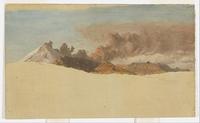
Cotopaxi seen from Ambato, Ecuador
Frederic Edwin Church
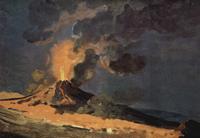
The Eruption of Vesuvius
Joseph Wright
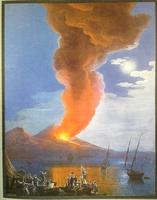
Eruption of Vesuvius on 1794
Saverio della Gatta
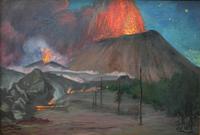
Erupción en apogeo
Dr. Atl
Illustration to Tell-Me-Why: Stories about Mother Nature by C.H. Claudy
Norman Rockwell
The Eruption of the Vesuv
Miklos Barabas
The Eruption of Vesuvius
Pierre-Jacques Volaire
Eruption
Pierre-Jacques-Antoine Volaire
L’éruption du Vésuve
Pierre-Jacques Volaire
L’éruption du Vésuve
Pierre-Jacques-Antoine Volaire
ERUPCIÓN DEL PARICUTÍN
Dr. Atl
Vesuvius in Eruption, with a View over the Islands in the Bay of Naples
Joseph Wright
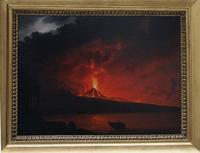
Eruption of the Mount Vesuvius at night
Pierre-Jacques Volaire
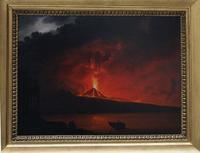
Eruption of the Mount Vesuvius
Pierre-Jacques-Antoine Volaire
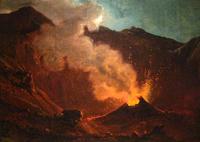
View of Vesuvius
Franz Ludwig Catel
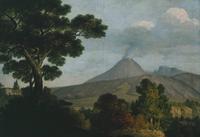
Mount Vesuvius from Torre dell’Annunziata near Naples
Thomas Jones
The volcano
Arnold Böcklin
Vesuvius from Portici
Joseph Wright