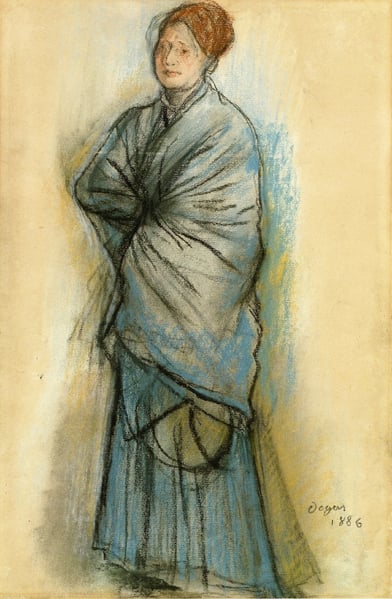
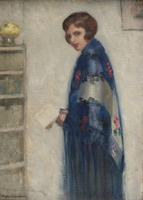
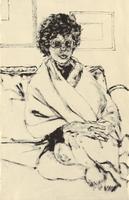
The significance of Edgar Degas’s Woman in Blue (Portrait of Mlle. Helene Rouart) lies in its embodiment of Impressionist principles through the sketch and study genre. As a preparatory or informal work, it reveals Degas’s process of capturing a fleeting, unposed moment—a hallmark of Impressionism’s break with academic finish. The loose, energetic handling of the blue tones suggests an emphasis on light and atmosphere over meticulous detail, while the portrait format places a contemporary individual at the center of modern life, another key Impressionist concern. This piece demonstrates how Degas, even in a study, prioritizes psychological immediacy and optical sensation, making it a compelling example of the movement’s radical approach to both technique and subject matter.