
Analisi esperta di Woman Ironing di Edgar Degas
Stile: Impressionism · Genere: genre painting
Expert Analysis of "Woman Ironing" by Edgar Degas
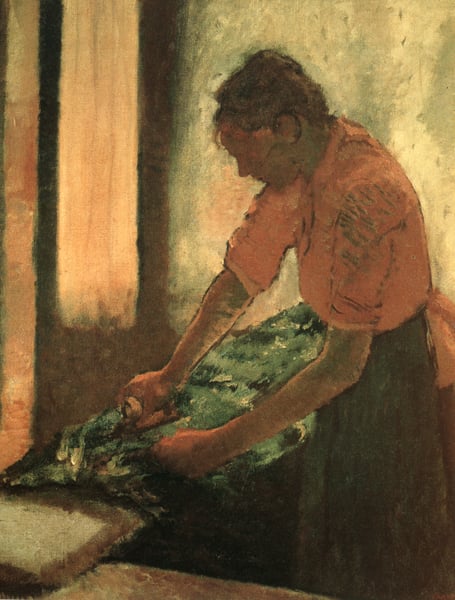
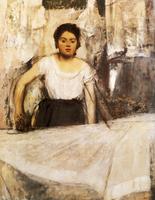
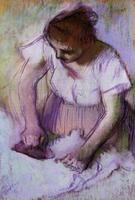
Edgar Degas’s Woman Ironing is a masterful example of Impressionist genre painting that captures the quiet dignity of everyday labor. While many Impressionists focused on leisure scenes—cafés, gardens, and ballet dancers—Degas frequently turned his attention to the unsung workers of Paris, particularly laundresses and milliners. This painting is significant for several reasons within the style and period:
-
Radical Subject Matter: By choosing a laundress—a mundane, physically demanding occupation—Degas broke from academic tradition, which favored historical, mythological, or idealized subjects. Instead, he embraced “modern life” as championed by the Impressionists, but with a gritty, unsentimental realism that distinguished him from contemporaries who often romanticized urban leisure.
-
Formal Innovation in Impressionism: Degas’s approach to Impressionism was unique. Rather than dissolving form in light and color, he retained strong linear contours and a sculptural sense of volume. Here, the woman’s slumped posture and repetitive motion are rendered with deliberate, unsparing draftsmanship—the tired curve of her back, the weight of the iron, the slight tension in her hands. This emphasis on line and structure, combined with a muted, earthy palette (typical of his laundress series), challenges the notion that Impressionism was solely about atmospheric color.
-
Fragmented, Candid Composition: The cropping of the figure—her face partially hidden, her body pressed close to the picture plane—suggests a snapshot glimpse into a private moment. This compositional device, influenced by photography and Japanese woodblock prints, aligns with the Impressionist desire to capture fleeting, unposed reality. Yet Degas imbues it with psychological depth: the viewer becomes an unseen observer of her weary routine.
-
Gender and Class Commentary: As a genre painting, Woman Ironing implicitly critiques the invisibility of working-class women in the modern city. The iron, a symbol of domestic drudgery, is both tool and burden. Degas’s neutral yet empathetic eye avoids both melodrama and idealization, instead presenting labor as a factual, absorbing subject worthy of artistic attention—a radical stance when such figures were typically relegated to background detail.
In sum, Woman Ironing exemplifies how Degas expanded the boundaries of Impressionism by merging its interest in contemporary life with a sober, almost Realist observation of the human condition. It remains a poignant testament to the power of genre painting to elevate the ordinary into the profound.
Museum / Gallery
Visivamente simili
20 opere con composizione e palette affini
Woman Ironing
Edgar Degas
Women ironing
Emmanuel Zairis
Interior
Janos Tornyai
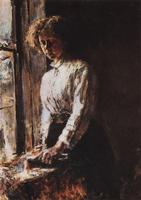
By the Window. Portrait of Olga Trubnikova
Valentin Serov
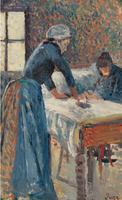
La Repasseuse
Maximilien Luce
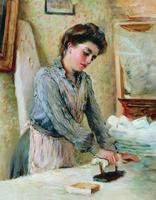
Presser
Konstantin Makovsky

Pesijättärienlaundresses
Albert Edelfelt
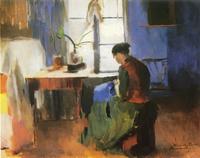
Sewing Woman
Harriet Backer
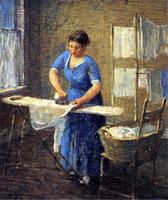
Woman Ironing
Robert Spencer
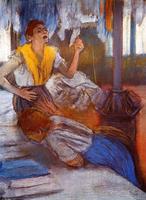
In a Laundry
Edgar Degas
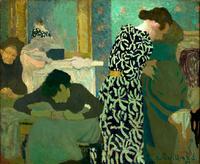
The Flowered Dress
Edouard Vuillard
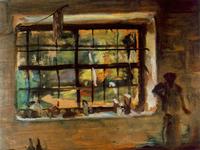
Window of the Atelier
Janos Tornyai
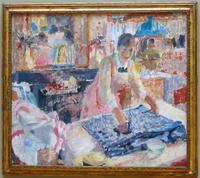
Woman Ironing
Rik Wouters
Woman Ironing
Edgar Degas
Making a Bunch of Flowers
Janos Tornyai
Interior of the work-table
Edouard Vuillard
Woman Ironing
Edgar Degas
At the Window
Rudolf Schweitzer-Cumpana
Girl in Blue
Francisc Sirato
The Maid
Henri Matisse