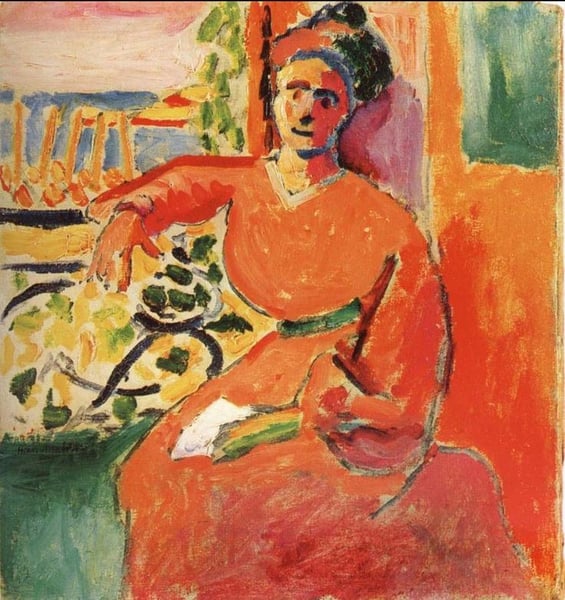
Expert analysis of Henri Matisse’s Woman at the Window
Style: Fauvism · Genre: portrait
Expert Analysis of "Woman at the Window" by Henri Matisse
As a defining work of Fauvism, Henri Matisse’s Woman at the Window exemplifies the movement’s revolutionary break from naturalistic representation. The portrait genre is here transformed through audacious color choices and simplified, expressive form. The composition juxtaposes the interior figure with the external view, a motif Matisse used to explore the dynamic tension between space and surface. Instead of modeling depth with shadow, he applies jarring, non-local hues—perhaps a green face or a pink sky—that convey emotional intensity and pure visual sensation. The window becomes a framing device that flattens the picture plane, merging interior and exterior into a unified, decorative whole. This work is significant because it demonstrates Fauvism’s core principle: that color, liberated from descriptive duty, could structure a painting solely on its own expressive power, paving the way for modern abstraction.
Visually similar
20 works with related composition and palette
Béla Czóbel Blue Dress Women
Bela Czobel
The Madras
Henri Matisse
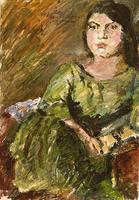
Wilhelmine in the Green Dress
Lovis Corinth
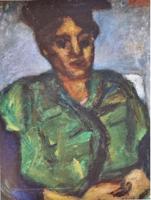
Czóbel Béla Zöldruhás Nő
Bela Czobel
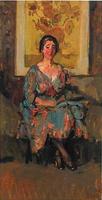
Seated Woman In Front Of Van Gogh's Sunflowers
Isaac Israels
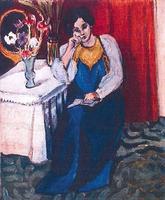
Reading Girl in White and Yellow
Henri Matisse
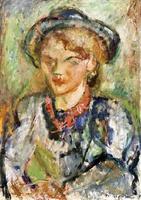
Modok Mária, Önarckép 1940
Modok Mária
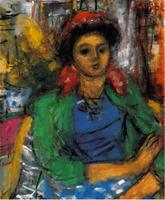
Czobel Béla Béue Dress Women
Bela Czobel
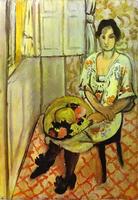
Sitting Woman
Henri Matisse
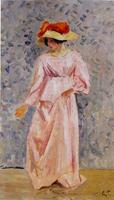
Portrait of Jeanne in a Pink Robe
Camille Pissarro
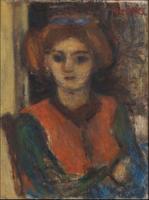
Alvó Lány
Bela Czobel
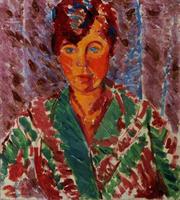
The Model
Matthew Smith
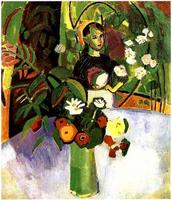
Jeanne with Flowers
Raoul Dufy
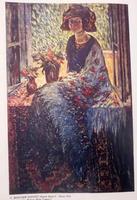
0
Vahram Gayfedjian
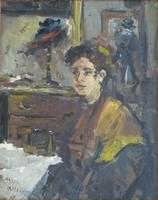
Woman in Interior
Isaac Israels
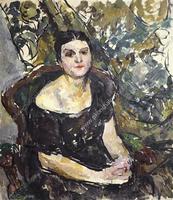
Female portrait
Pyotr Konchalovsky
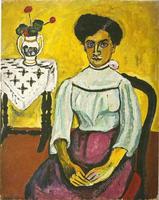
Spanish woman
Pyotr Konchalovsky
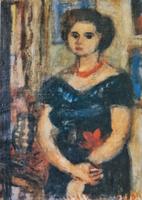
Czóbel Béla Kékruhás Nő
Bela Czobel
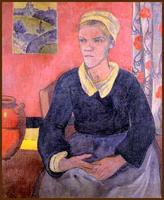
Louise (The Breton servant)
Paul Serusier
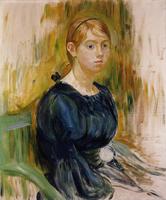
Jeannie Gobillard
Berthe Morisot