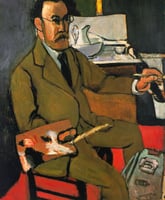

Análisis experto de Moroccan Landscape de Henri Matisse
Estilo: Fauvism · Género: landscape
Artwork Analysis: Moroccan Landscape (c. 1912) by Henri Matisse
Style: Fauvism | Genre: Landscape
Significance within Fauvism
Henri Matisse’s Moroccan Landscape exemplifies the radical departure from naturalistic representation that defines Fauvism. Painted during his transformative 1912–1913 travels to Tangier, the work captures the intense, blinding light of North Africa through a daring use of pure, unmixed color. The landscape is reduced to essential planes: a vivid pink or orange foreground, a string of green cypress trees, and a sky washed in cobalt blue. These hues do not mimic nature but instead convey the raw sensory experience of the Moroccan sun—a hallmark of Fauvist philosophy, where color becomes the primary vehicle for emotion and structure.
Key Features & Innovations
- Color as form: Matisse abandons local color; the earth is not brown but saturated with pink and terracotta, while shadows are rendered as deep purples or blues. This arbitrary yet harmonious palette creates a rhythmic, almost abstract composition that prioritizes visual intensity over descriptive accuracy.
- Simplified brushwork: Broad, flat strokes and a lack of fine detail push the scene toward two-dimensional pattern, reflecting Matisse’s growing interest in decorative art and the influence of Islamic textile designs he encountered in Morocco.
- Cultural fusion: The painting bridges European avant-garde techniques with the visual vocabulary of the Maghreb. The flattened perspective and repeated verticals (cypresses, minaret-like forms) evoke a sense of timeless, sacred space, anticipating his later cut-out works.
Legacy
Moroccan Landscape is significant because it marks a pivotal moment in Matisse’s evolution from pure Fauvism toward a more structured, meditative style. It demonstrates how Fauvism—often dismissed as mere color chaos—could be harnessed to express profound spatial and emotional truths, laying groundwork for subsequent movements like Expressionism and Color Field painting. This work remains a testament to Matisse’s belief that “color was not a means of transcribing nature, but a means of intensifying reality.”
Género
Estilo
Visualmente similares
20 obras con composición y paleta relacionadas
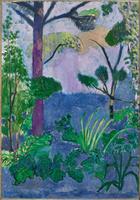
Acanthus (Moroccan Landscape)
Henri Matisse
Waldlandschaft
Otto Mueller
Landschaft Iii
Otto Mueller
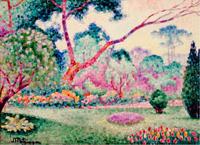
Parc Monceau
Jean Metzinger
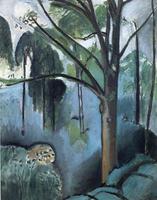
Trivaux Pond
Henri Matisse
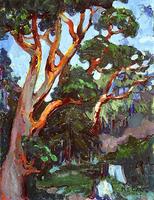
Arbutus Tree
Emily Carr
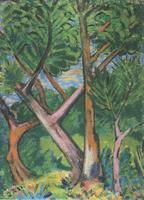
Waldlandschaft
Otto Mueller
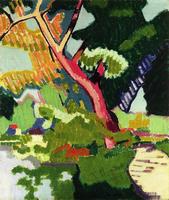
Landscape of a waterway
Auguste Herbin
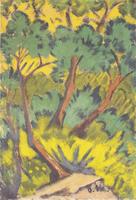
Waldstück Mit Stein Und Gebüsch
Otto Mueller
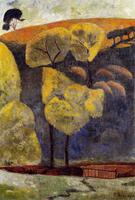
The Blue Valley
Paul Serusier
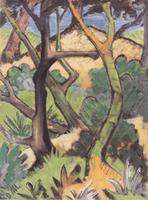
Abendlandschaft
Otto Mueller
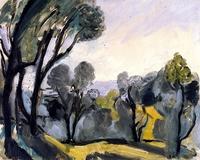
Landscape with Olive Trees
Henri Matisse
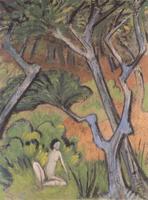
Waldlandschaft Mit Akt
Otto Mueller
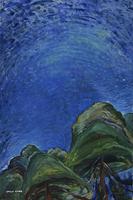
Above the Trees
Emily Carr
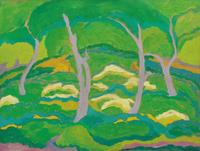
Landscape with Trees
Janos Mattis-Teutsch
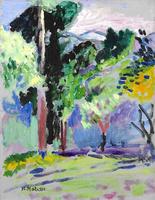
Paysage À Collioure
Henri Matisse
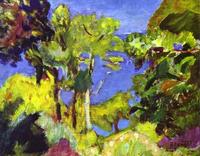
Landscape of Cote d Azur
Pierre Bonnard
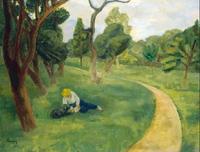
Berény Róbert, Parkban 1931
Berény Róbert
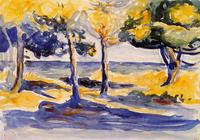
Trees by the Sea
Henri-Edmond Cross
Pine Tree
Konstantinos Parthenis