Analisi esperta di The Three O'Clock Sitting di Henri Matisse
Stile: Expressionism · Genere: genre painting
Expert Analysis: "The Three O’Clock Sitting" by Henri Matisse
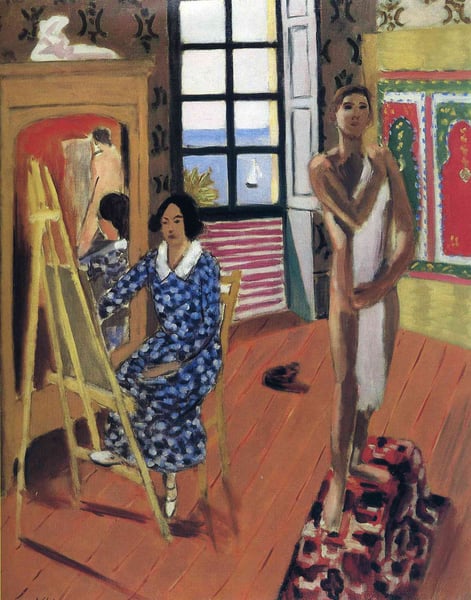
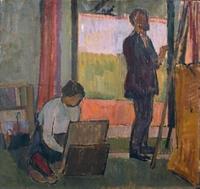
Although Henri Matisse is most commonly aligned with Fauvism, the supplied categorization of this work as Expressionist is revealing. In "The Three O’Clock Sitting," Matisse harnesses the core Expressionist drive—to convey inner emotional states through distortion and heightened color—while grounding the scene in the everyday realm of genre painting.
Subject and Genre Convention:
The painting depicts a domestic or studio moment at three o’clock, likely a model posing for an artist. Genre painting traditionally chronicles slices of ordinary life, but here Matisse transforms a quiet, routine sitting into a charged psychological space. The clock’s precision (three o’clock) suggests both the passage of time and a ritual of creative labor, making the mundane monumental.
Expressionist Innovations:
Matisse abandons naturalistic color and perspective. The figure and interior are rendered in bold, non-descriptive hues—perhaps acid greens or deep violets—that pulse with emotional intensity. Contours may be exaggerated, flattening the space and pressing the figure toward the picture plane. This flattening and chromatic dissonance evoke the inner tension of the sitter or the artist’s own restless vision, a hallmark of Expressionist practice.
Significance within the Style:
While Matisse’s Fauve work is often celebrated as a precursor to Expressionism, “The Three O’Clock Sitting” demonstrates his direct engagement with Expressionist principles: subjective truth over objective record, and the use of pure color to dramatize a seemingly banal moment. It bridges the gap between the decorative joy of earlier Fauve paintings and the anxious, introspective mood of German Expressionists like Kirchner.
In essence, this work is significant because it shows Matisse applying Expressionism’s emotional urgency to the quiet theater of the studio, proving that even a routine “sitting” can become a vessel for profound artistic expression.
Genere
Stile
Visivamente simili
20 opere con composizione e palette affini
The Three O'Clock Sitting
Henri Matisse
The studio on Seguier street
Raoul Dufy
The Morning Session
Henri Matisse
Czene Béla, Akt 1993
Czene Béla
Studio
Benny Andrews
Painter with Model
Istvan Ilosvai Varga
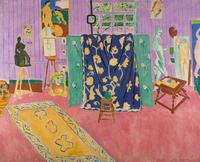
The Pink Studio
Henri Matisse
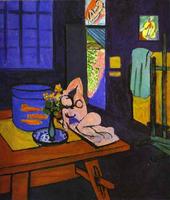
Red Fish in Interior
Henri Matisse
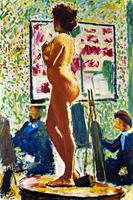
Life Class at the École des Beaux-Arts (Fauvist Nude)
Albert Marquet
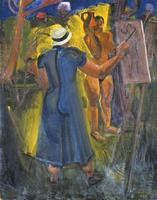
Woman Painter
Istvan Ilosvai Varga
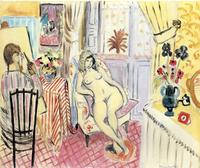
The Artist and his model
Henri Matisse
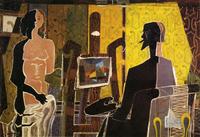
The Painter and His Model
Georges Braque
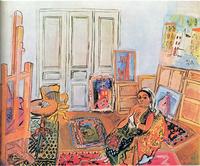
Indian Model in the Studio at l'impasse Guelman
Raoul Dufy
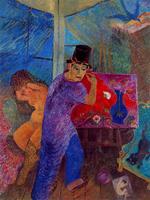
Untitled
Antonietta Raphael
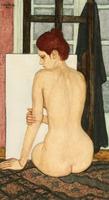
Czene Béla, Műteremben 1975
Czene Béla
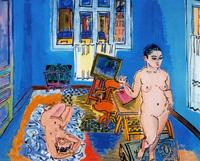
The Two Models
Raoul Dufy
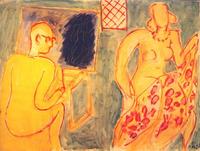
The Painting Session
Henri Matisse
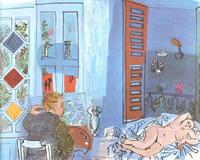
The Artist and His Model in the Studio at Le Havre
Raoul Dufy
Frederick and Jessie Etchells Painting
Vanessa Bell
The three graces
Rafael Zabaleta