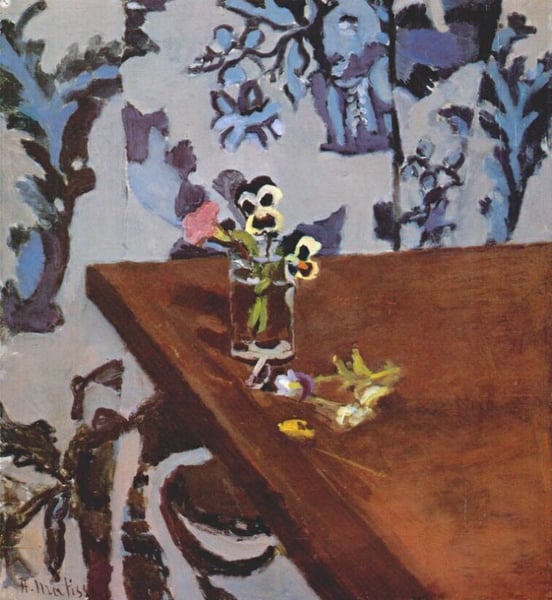
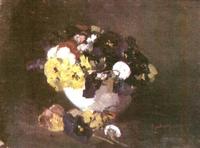
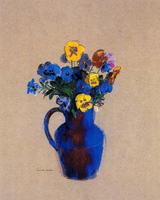
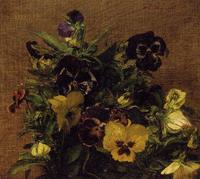
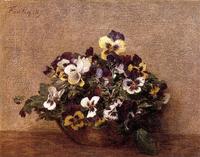
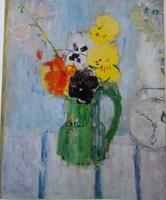
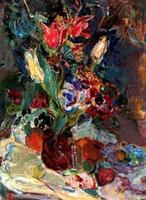
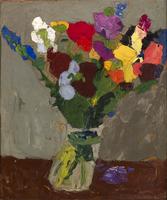
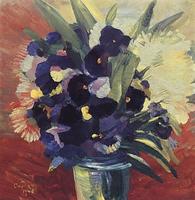
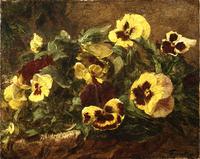
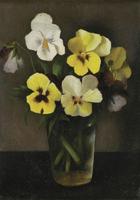
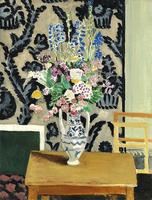
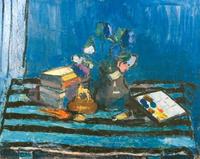
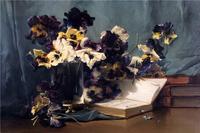
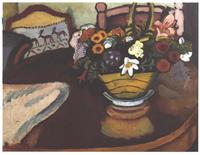
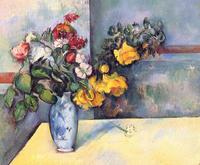
As a still life from Henri Matisse’s Post-Impressionist period, Pansies on a Table demonstrates the artist’s shift away from naturalistic representation toward a more personal, expressive use of color and form. Although the work predates his full embrace of Fauvism, it already exhibits the flattened perspective and decorative arrangement that would define his later style. The choice of ordinary flowers and a simple tabletop allows Matisse to focus on compositional balance and chromatic harmony—central concerns of Post-Impressionism. This piece is significant as an early example of Matisse’s deliberate departure from Impressionist spontaneity, signaling his move toward a more structured, emotionally resonant visual language that would influence modern still life painting.