Analisi esperta di Papercut di Henri Matisse
Stile: Abstract Expressionism · Genere: abstract
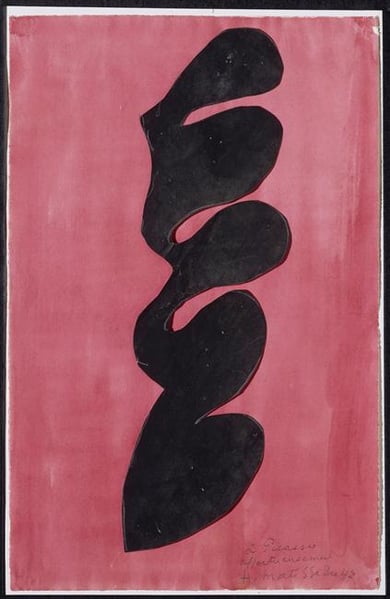
Based solely on the provided structured facts, Henri Matisse’s "Papercut" is classified within the style of Abstract Expressionism and the genre of abstract. Its significance within this style/period can be analyzed as follows:
-
Emphasis on Pure Abstraction: As an abstract work, "Papercut" strips away representational subject matter to focus on the fundamental elements of art—color, line, and form. This aligns with Abstract Expressionism’s goal of conveying emotion and meaning through non-objective composition.
-
Integration of Process and Gesture: Although Matisse is historically known for his cut-out technique, here the "papercut" method itself becomes a direct, physical act of creation. In the context of Abstract Expressionism, this process-driven approach mirrors the action painting of artists like Jackson Pollock, where the artist’s gesture is inseparable from the final piece. The cut lines and layered shapes simulate a spontaneous, visceral mark-making, imbuing the work with a sense of energetic decision-making.
-
Reduction to Essential Shapes: Abstract Expressionism often sought to tap into universal or subconscious impulses through simplified forms. "Papercut" achieves this by reducing complex imagery to pure, organic silhouettes. The stark contrast between positive and negative space forces the viewer to engage with the work’s materiality and rhythm, making it a significant example of how abstraction can achieve emotional directness.
-
Chromatic and Spatial Innovation: While the fact set does not specify colors, the papercut technique inherently relies on bold, clear hues and flat planes—characteristics that Abstract Expressionism adopted from earlier modern movements. The interplay of cutout shapes creates a dynamic tension on the picture plane, echoing the movement’s interest in allover composition and the flattening of pictorial depth.
In summary, within the framework of Abstract Expressionism, Matisse’s "Papercut" is significant for its radical commitment to abstraction, its celebration of the creative gesture through cutting, and its ability to generate profound visual impact from seemingly simple means. It exemplifies how the style’s core principles—spontaneity, reduction, and emotional resonance—can be explored through nontraditional, tactile methods.
Museum / Gallery
Visivamente simili
20 opere con composizione e palette affini
Red Boat
Robert Goodnough
Composition Tight Curves. 25
Carl Buchheister
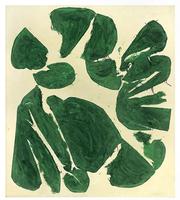
Meun
Simon Hantai
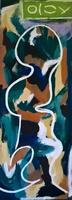
They Took My Love Away
Paulo Fontes
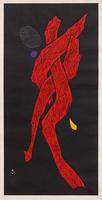
Poem 71-90, Woman
Maki Haku
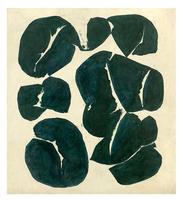
Meun
Simon Hantai
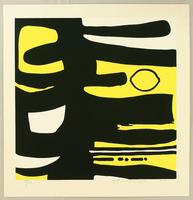
Lemon
Funasaka Yoshisuke
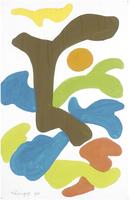
Le premier jour
Charles Lapicque
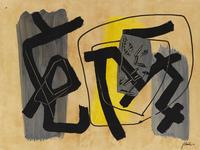
Schwarz vor Grau und Gelb
Fritz Winter
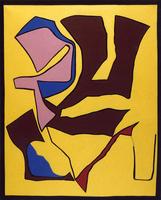
Ajaccio I
Richard Mortensen
Call It Winter
Will Barnet
Untitled
Marcel Barbeau
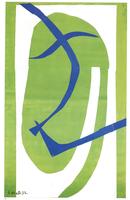
Japanese Mask
Henri Matisse
C9
Joaquim Rodrigo
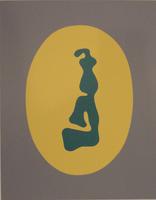
Sun
Jean Arp
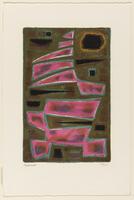
Twilight
Alfred Manessier
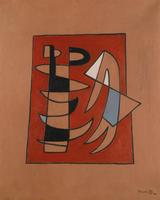
Tension D'Images
Alberto Magnelli
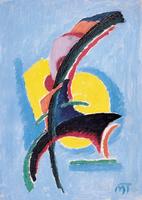
Composition
Janos Mattis-Teutsch
Dux et Comes IV
Edward Wadsworth
Les adieux
Joan Miro