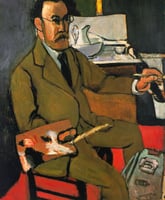
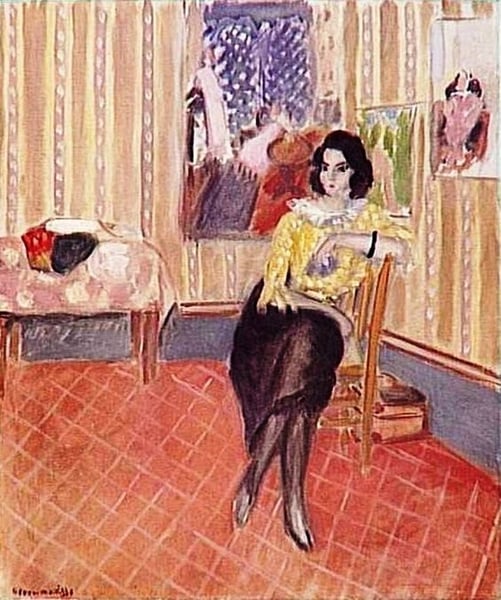
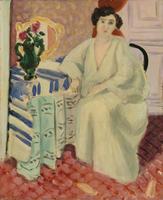
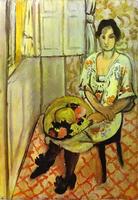
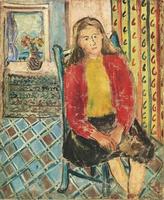
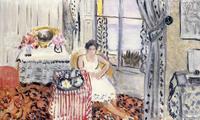
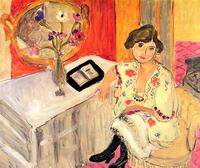
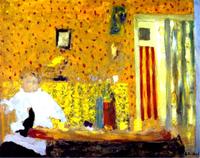
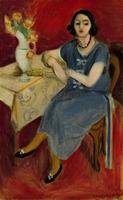
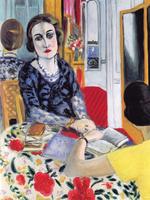
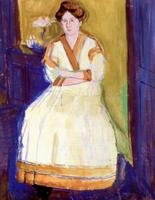
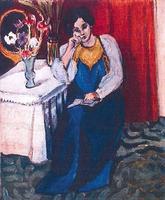
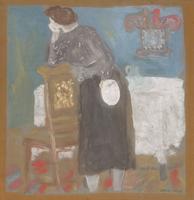
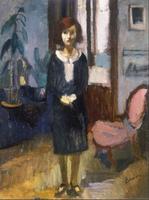
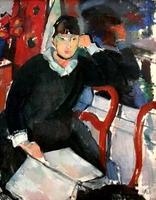
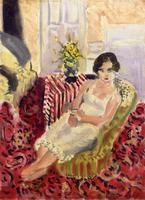
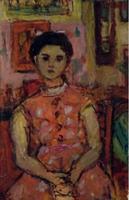
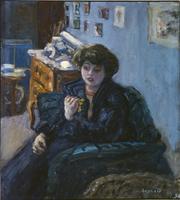
This portrait, executed in a Post-Impressionist idiom, is significant for how Henri Matisse begins to push beyond the naturalistic depiction of his subject toward a more expressive, color-driven approach—a key step that would soon lead him to Fauvism.
The work’s importance lies in its balance between the recognizable features of the artist’s daughter and a deliberate flattening of form. Matisse simplifies volumes, emphasizes outline, and applies color in broad, unmodulated areas, allowing the emotional resonance of the sitter to emerge through hue and composition rather than through meticulous shading or anatomical precision.
As a Post-Impressionist portrait, it reflects the movement's broader interest in subjective vision and formal experimentation—Matisse prioritizes the painter’s personal response over objective likeness. The intimate subject (his own child) further underscores the artist’s turn toward domestic life as a source of modernist innovation, prefiguring the radical color choices and gestural freedom of his Fauvist works just a few years later.