Expert analysis of Henri Matisse’s The Dance
Style: Expressionism · Genre: genre painting
Expert Analysis: The Dance (Henri Matisse)
The Dance stands as a landmark of early 20th‑century Expressionism, a movement that prioritized emotional intensity and subjective experience over naturalistic representation. Matisse’s work famously achieves this through radical simplification and raw, uninhibited color—hallmarks that define its significance within the Expressionist canon.
Composition and Movement
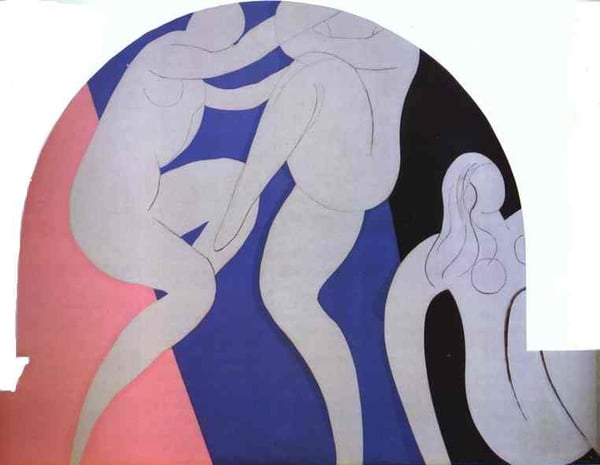
The painting depicts five nudes performing a frenzied, circular dance against a stark background of deep blue, green, and red. Figures are reduced to fluid, looping contours; their bodies twist and arch with primal energy. The rhythm is relentless: hands clasp, feet stamp, and the entire group seems to spin outward from an unseen center. This dynamic composition breaks with traditional, static genre painting—instead of capturing a quiet domestic scene, Matisse distills dance into its purest, most visceral expression.
Expressive Color Palette
Here, color is not descriptive but emotive. The vibrant cinnabar red of the dancers’ bodies pulses with life and passion, contrasting sharply with the cool, flat cobalt sky and emerald ground. These hues are deliberately unnatural, chosen to heighten the sense of ecstatic release. In the context of Expressionism, Matisse’s palette liberates color from its representational role, making it a direct conduit for feeling. This approach—bold and almost aggressive—would influence generations of artists seeking to convey inner states through pure chromatic force.
Significance in Expressionist Genre Painting
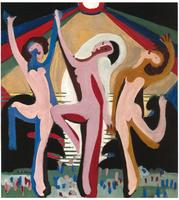
Though genre painting traditionally records everyday activities, Matisse transforms it into a vehicle for universal human experience. The Dance is not about a specific social event; it is about the timeless, communal euphoria of movement and connection. By stripping away details of setting, costume, and narrative, Matisse achieves a kind of mythic simplicity. The work’s raw energy and emotional directness align it with the Expressionist goal of tapping into primal, subconscious impulses—echoing the contemporaneous interests of artists like Ernst Ludwig Kirchner, yet pushing toward a more lyrical, joyful form of expression.
In sum, The Dance is significant because it redefines what a genre scene can be: no longer a window onto ordinary life, but a world of pure sensation, where form and color fuse into an ecstatic Expressionist statement.
Museum / Gallery
Genre
Style
Visually similar
20 works with related composition and palette
The Dance
Henri Matisse
The Dance
Henri Matisse
Composition III
Nikos Nikolaou
Music
Dorrit Black

Figure
Nikos Nikolaou
Colourful Dance
Ernst Ludwig Kirchner
Blue Nude
Henri Matisse
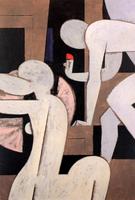
Erotic
Yiannis Moralis
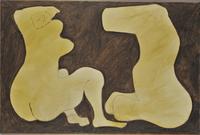
Composition IIII
Nikos Nikolaou
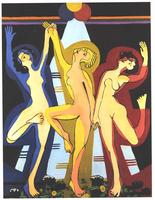
Colourful Dance
Ernst Ludwig Kirchner
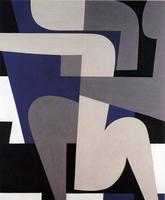
Erotic
Yiannis Moralis
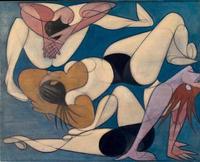
Acrobats
Jose de Almada-Negreiros
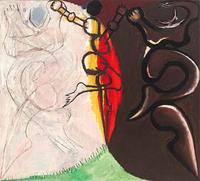
Dance IV
Frank Lobdell
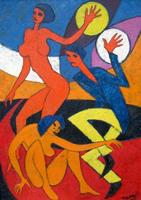
Dancers
Endre Bartos
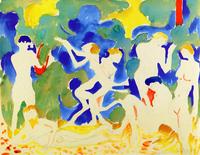
Music
Andre Derain
Acrobats in gray
Fernand Leger
Composition
Nikos Nikolaou
Satirical Composition ('The Dance' by Matisse)
Salvador Dali
Two Nude Female Figures (Seated and Bending)
Olexandr Archipenko
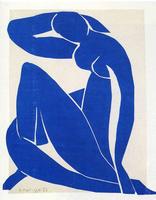
Blue Nude II
Henri Matisse