Analisi esperta di The Yellow Dress di Henri Matisse
Stile: Post-Impressionism · Genere: portrait
Analysis of "The Yellow Dress" by Henri Matisse
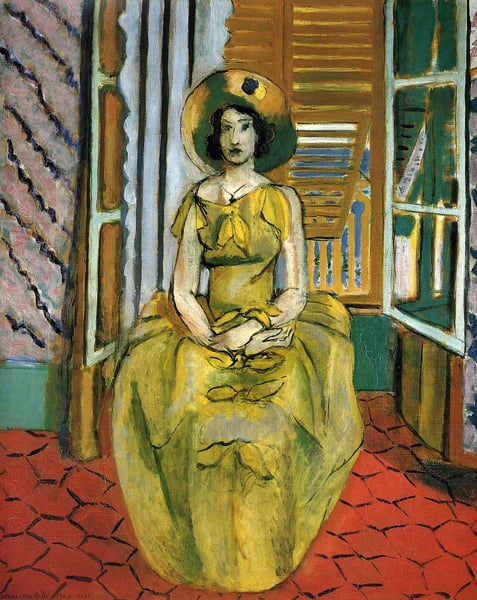
As a Post-Impressionist portrait, Henri Matisse’s The Yellow Dress exemplifies the movement’s radical shift from naturalistic representation toward expressive color and flattened form. The painting’s significance lies in Matisse’s deliberate use of a single, intensely vibrant yellow for the dress—a choice that subordinates realistic modeling to emotional and decorative impact. By simplifying the figure’s contours and reducing shading, the artist prioritizes the sensory experience of color over descriptive accuracy, a hallmark of his evolving Fauvist sensibility (which emerged within late Post-Impressionism). This work stands as a key transitional piece, demonstrating how portraiture could be reimagined as a vehicle for pure visual harmony and psychological resonance, rather than mere likeness. The yellow not only anchors the composition but also projects warmth and vitality, transforming an ordinary subject into a meditation on the power of hue.
Visivamente simili
20 opere con composizione e palette affini
Sitting Woman
Henri Matisse
Mathilde Schoenberg II
Richard Gerstl
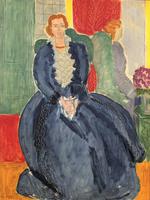
Blue Dress Reflected in a Mirror
Henri Matisse
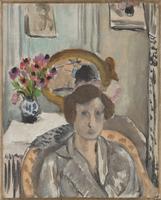
Woman with Anemones
Henri Matisse
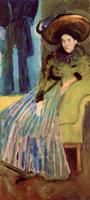
Seated Woman in green dress
Richard Gerstl
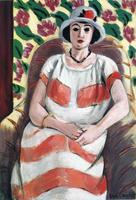
Young woman in Pink
Henri Matisse
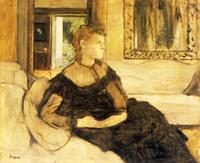
Madame Gobillard, Yves Morisot
Edgar Degas
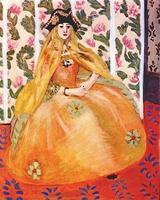
The Venetian
Henri Matisse
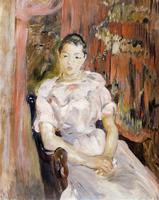
Young Girl Resting
Berthe Morisot
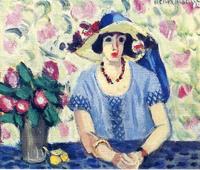
Untitled
Henri Matisse
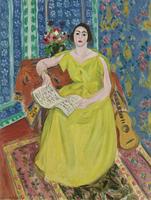
The Woman In Wellow
Henri Matisse
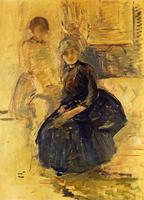
Self-Portrait with Julie (study)
Berthe Morisot
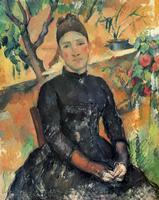
Madame Cezanne in the Greenhouse
Paul Cezanne
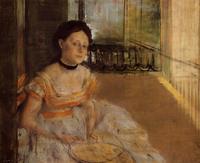
Woman Seated on a Balcony
Edgar Degas
Paris. Innkeeper.
Pyotr Konchalovsky
Fernanda de Castro
Anita Malfatti
Lady in Pink
Frederick Carl Frieseke
Portrait of Gertrud Muller
Ferdinand Hodler
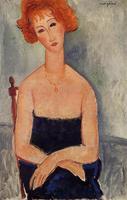
Redheaded woman wearing a pendant
Amedeo Modigliani
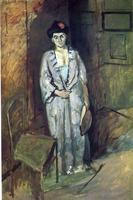
The Japanese Lady
Henri Matisse