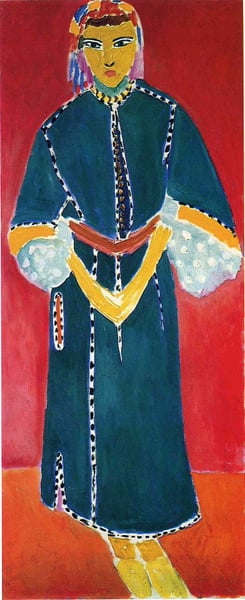
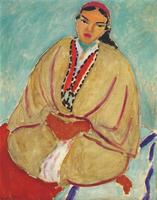
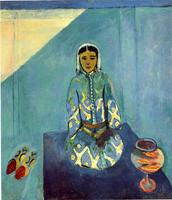
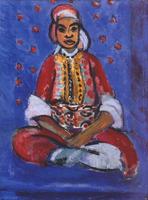
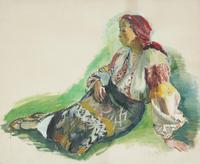
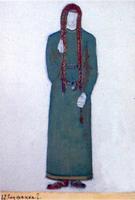
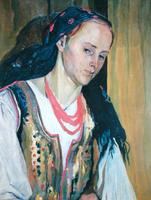
“Zorah Standing” is a significant work within Henri Matisse’s oeuvre, merging two critical stylistic currents: Expressionism and Orientalism. As a portrait, the piece exemplifies Matisse’s departure from naturalistic representation in favor of emotionally charged color and simplified form—a hallmark of Expressionism. Simultaneously, its Orientalist lens reflects the artist’s fascination with North African culture, a recurring theme in his early 20th‑century output. The subject, Zorah, likely embodies Matisse’s interest in exoticized figures as vehicles for exploring vibrant palettes and flattened空间的composition. This fusion of inward emotion (Expressionism) and outward cultural fascination (Orientalism) underscores Matisse’s role in pushing portraiture beyond mere likeness toward a synthesis of psychological mood and decorative surface. The work thus stands as a condensed example of how Matisse used non‑Western motifs to liberate color from descriptive function, a key contribution to modern portraiture.