Экспертный разбор работы «A Dedication to Bacchus» художника Sir Lawrence Alma-Tadema
Стиль: Romanticism · Жанр: mythological painting
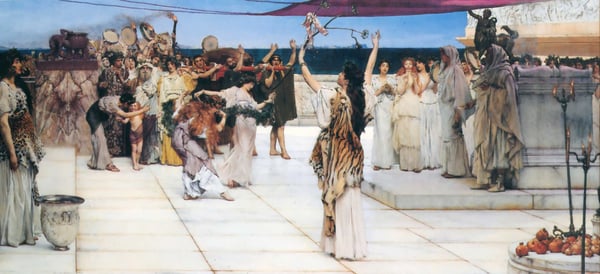
Expert Analysis of A Dedication to Bacchus by Sir Lawrence Alma-Tadema
Within the framework of Romanticism—a movement that prized emotional intensity, the exotic, and a nostalgic reverence for the past—Alma-Tadema’s A Dedication to Bacchus stands as a distinctive bridge between Romantic sensibility and meticulous archaeological precision. Though often aligned with Neoclassicism, Alma-Tadema injects Romanticism’s hallmark emotional warmth and sensual immediacy into a mythological scene, elevating it beyond mere historical reconstruction.
The work’s significance lies in its fusion of two seemingly opposing impulses: the Romantic yearning for transcendence and the Victorian fascination with factual accuracy. Alma-Tadema renders the ancient Bacchic rite with the same painstaking attention to marble textures, floral details, and architectural accuracy that defined his oeuvre, yet the scene is suffused with a palpable atmosphere of ecstatic abandon—a key Romantic trope. The figures’ languid poses and the golden light evoke not just a mythological ceremony but an idealized, emotional escape into a world of sensuous pleasure.
In the context of Romantic mythological painting, A Dedication to Bacchus redefines the genre by making the ancient world feel intimate and accessible. Rather than depicting gods in heroic grandeur, Alma-Tadema humanizes the divine, focusing on the devotees’ personal devotion and the ritual’s psychological charge. This approach aligned Romanticism’s emphasis on individual emotional experience with a scholarly revival of antiquity, making the work a landmark in the later 19th-century classicist revival. It demonstrates that Romanticism, even at its most historically exacting, could still stir the soul through the timeless allure of myth.
Museum / Gallery
Визуально похожие
20 работ с близкой композицией и палитрой
Scene
Thomas Ralph Spence
The Women of Amphissa
Sir Lawrence Alma-Tadema
Phryne on the Poseidon's celebration in Eleusis
Henryk Siemiradzki
A Reading from Homer
Sir Lawrence Alma-Tadema
Phryne at the Poseidonia in Eleusis
Henryk Siemiradzki
The Frigidarium
Sir Lawrence Alma-Tadema
The Vintage Festival
Sir Lawrence Alma-Tadema
Die Gartenlaube
Henri-Paul Motte
After the Audience
Sir Lawrence Alma-Tadema
The Triumph of Titus
Sir Lawrence Alma-Tadema
Phryne on the Poseidon's celebration in Eleusis (detail)
Henryk Siemiradzki
Queen Zenobia's Last Look Upon Palmyra
Herbert Gustave Schmalz (Herbert Carmichael)
Nero's Torches (Leading Light of Christianity)
Henryk Siemiradzki
A Kiss
Sir Lawrence Alma-Tadema
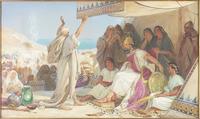
Elijah Before King Ahab
John Absolon
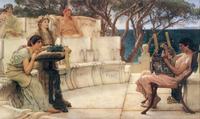
Sappho and Alcaeus
Sir Lawrence Alma-Tadema
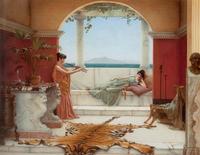
The Sweet Siesta of a Summer Day
John William Godward
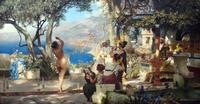
Dance Amongst Daggers
Henryk Siemiradzki
An Exedra
Sir Lawrence Alma-Tadema
Roma
Henryk Siemiradzki