Expertenanalyse zu Sir Lawrence Alma-Tademas The Massacre of the Monks of Tamond
Stil: Romanticism · Genre: history painting
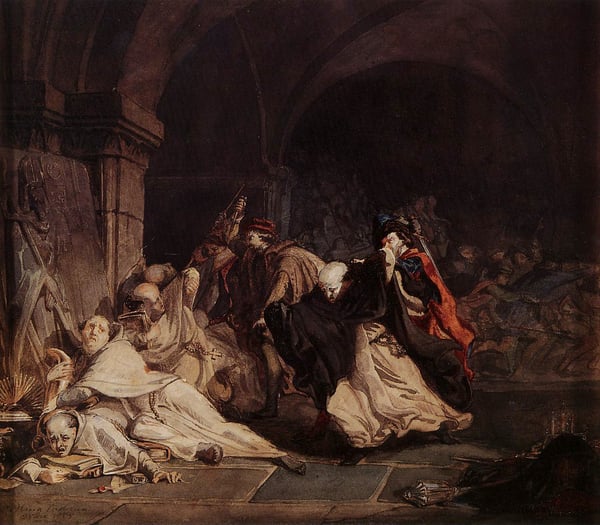
An expert analysis of The Massacre of the Monks of Tamond by Sir Lawrence Alma-Tadema must first acknowledge the striking tension between the artist’s signature classical serenity and the brutal historical drama demanded by Romanticism. Although Alma-Tadema is celebrated for his meticulously researched, sunlit scenes of ancient Greek and Roman domestic life, here he steps into the emotional intensity of Romantic history painting—a genre that prizes dramatic incident, moral conflict, and the sublime terror of human suffering.
Stylistic Significance within Romanticism: The work exemplifies the Romantic fascination with martyrdom and sacrifice, a common theme among artists like Delacroix or Géricault. Rather than depicting a calm, idealized past, Alma-Tadema presents a moment of visceral violence: monks falling under the swords of attackers, their robes tangled in desperate struggle. The composition likely thrusts the viewer into the midst of the chaos, forcing an empathetic confrontation with the brutality of religious persecution. Romanticism’s emphasis on emotional immediacy is heightened by Alma-Tadema’s technical precision—every fold of fabric, every gleam of metal is rendered with archaeological fidelity, yet the scene’s dark, tumultuous palette (far from his usual pastels) channels the Romantic sublime: horror wrapped in beauty.
Departure from the Artist’s Norm: What makes this work especially significant is its deviation from Alma-Tadema’s established identity. His reputation rests on harmonious, anecdotal scenes of leisure in marble halls—populated by languid figures and glowing Mediterranean light. The Massacre of the Monks of Tamond is a rare foray into medieval or contemporary religious violence (the title suggests an obscure event, possibly from the French Revolutionary or anti-clerical conflicts). This shift underscores the Romantic notion of the artist as a chronicler of history’s darkest moments, not merely a decorator of antiquity. It proves Alma-Tadema could command dramatic action and raw pathos, not just quiet stillness.
Historical Painting & Moral Gravity: As a history painting, the work carries a moral weight typical of the genre: it memorializes victims, condemns fanaticism, and stirs the viewer’s conscience. The Romantic era saw history painting as the highest form of art, tasked with teaching virtue through emotional identification. Here, the monks’ martyrdom is rendered with a solemnity that borders on sacred—their suffering becomes a testament to faith under siege. The specificity of “Tamond” (if a fictional or obscure location) invites the audience to reflect on all unseen atrocities, making the painting a universal cry against persecution.
In sum, The Massacre of the Monks of Tamond is significant for being Alma-Tadema’s unexpected bridge between the detached precision of Classicism and the fiery heart of Romanticism—a historical canvas where archaeological detail serves not nostalgia, but terror and compassion.
Museum / Gallery
Visuell ähnlich
20 Werke mit ähnlicher Komposition und Farbpalette
Woman Taken in Adultery
Gabriel Metsu
Christ in the Praetorium
Alexandre-Gabriel Decamps
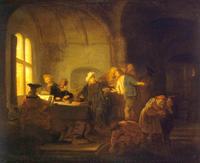
Parable of the Workers in the Vineyard
Salomon Koninck
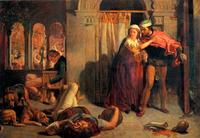
The Eve of St. Agnes
William Holman Hunt
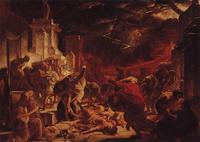
The Last Day of Pompeii
Karl Bryullov
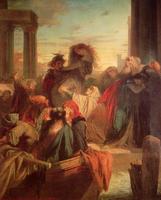
Abduction of the Young Venetian Woman by Cypriot Pirates
Gustave Moreau
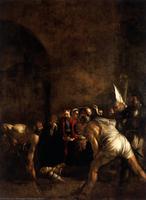
Enterro de Santa Lucia
Caravaggio
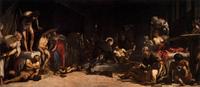
St Roch in the Hospital
Tintoretto
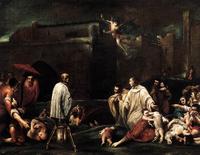
The Blessed Bernardo Tolomeo's Intercession for the End of the Plague in Siena
Giuseppe Maria Crespi
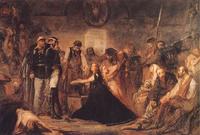
Polonia
Jan Matejko
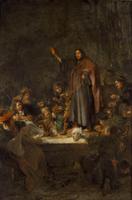
The Raising of Lazarus
Carel Fabritius
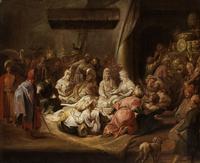
Audience at the Sultan's court
Jean Baptiste Vanmour
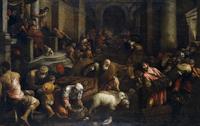
Expulsion of the Merchants from the Temple
Jacopo Bassano
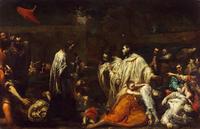
Bernard Tolomei and the Plague in Siena
Giuseppe Maria Crespi
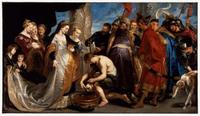
Head of Cyrus Brought to Queen Tomyris
Peter Paul Rubens
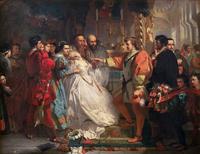
Claudio, Deceived by Don John, Accuses Hero
Marcus Stone
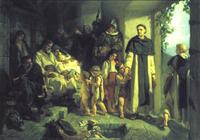
Counter-Reformation
Jaroslav Čermák
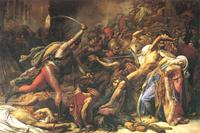
Revolt in Cairo (on) 21 October 1798
Anne-Louis Girodet
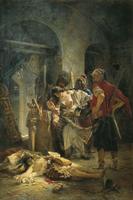
The Bulgarian Martyresses
Konstantin Makovsky
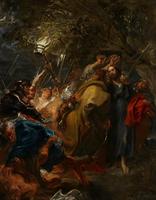
The Capture of Christ
Anthony van Dyck