Analisi esperta di After the battle di Kuzma Petrov-Vodkin
Stile: Symbolism · Genere: genre painting
Expert Analysis: After the Battle by Kuzma Petrov-Vodkin (Symbolism / Genre Painting)
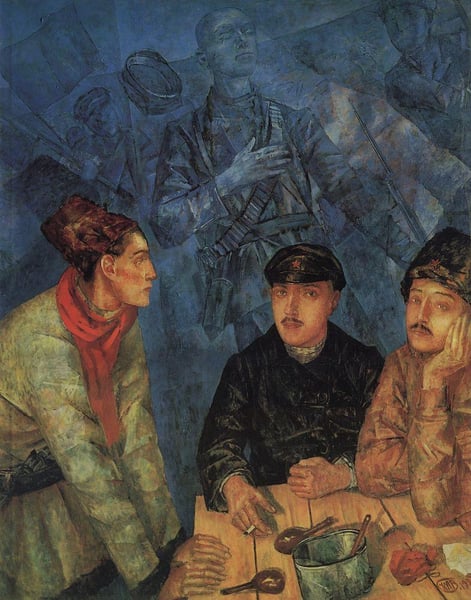
Kuzma Petrov-Vodkin’s After the Battle stands as a profound example of Symbolist genre painting, where the mundane aftermath of conflict is elevated into a timeless meditation on suffering, sacrifice, and human endurance.
Significance within Symbolism:
True to the Symbolist ethos, Petrov-Vodkin does not merely document a historical event; he transforms the scene into a universal allegory. The painting’s quiet, almost suspended atmosphere—often achieved through his distinctive “spherical perspective” and muted, earthy palette—invites contemplation beyond the literal narrative. The figures, likely wounded or grieving soldiers, are rendered not as individuals but as archetypes of loss and resilience, their poses and compositions echoing the solemnity of religious iconography. This fusion of everyday genre with metaphysical weight was central to Petrov-Vodkin’s mission: to give modern life the symbolic depth of traditional Russian icons and frescoes.
Innovation within Genre:
While genre painting typically captures slices of life, Petrov-Vodkin subverts its conventions by stripping the scene of anecdotal details. There is no explicit drama or heroic action; instead, the stillness and the emotional gravity of the “after” become the true subject. The work’s significance lies in how it bridges the personal and the collective: the battle recedes into a shared memory, leaving only the quiet, haunting presence of its survivors. This approach anticipates later existential and war-themed art, while remaining rooted in the spiritual preoccupations of Russian Symbolism.
In After the Battle, Petrov-Vodkin demonstrates that Symbolist painting can speak as powerfully through restraint as through grand gestures—making the ordinary aftermath of conflict a vessel for timeless, human truths.
Genere
Stile
Visivamente simili
20 opere con composizione e palette affini
Death of Commissar
Kuzma Petrov-Vodkin
Soldiers
Pyotr Konchalovsky
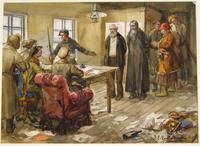
Questioning in the committee of poor
Ivan Vladimirov
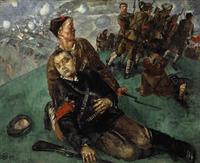
Death of Commissioner
Kuzma Petrov-Vodkin
Vaszary János, Katonák 1915
Vaszary János
Vaszary János, Katonák 1917
Vaszary János
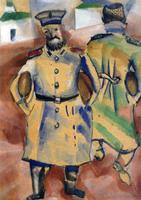
Soldiers with Bread
Marc Chagall
Return Возвращение - Zenkow
Zenkow, Semyon Nikolaevich
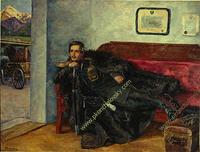
Lermontov
Pyotr Konchalovsky
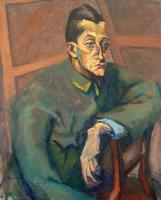
Portrait of Grósz Andor
Lajos Tihanyi
Students talk with the monk
Vasily Perov
Family
Tove Jansson
Moving party
Kuzma Petrov-Vodkin
Volunteers
Simeon Velkov
Misha, go out for a beer
Pyotr Konchalovsky
Mountainous march of armenian units
Martiros Sarian
Vaszary János, Katonák, 1915
Vaszary János
Scouts at Sevastopol
Vasily Perov
Hunter
Magnus Enckell
Dorobanțul
Nicolae Grigorescu