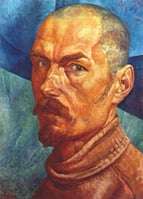
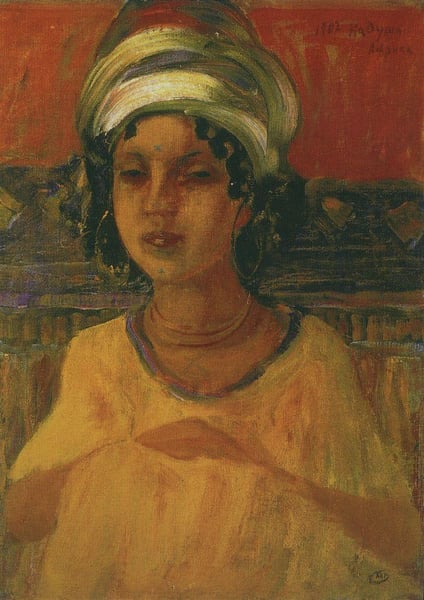
Analisi esperta di Kadusha di Kuzma Petrov-Vodkin
Stile: Post-Impressionism · Genere: portrait
Kuzma Petrov-Vodkin’s "Kadusha" stands as a compelling example of how Post-Impressionism was adapted in early 20th-century Russia, merging Western avant-garde principles with a distinctly Eastern Orthodox spiritual sensibility. While the facts provided limit us to style (Post-Impressionism) and genre (portrait), the painting’s significance lies in Petrov-Vodkin’s signature innovations—namely his “spherical perspective” and symbolic use of color—which transform a conventional portrait into a metaphysical icon.
Unlike the decorative or emotional excesses of some French Post-Impressionists, Petrov-Vodkin anchors his portraiture in a rigorous compositional geometry. The sitter, Kadusha (likely a diminutive of a Russian name, evoking peasant or ordinary origins), is treated with the monumentality of a Byzantine icon. The background is typically simplified, the figure’s form flattened yet sculptural, and the gaze directed outward with a calm, introspective intensity. This is typical of his mature style, where human form becomes a vessel for universal, often spiritual, themes.
What makes "Kadusha" significant is its fusion of modern pictorial language with Russian cultural memory. Petrov-Vodkin’s palette—often dominated by reds, blues, and ochres—carries symbolic weight: red for life and sacrifice, blue for transcendence or the divine. The portrait thus transcends mere likeness, inviting meditation on the subject’s inner life and the timeless dignity of the Russian folk. In this, Petrov-Vodkin aligns with the Symbolist strand of Post-Impressionism, but his stark, almost archaic plasticity looks forward to later Soviet realism while retaining a mystical intensity that resists ideological reduction.
Without further details on the specific sitter or date, we can still assert that "Kadusha" exemplifies Petrov-Vodkin’s mission to create a “grand style” rooted in national tradition yet open to modern spatial and chromatic experiments—a rare achievement that secures his place as a pivotal figure in Russian modernism.
Visivamente simili
20 opere con composizione e palette affini
Lorette
Henri Matisse
Bela Czobel Painter in the Backround
Bela Czobel
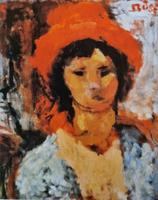
Bela Czobel Vöröskalapos Lány
Bela Czobel
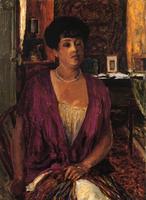
Madame Claude Anet
Pierre Bonnard
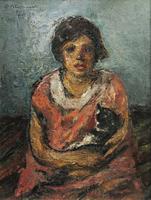
Girl With Cat
Gheorghe Petrascu
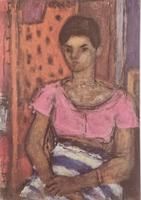
Girl in Pink Bluse
Bela Czobel
Young Girl Sitting
Bela Czobel
A Blond Wearing Earrings
Amedeo Modigliani
Selling
Jan Sluyters
Autoritratto
Bice Lazzari
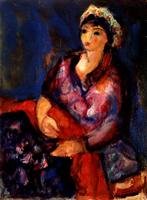
Oriental Woman
Alexander Bogen
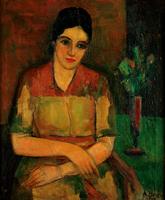
The Artist's Wife
Alexander Bogen
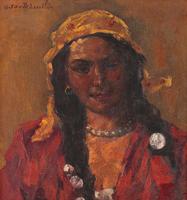
The Yellow Headscarf
Octav Bancila
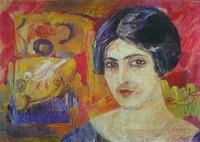
Brunette
Martiros Sarian
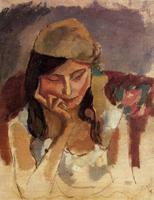
Lady Wearing a Turban
Jules Pascin
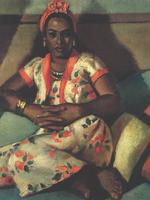
Nabweya
Mahmoud Saiid
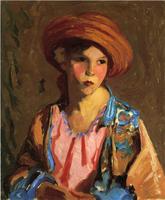
Mildred-O Hat
Robert Henri
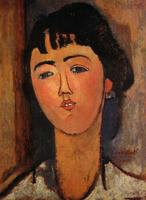
Portrait of a Woman
Amedeo Modigliani
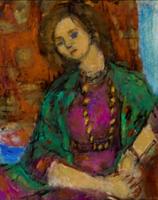
Czóbel Béla Mimi
Bela Czobel
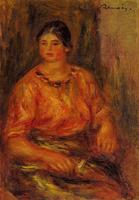
Woman in a Red Blouse
Pierre-Auguste Renoir