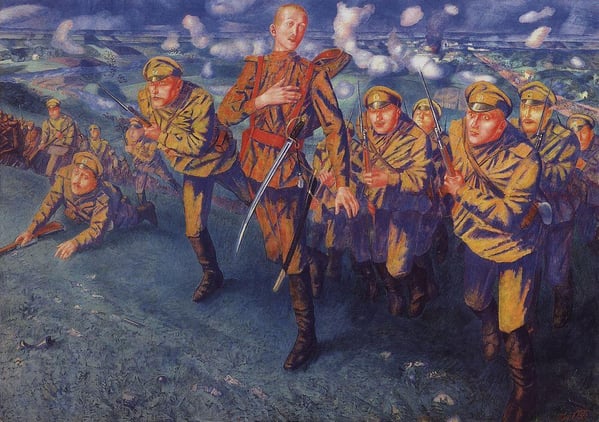
Kuzma Petrov-Vodkin sanatçısının On the Line of Fire eseri hakkında uzman analizi
Tarz: Symbolism · Tür: battle painting
"On the Line of Fire" (1916) by Kuzma Petrov-Vodkin is a pivotal work that redefines the battle painting genre through a Symbolist lens. Rather than depicting the chaos of combat, Petrov-Vodkin freezes a moment of tense expectancy—soldiers poised on a ridge, their bodies simplified into sculptural, almost icon-like forms. The striking use of a tri-color palette (red, blue, and earth tones) and his signature "spherical perspective" creates a cosmic, almost liturgical space, elevating the mundane horror of war into a metaphysical meditation on sacrifice and destiny. This fusion of traditional battle motifs with Symbolist spirituality makes the painting significant: it transforms the genre from narrative reportage into a timeless allegory of human faith and mortality, reflecting Petrov-Vodkin’s unique synthesis of Russian icon painting, modernist form, and psychological introspection.
Görsel olarak benzer
İlişkili kompozisyon ve renk paletine sahip 20 eser
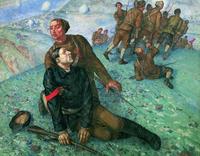
Death of Commissar
Kuzma Petrov-Vodkin
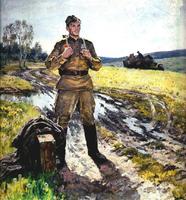
Peace Ahead
Victor Puzyrkov
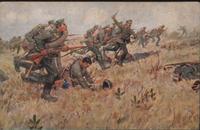
Counterattack
Ivan Vladimirov
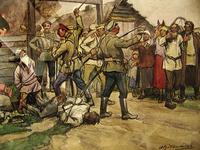
The shooting of peasants by White Cossacks
Ivan Vladimirov
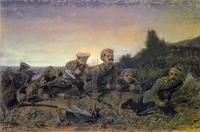
Scouts at Sevastopol
Vasily Perov
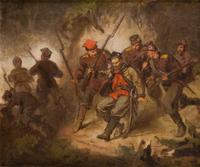
Scene from the January Uprising
Walery Eljasz Radzikowski
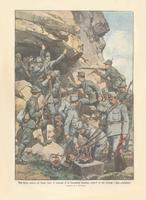
A Good Capture On The Black Mountain. The Command Of An Austrian Battalion Discovered In A Cave And Made Prisoner
Achille Beltrame
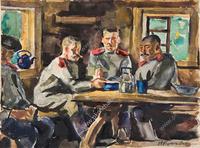
Soldiers
Pyotr Konchalovsky
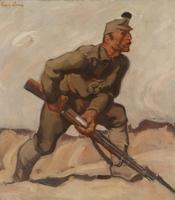
Kaiserschütze (dolomitenwacht)
Albin Egger-Lienz
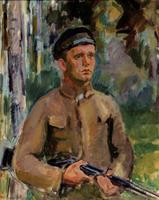
Hunter
Magnus Enckell
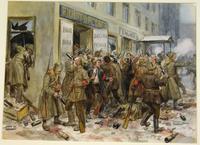
Pogrom of wine shop
Ivan Vladimirov
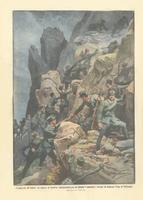
In competition with the Alpine troops, an infantry troop climbing up a difficult "gully" Surprisingly occupies Cima Di Falzarego
Achille Beltrame
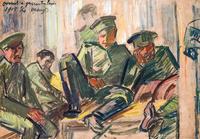
Vaszary János, Katonák 1917
Vaszary János
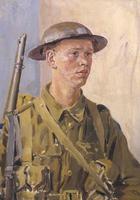
A Canadian Soldier
Augustus John
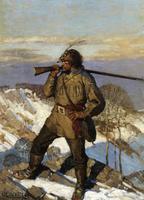
The Frontiersman Pupular Magazine cover Illustration
N.C. Wyeth
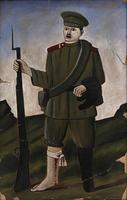
Wounded soldier (Part of diptych)
Niko Pirosmani
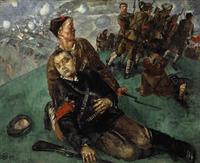
Death of Commissioner
Kuzma Petrov-Vodkin
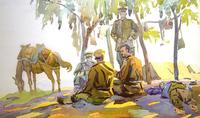
Untitled
Vladimir Dimitrov
Portrait of a Military Man
Viktor Shatalin
Farewell of Slav
Konstantin Vasilyev