Expert analysis of Paul Cezanne’s Flower Pots
Style: Post-Impressionism · Genre: still life
Expert Analysis: "Flower Pots" by Paul Cézanne
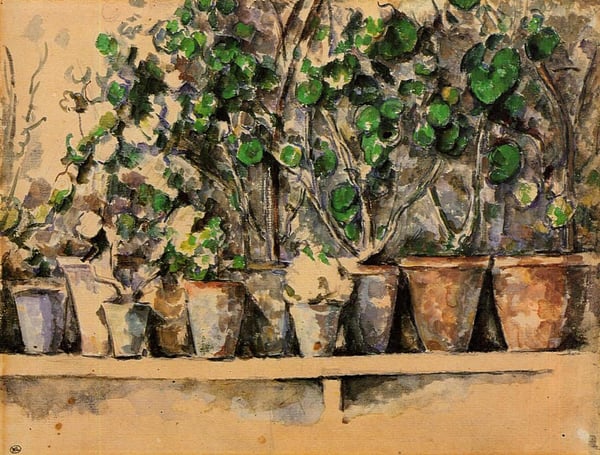
Paul Cézanne’s Flower Pots, painted during his mature period, is a quintessential work of Post-Impressionist still life that redefines the genre through structure, color, and spatial ambiguity. Although the composition is not described in the given facts, the artwork’s significance lies in how Cézanne’s mature style transforms an ordinary subject—flower pots—into a rigorous study of form and perception.
As a Post-Impressionist work, Flower Pots moves beyond the naturalistic aims of Impressionism. Cézanne abandons atmospheric effects in favor of a more deliberate, analytical approach. He treats the pots, leaves, and background not as optical impressions but as volumes built from overlapping patches of color. The still life genre, traditionally concerned with mimesis and symbolic arrangement, becomes for Cézanne a laboratory for exploring the underlying geometry of nature—cylinders, spheres, and cones. In his mature period, this method becomes especially pronounced: the paint is applied with small, parallel brushstrokes that articulate planes, while contours are repeated or broken, creating a tension between flatness and depth.
The significance of Flower Pots lies in its role as a bridge between 19th-century realism and 20th-century abstraction. Cézanne’s handling of space—slightly tipping the tabletop forward, making the pots appear to tilt—foreshadows the multiple viewpoints of Cubism. The work also demonstrates his belief that “the painter must give the image of a strong and intense nature, of a nature that is not in the least vague or diffuse.” Here, the ordinary flower pots achieve a monumental, almost architectural presence.
In the context of Cézanne’s oeuvre, Flower Pots exemplifies the mature period’s mastery: a still life stripped of anecdote, where every brushstroke contributes to a unified, meditative field of color and form. This painting is not merely a representation of plants in clay—it is a profound inquiry into how we see, how we structure reality, and how paint can embody both the tangible world and the artist’s inner vision. Such works laid the foundation for modern art, making Cézanne the “father of us all,” as Picasso and Matisse acknowledged.
Museum / Gallery
Visually similar
20 works with related composition and palette
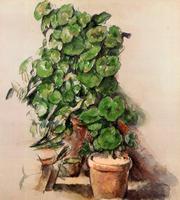
Pots of Geraniums
Paul Cezanne
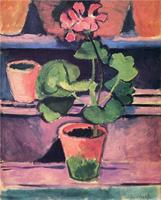
Pot of Geraniums
Henri Matisse
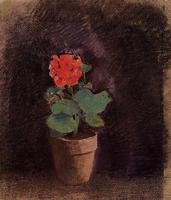
Geranium
Odilon Redon
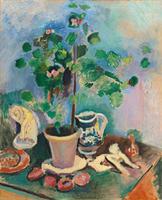
The Geranium
Henri Matisse
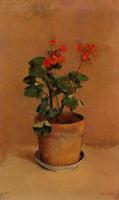
A Pot of Geraniums
Odilon Redon
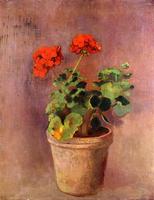
The Pot of Geraniums
Odilon Redon
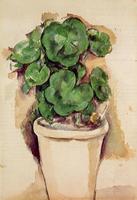
Pot of Geraniums
Paul Cezanne
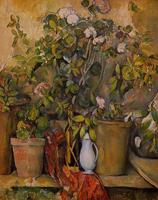
Potted Plants
Paul Cezanne
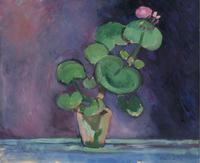
Geranium
Henri Matisse
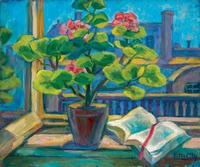
Sunlit Window in Szentendre
Kmetty János
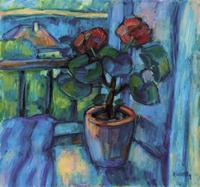
Geranium
Kmetty János
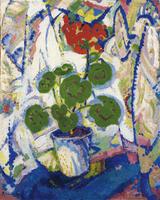
Still Life with Flowers
Mommie Schwarz
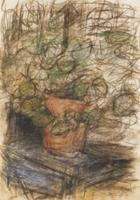
Bela Czobel Flower at the Window
Bela Czobel
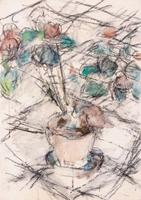
Czobel Still Life..
Bela Czobel
Geranium in Winter
Avigdor Arikha
Geraniums
Odilon Redon
Geranium
Vitaly Volkov
Capucines
Cricorps
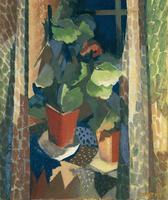
Geranium in Night Window
Karl Knaths
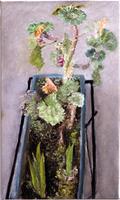
After Growth
Avigdor Arikha