Expertenanalyse zu Paul Cezannes Harlequin
Stil: Post-Impressionism · Genre: genre painting
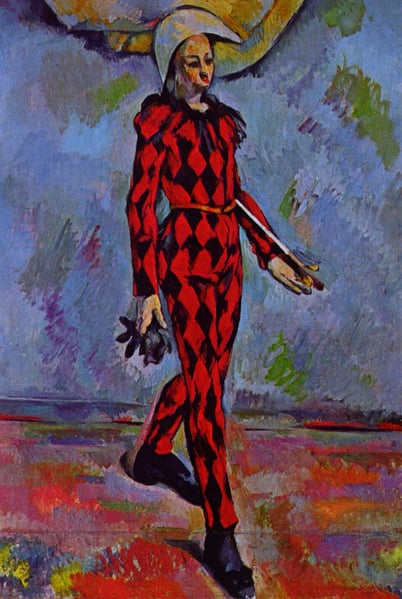
Paul Cezanne's Harlequin, from the artist's mature period, is a significant work within the Post-Impressionist style and the genre painting tradition. As a mature-period piece, it exemplifies Cezanne’s shift away from Impressionism's fleeting effects toward a more structured, enduring representation of form. The subject—a figure from the commedia dell’arte—is treated not as a simple narrative or theatrical portrait, but as a vehicle for formal exploration. Within the genre painting category, Harlequin elevates a seemingly everyday or costume-based scene into a study of geometric simplification and color modulation. The work’s significance lies in how Cezanne compresses space, uses layered brushstrokes, and builds the figure through planes of color rather than traditional perspective. This approach directly prefigures the fractured planes of Cubism and marks a pivotal moment in Post-Impressionism’s move toward abstraction. The painting demonstrates Cezanne’s mature concern with balancing observation and structure, making it a key example of how he transformed the genre painting into a meditation on pictorial form.
Museum / Gallery
Genre
Visuell ähnlich
20 Werke mit ähnlicher Komposition und Farbpalette
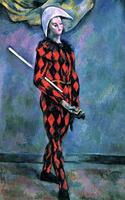
Harlequin
Paul Cezanne
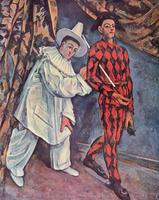
Pierrot and Harlequin (Mardi Gras)
Paul Cezanne
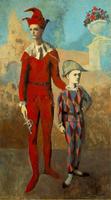
Acrobat and young harlequin
Pablo Picasso
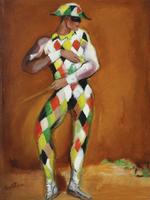
Harlequin
Vasile Popescu
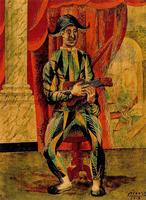
Harlequin with guitar
Pablo Picasso
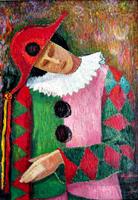
Harlequin
George Stefanescu
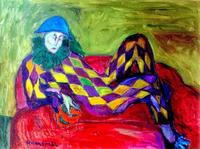
Arlequín
Víctor Humareda
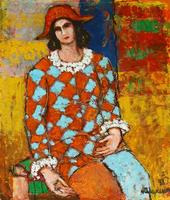
Sad Performance
George Stefanescu
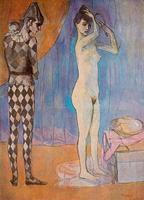
Harlequin's family
Pablo Picasso
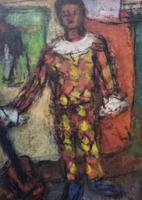
Harleqim
Bela Czobel
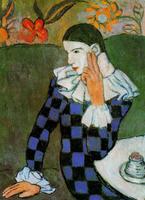
Harlequin leaning
Pablo Picasso
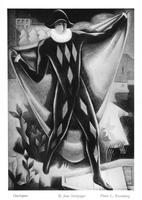
Embarkation of Harlequin (Arlequin)
Jean Metzinger
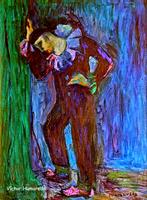
Arl
Víctor Humareda
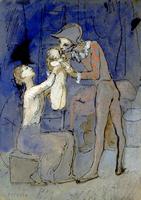
Harlequin's family
Pablo Picasso
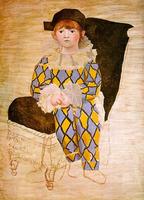
Paul as harlequin
Pablo Picasso
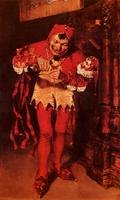
Keying Up, The Court Jester
William Merritt Chase
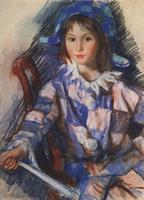
Tata portrait in the costume of Harlequin
Zinaida Serebriakova
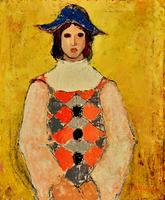
Harlequin
George Stefanescu
Polichinelle
Edouard Manet
Portrait of Faure as Hamlet
Edouard Manet