
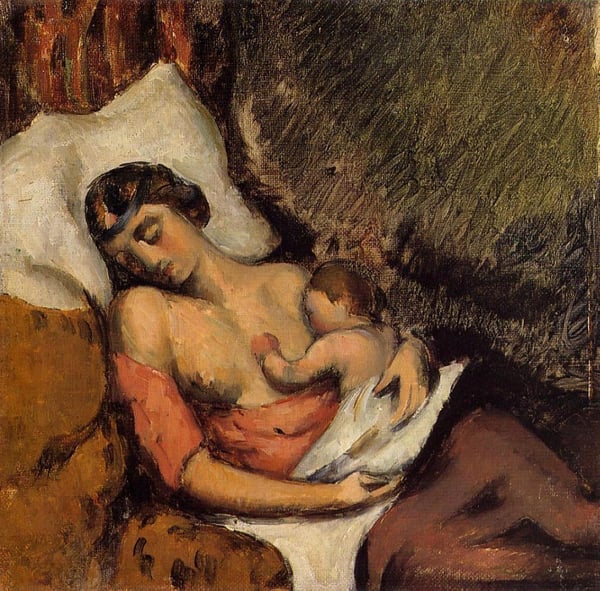
Analisi esperta di Hortense Breast Feeding Paul di Paul Cezanne
Stile: Romanticism · Genere: genre painting
Expert Analysis of "Hortense Breast Feeding Paul" by Paul Cézanne
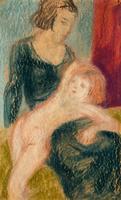
This deeply intimate genre painting, Hortense Breast Feeding Paul, represents a significant intersection of Romantic sentiment with the emerging concerns of the Impressionist period. While Cézanne is later celebrated as a Post-Impressionist pioneer, the supplied facts situate this work within a Romantic stylistic framework—a choice that illuminates its emotional and thematic ambitions.
Romanticism in a Domestic Key Romanticism prized the expression of profound human feeling, the sublime power of nature, and the valorization of individual experience. Here, Cézanne applies Romantic ideals not to dramatic landscapes or historical allegory, but to the quiet, universal act of maternal nurture. The painting’s significance lies in its elevation of a private, tender moment to a subject worthy of monumental treatment. The soft modeling of Hortense’s figure, the gentle tilt of her head, and the focused intimacy of the breastfeeding scene evoke the Romantic reverence for raw emotion and human connection—a sacred bond between mother and child rendered with sincerity rather than sentimentality.
Impressionist Period Context Executed during the Impressionist period (circa 1872–1873), the work demonstrates early Cézanne’s engagement with the period’s core concerns: direct observation, everyday subject matter, and a fresh approach to light and color. The painting’s loose, visible brushstrokes and the muted yet warm palette—ochres, creams, and soft blues—show an Impressionist sensitivity to atmosphere and fleeting glimpses of life. The domestic interior is not idealized but grounded in the actual space of the artist’s home, a hallmark of Impressionist genre painting. Yet Cézanne’s composition already hints at his future structural rigor: the balanced placement of mother and child, the subtle geometric shaping of the blanket and chair, and the controlled dappling of light.
Significance Within the Period This work is significant because it bridges two artistic sensibilities. As a Romantic genre painting, it affirms the emotional weight of everyday life, a theme that Impressionists would later make central. As a product of the Impressionist moment, it captures the fleeting texture of light and intimacy while foreshadowing Cézanne’s lifelong obsession with form and stability. In Hortense Breast Feeding Paul, the personal becomes the universal—a quiet revolution in subject matter that prepares the ground for modern art’s embrace of the ordinary.
Museum / Gallery
Visivamente simili
20 opere con composizione e palette affini
Mother Jeanne Nursing Her Baby
Mary Cassatt
Louise Nursing Her Child
Mary Cassatt
Maternity
Alessandro Milesi
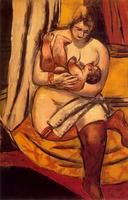
Motherhood
Max Beckmann
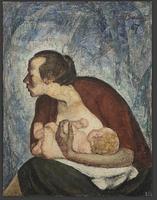
Mother. Anxiety
Mykhailo Vainshtein
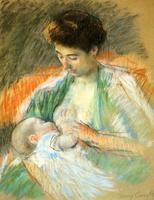
Mother Rose Nursing Her Child
Mary Cassatt
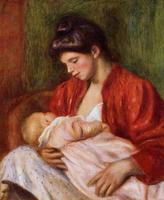
Young Mother
Pierre-Auguste Renoir
Untitled
Zoe Lerman
Maternity
Mary Cassatt
Mother and child
Pablo Picasso
Mutter Und Sohn
Otto Mueller
Motherhood
Maurice Denis
Maternity: Mary Henry Breastfeeding
Meijer de Haan
Mother with a Child
Volodymyr Loboda
Motherhood
Mary Cassatt
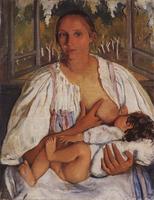
Nurse with baby
Zinaida Serebriakova
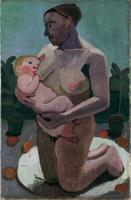
Kneeling Mother with Child at Her Breast
Paula Modersohn-Becker
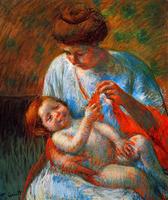
Baby Lying on His Mother s Lap, reaching to hold a scarf
Mary Cassatt
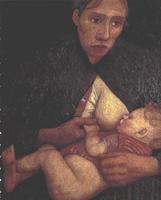
Breast feeding mother
Paula Modersohn-Becker
Berény Róbert, Annácska
Berény Róbert