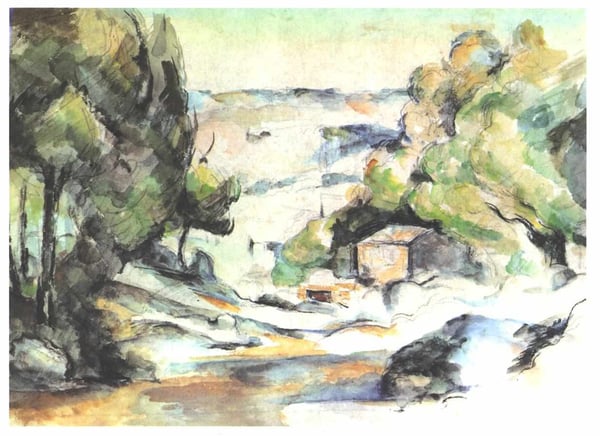
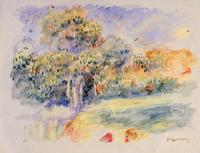
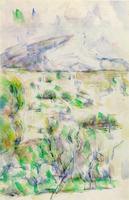
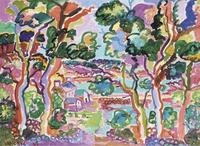
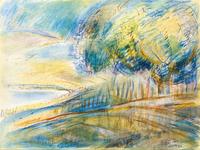
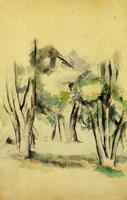
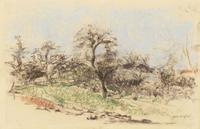
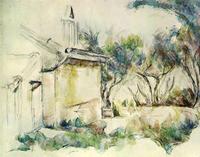
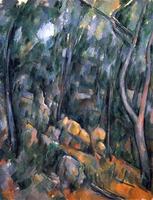
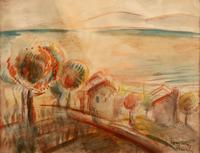
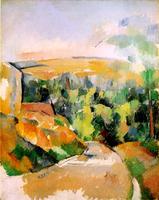
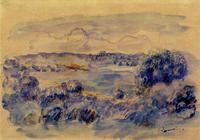
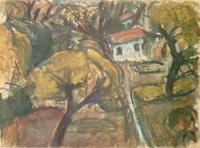
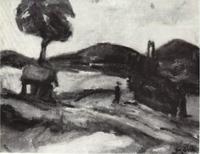
This artwork, Landscape in the Provence by Paul Cézanne, exemplifies the core ambitions of Post-Impressionism. Moving beyond the fleeting optical effects of Impressionism, Cézanne’s landscape is significant for its structural rigor and geometric simplification. He builds the scene through modulated color planes and rhythmic brushstrokes, emphasizing the underlying order of nature—a pivotal step that directly paved the way for Cubism and modern abstraction. Within the genre of landscape, Cézanne’s work transforms a natural view into a deliberate, monumental composition, marking a shift from perceptual recording to intellectual construction.