Mont Sainte-Victoire
Dettagli
Analisi esperta di Mont Sainte-Victoire di Paul Cezanne
Stile: Post-Impressionism · Genere: landscape
This analysis is based solely on the provided facts: Mont Sainte-Victoire by Paul Cézanne, Post-Impressionism, landscape, final period.
Expert Analysis of Mont Sainte-Victoire by Paul Cézanne
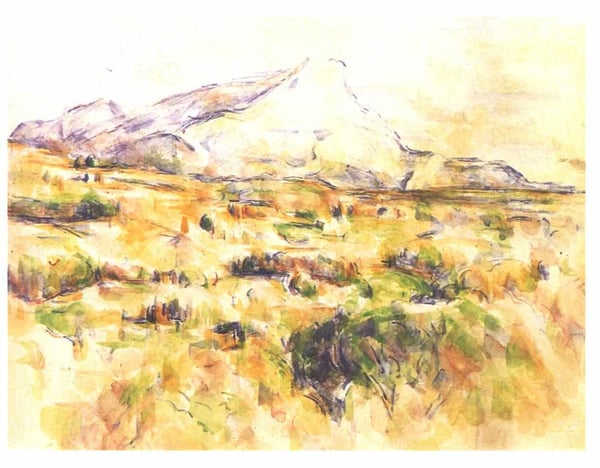
In this quintessential Post-Impressionist landscape from Cézanne's final period, the artist achieves a radical synthesis of observation and structure. The work is significant because it represents the culmination of his lifelong pursuit to "make Impressionism something solid and durable, like the art of the museums."
Significance within Post-Impressionism and the Final Period:
-
Structural Color: Eschewing the atmospheric, fleeting effects of earlier Impressionism, Cézanne builds the mountain, trees, and fields not through line but through carefully placed patches of color. Each brushstroke – a plane of green, ochre, or blue – functions as a building block, creating a dense, architectural surface that vibrates with tension.
-
Multiple Viewpoints: True to his late style, the painting compresses space. The foreground, middle ground, and distant mountain are pulled forward onto the same picture plane. The viewer’s eye is forced to jump between the tilted plane of the fields and the towering, faceted mass of Mont Sainte-Victoire, a technique that prefigures the fragmentation of modern art.
-
Monumental Simplicity: As a final-period work, this painting distills nature to its essential geometric forms (cylinders, spheres, cones). The mountain is no longer a topographical feature but a crystalline, almost abstract form that embodies permanence and harmony. This reduction to elemental structure makes the painting a foundational bridge between 19th-century naturalism and 20th-century abstraction.
In short, Mont Sainte-Victoire is significant because it transforms a specific landscape into a timeless, constructed vision, proving that a painting can be both deeply felt and rigorously organized. It stands as a masterful summary of Cézanne’s Post-Impressionist innovations and his final artistic testament.
Museum / Gallery
Visivamente simili
20 opere con composizione e palette affini
Mont Sainte-Victoire Seen from les Lauves
Paul Cezanne
Mont Sainte-Victoire
Paul Cezanne
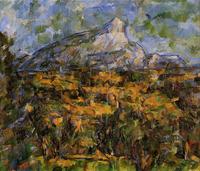
Mont Sainte-Victoire Seen from les Lauves
Paul Cezanne
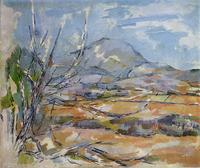
Mont Sainte-Victoire
Paul Cezanne
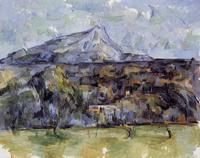
Mont Sainte-Victoire Seen from les Lauves
Paul Cezanne
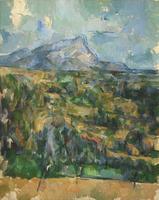
Mont Sainte Victoire
Paul Cezanne
Pietra Blu
Paolo Salvati
Pietra blu
Paolo Salvati
Subjects Figment of the Imagination
Paolo Salvati
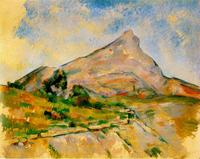
Mont Sainte-Victoire
Paul Cezanne
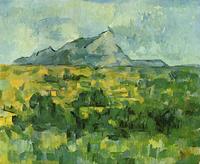
Mont Sainte-Victoire
Paul Cezanne
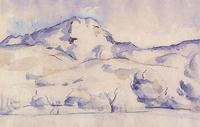
Mont Sainte-Victoire
Paul Cezanne
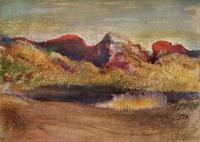
Lake and Mountains
Edgar Degas
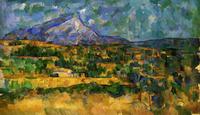
Mont Sainte-Victoire
Paul Cezanne
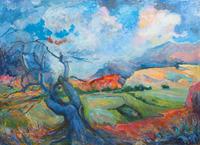
Albero Blu
Paolo Salvati
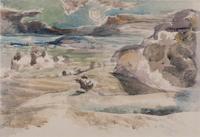
Nocturne, Landscape of the Vale
Paul Nash
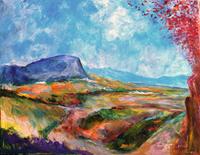
Fronde Rosse
Paolo Salvati
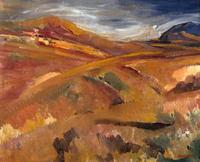
Tregor and Tregoff, Cornwall
David Bomberg
Jackson Hole, Wyoming
Ivan Albright
Barra
Samuel Peploe