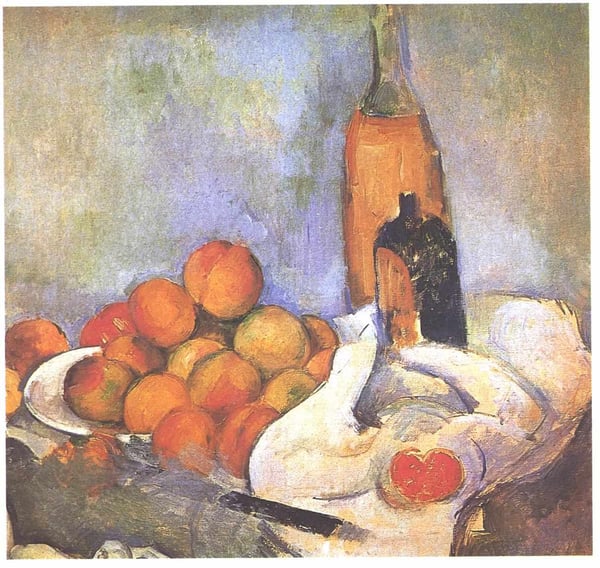
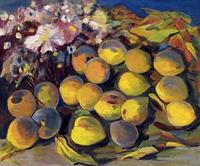
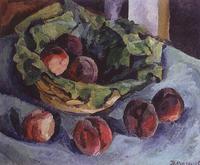
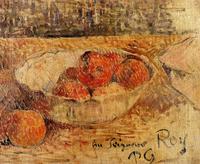
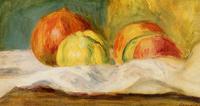
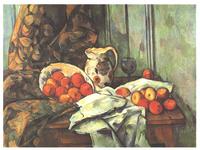
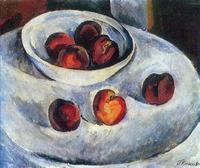
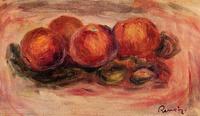
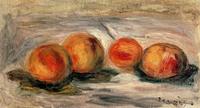
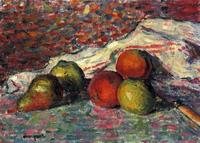
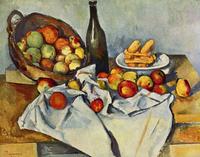
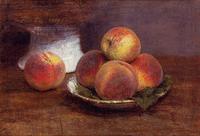
In Paul Cézanne’s Still Life with Bottles and Apples, the artist transforms a conventional still‑life subject into a landmark of Impressionist inquiry. Although Cézanne is often noted as a bridge to Post‑Impressionism, within the stated style of Impressionism this work is remarkable for its departure from the movement’s typical emphasis on fleeting light effects. Instead, Cézanne builds the composition through deliberate, brushstroke‑by‑brushstroke construction—each apple, bottle, and fold of cloth is defined by patches of color that lock together into a taut, geometrical structure. This approach highlights the still life genre as a laboratory for exploring form, space, and the perceptual tension between flat canvas and three‑dimensional object. The work’s significance lies in how Cézanne pushes Impressionist color and surface vibrancy toward a new, monumental solidity, anticipating the structural rigor that would later define Cubism.