Analisi esperta di The Murder di Paul Cezanne
Stile: Romanticism · Genere: genre painting
Expert Analysis of "The Murder" by Paul Cezanne
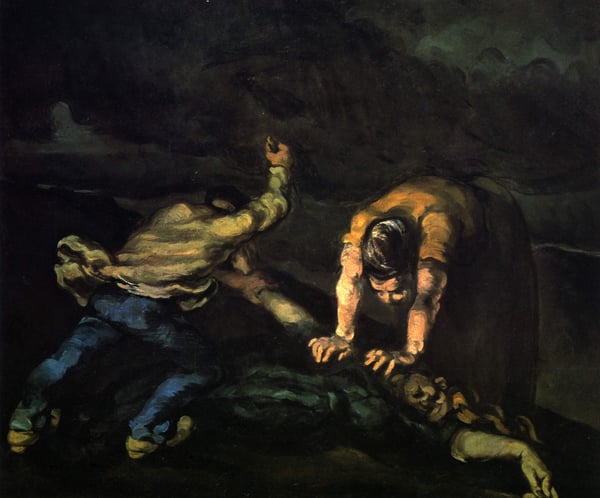
Within the framework of Romanticism and the artist’s so-called "Dark period," Paul Cezanne’s "The Murder" stands as a profoundly expressive and psychologically charged genre painting. While Cezanne is best known for his later Post-Impressionist innovations, this early work is significant for its raw, almost brutal exploration of human drama—a hallmark of Romanticism’s fascination with intense emotion and the darker facets of experience.
Romantic Sensibility and Emotional Intensity The painting embraces Romanticism’s core mandate: to evoke powerful feeling through dynamic composition and dramatic contrast. The scene depicts a violent assault in a shadowy, claustrophobic landscape, with figures locked in a struggle that feels both immediate and timeless. The use of deep, murky shadows and stark lighting heightens the sense of menace, aligning with Romanticism’s preference for the sublime and the terrifying. Cezanne’s handling of the figures—their contorted poses and anguished expressions—is deliberately anti-classical, prioritizing emotional impact over idealized beauty. This mirrors the Romantic revolt against academic conventions, a stance Cezanne would carry forward into his later, more structurally radical works.
Genre Painting as Social Commentary As a genre painting—a depiction of everyday life, albeit an extreme one—"The Murder" uses a recognizable subject (a violent crime) to comment on the brutality lurking beneath ordinary existence. In the context of the Dark period, this choice reflects a preoccupation with mortality, instinct, and the uncanny. Unlike the bucolic scenes of his Impressionist contemporaries, Cezanne here fuses genre painting with a gothic, almost fantastical quality. The work’s significance lies in how it transforms a mundane (if heinous) act into a symbolic tableau of human savagery, a theme that Romantic artists like Géricault and Delacroix had explored, albeit with more theatrical grandeur. Cezanne’s version is more intimate and psychologically direct, foreshadowing the inward-turn that would define later modernist painting.
The Dark Period’s Formal Boldness The Dark period is characterized by Cezanne’s use of heavy impasto, somber earth tones, and a deliberately rough, almost clumsy application of paint. In "The Murder," this technique serves the subject perfectly: the thick, agitated brushstrokes convey physical violence and emotional turmoil, while the limited palette—ochres, blacks, and browns—creates an atmosphere of suffocating dread. This period is significant because it shows Cezanne moving away from the influence of his friend Émile Zola’s naturalist ideals and toward a more subjective, expressionistic vision. The painting’s awkward proportions and flattened space, while sometimes criticized as inept, actually anticipate the radical distortions of his mature work.
Conclusion "The Murder" is a landmark in Cezanne’s early career, marking his engagement with Romanticism’s darkest themes and his determination to use genre painting as a vehicle for raw, unmediated emotion. It reveals an artist unafraid of ugliness and chaos—qualities he would later channel into the tectonic still lifes and landscapes that changed the course of modern art. For its emotional ferocity, formal audacity, and bold departure from academic norms, this painting remains a crucial key to understanding Cezanne’s development as both a Romantic and a proto-modernist.
Museum / Gallery
Visivamente simili
20 opere con composizione e palette affini
The Thieves and the Donkey
Honore Daumier
Scene of Rape and Murder
Francisco Goya
The lightning
Jules Breton
Smallholders playing dice
Adriaen Brouwer
African Pirates Abducting a Young Woman
Eugene Delacroix
A Fight
Adriaen van Ostade
Tancred and Clorinda
Domenico Tintoretto
The Murder of Andreas Baader
Odd Nerdrum
The Conversion of Saint Paul
Bartolome Esteban Murillo
Smallholders Playing Cards
Adriaen Brouwer
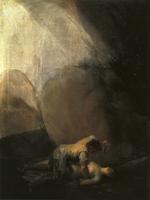
Brigand Murdering a Woman
Francisco Goya
Twerp
Francisco Goya
Scene of the flooding in 1830
Peter Fendi
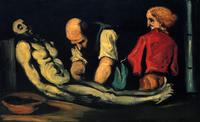
Preparation for the Funeral
Paul Cezanne
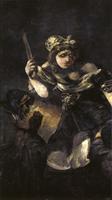
Judith and Holofernes
Francisco Goya
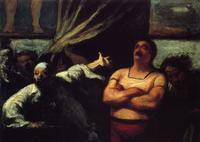
Barker at a fair booth
Honore Daumier
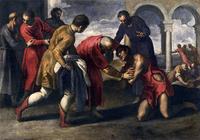
Return of the Prodigal Son
Palma il Giovane
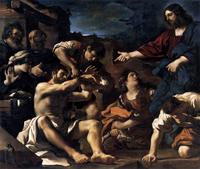
Raising of Lazarus
Guercino
Justice and Divine Vengeance pursuing Crime (study)
Pierre-Paul Prud'hon
The Deposition from the Cross
Theodule Ribot