Niko Pirosmani sanatçısının Tatar – fruit seller eseri hakkında uzman analizi
Tarz: Naïve Art (Primitivism) · Tür: genre painting
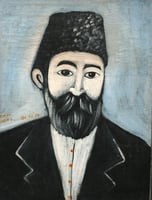
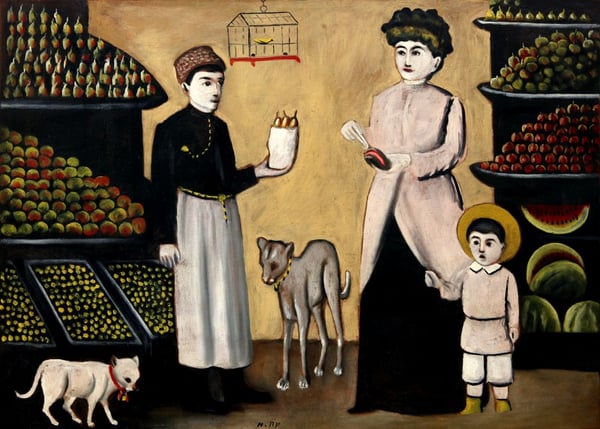
This work, Tatar – fruit seller by Niko Pirosmani, is a prime example of Naïve Art (also called Primitivism) and demonstrates why Pirosmani is celebrated as a master of the style. Painted in the early 20th century, it captures a simple, everyday scene—a fruit vendor at work—with a directness and emotional sincerity that define the Naïve approach.
Significance within Naïve Art / Primitivism
Pirosmani, a self-taught Georgian artist, never received formal academic training, which allowed him to develop a highly personal visual language unfiltered by artistic conventions. In Tatar – fruit seller, this manifests in several ways:
- Flat, unmodulated color: Pirosmani uses broad areas of intense, local color (deep blacks, rich reds, ochres) without shading or perspective, giving the composition a bold, poster-like clarity.
- Simplified, iconic forms: The figure is rendered in a stiff, frontal pose (reduced to essential facial features and a distinctive hat), while the fruits are shown as repeated, almost decorative circles. This simplification heightens the symbolic presence of the seller and his wares, turning a genre scene into an iconic portrait.
- Naïve perspective and scale: The seller dominates the canvas, his large figure set against an abstracted, minimally detailed background. This intentional disproportion—a hallmark of Primitivism—emphasizes the human subject over realistic spatial cues, drawing the viewer directly into the transaction.
Cultural and Genre Significance
The painting is also significant as a genre piece documenting daily life in the multi-ethnic marketplaces of Tbilisi, Georgia. The title identifies the seller as Tatar (referring to Turkic peoples of the Caucasus region), highlighting Pirosmani’s interest in the city’s diverse tradespeople. He often painted merchants, bakers, and farmers, elevating these humble workers to a dignified, almost heroic status. Here, the fruit seller’s calm, unwavering gaze and the careful arrangement of peaches, apples, and pears turn commerce into a quiet ritual.
Why It Matters
Tatar – fruit seller exemplifies how Pirosmani transformed commonplace subject matter into works of profound simplicity and expressive power—qualities that later influenced modern artists like Picasso and the Fauves. Its significance lies in its authentic, unpretentious vision: a self-taught artist, working outside the academy, capturing the soul of his time and place through direct, “primitive” visual means. The painting stands as a testament to the enduring value of Naïve Art as a raw, truthful, and deeply human mode of expression.
Museum / Gallery
Görsel olarak benzer
İlişkili kompozisyon ve renk paletine sahip 20 eser
Fruit stall
Niko Pirosmani
Sanitary inspector woman of the market
Niko Pirosmani

Childless millionaire and the poor with children
Niko Pirosmani
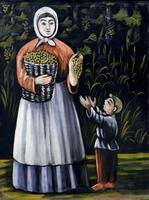
Peasant woman with boy
Niko Pirosmani
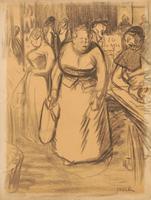
Femmes Sur Le Marche
Theophile Steinlen
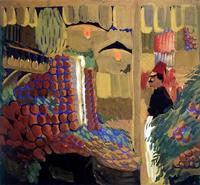
Fruit shop
Martiros Sarian
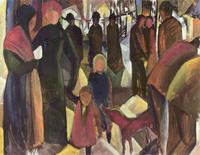
Farewell
August Macke
Easter Festival
Niko Pirosmani

Discord 1
L. S. Lowry
Two women in front of a hat shop
August Macke
Woman with Easter Eggs
Niko Pirosmani
In Front of the Hat Shop (woman with red jacket and child)
August Macke
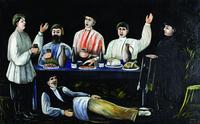
Molokani Carousing
Niko Pirosmani
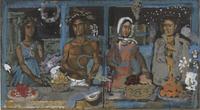
Study for the ''Four Seasons'' painting
Yiannis Tsaroychis
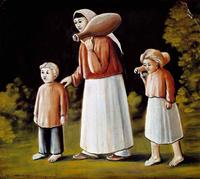
Georgian woman with children
Niko Pirosmani
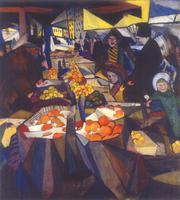
Sinny market. Kyiv
Oleksandr Bogomazov
Women carrying eggs (Extant part of the Painting)
Niko Pirosmani
Village with Figures
Grégoire Michonze
Family Portrait (Siena)
Pyotr Konchalovsky
At the Market
Felix Vallotton