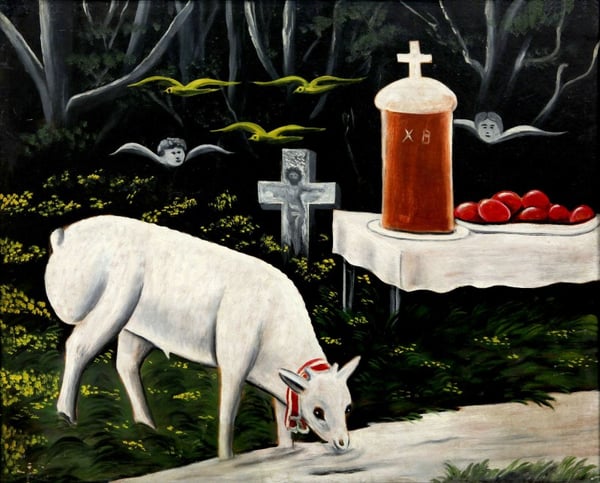
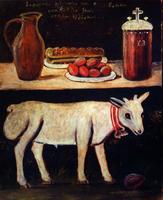
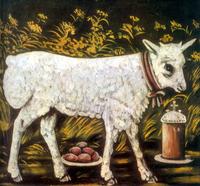
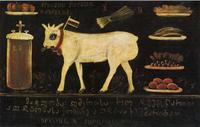
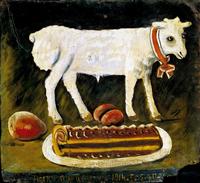
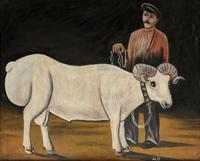
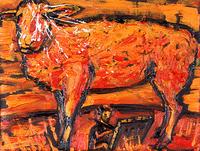
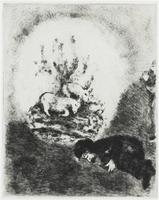
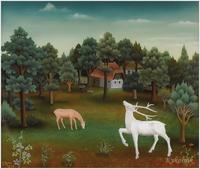
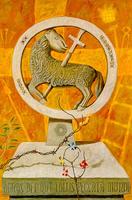
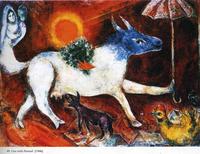
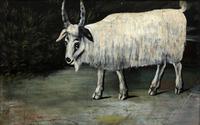
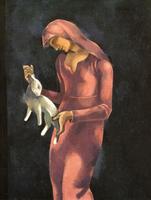
Niko Pirosmani’s “Easter Lamb” is a quintessential example of Naïve Art (Primitivism), prized for its direct, unpretentious visual language and profound symbolic weight. The work bypasses academic conventions—perspective is flattened, form is simplified, and color is applied in broad, saturated planes—evoking the intuitive, folk-inspired clarity that defines the style. Its significance lies in how Pirosmani transforms a traditional religious motif into a universal emblem of sacrifice and renewal. The lamb, central to Easter iconography, is rendered not with theological drama but with quiet, solemn presence, its stillness emphasizing the cycle of life and death. This fusion of humble technique with deep symbolism exemplifies Primitivism’s power to convey spiritual and cultural truths through raw, emotional simplicity, marking Pirosmani as a master who elevated folk imagery into timeless art.