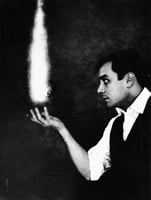
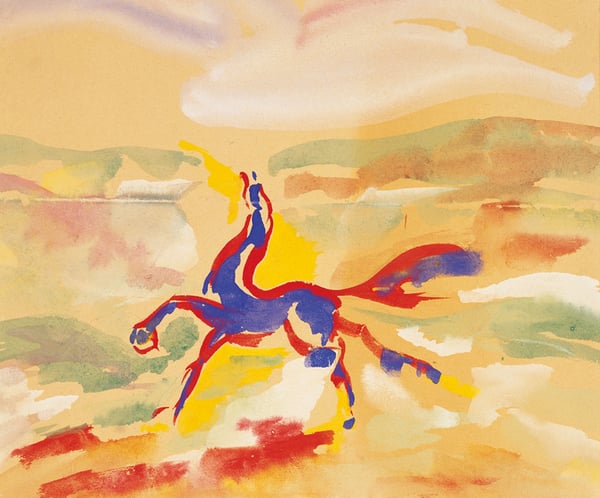
Expert analysis of Yves Klein’s Horse
Style: Nouveau Réalisme · Genre: animal painting
Expert Analysis: "Horse" by Yves Klein
Yves Klein’s Horse stands as a provocative exemplar of Nouveau Réalisme—a movement that redefined art by incorporating real or quotidian materials and rejecting illusionistic tradition. Although the work is categorized as an animal painting, Klein subverts the genre entirely. Rather than rendering the horse through mimetic detail or expressive brushwork, he likely reduces it to a pure, undifferentiated silhouette or monochrome mass—most probably in his signature International Klein Blue (IKB). By stripping the animal of anatomy, context, and narrative, Klein transforms the horse into an icon of sensibility: a vehicle for intangible presence rather than biological truth.
This approach resonates with Nouveau Réalisme’s core principle: art should capture the “real” as a direct, non-metaphorical experience. Klein’s Horse does not depict a horse; it becomes a horse through the sheer force of color and form—an act that echoes his famous dictum about blue being the color of infinite space. The work’s significance lies in its radical compression: a living creature is distilled into an elemental sign, forcing viewers to confront the essence of representation itself. Within the context of the 1960s avant-garde, Horse aligns with Klein’s broader mission to dematerialize the object and elevate the immaterial, marking a decisive break from both traditional animal painting and abstract expressionism.
Genre
Style
Visually similar
20 works with related composition and palette
Horses - white/purple
Małgorzata Serwatka
Blue Horse
Giovanni Morassutti
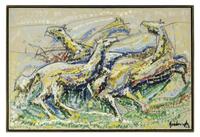
Running Horses
Robert Goodnough
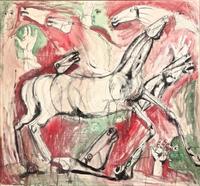
La Nobiltà Dei Cavalli
Bruno Cassinari
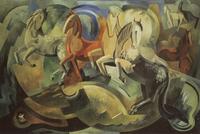
Achill Horses, 1939
Mainie Jellette
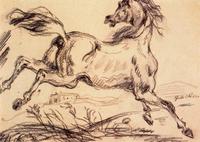
A horse
Giorgio de Chirico
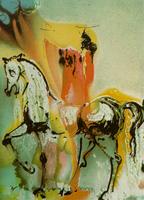
The Christian Knight (Dali's Horses)
Salvador Dali
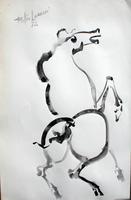
Horse
Pietro Lazzari
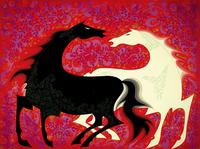
Two Wild Horses
Eyvind Earle
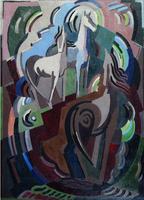
Achill Horses, 1934
Mainie Jellette
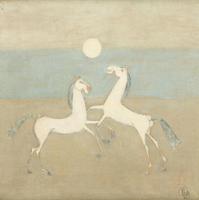
Dance
Constantin Piliuta
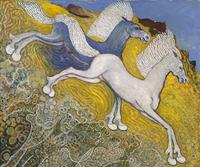
Kiddi og jeg
Johannes Sveinsson Kjarval
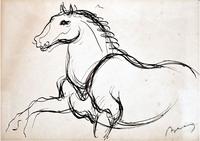
Berény Róbert, Vágtató Ló
Berény Róbert
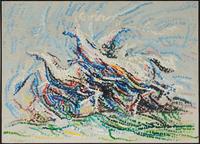
Wild Horses
Robert Goodnough
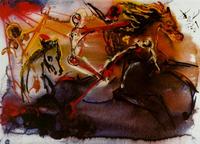
The Horseman of the Apocalypse
Salvador Dali
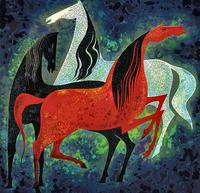
Three Noble Horses
Eyvind Earle
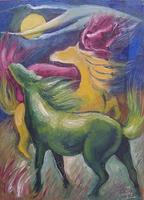
Johannes Meintjes
Johannes Meintjes
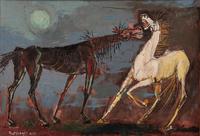
Love
Pedro Pont Vergés
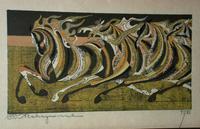
Five horses running
Tadashi Nakayama
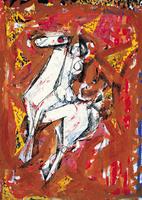
Cavaliere
Marino Marini