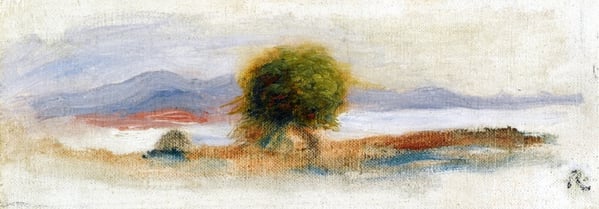
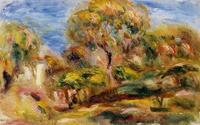
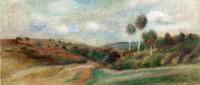
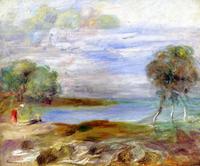
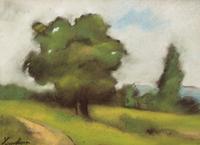
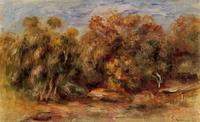
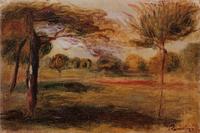
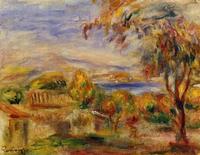
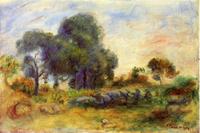
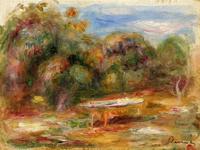
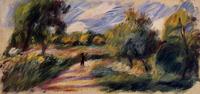
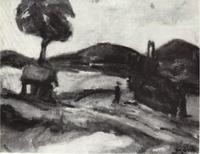
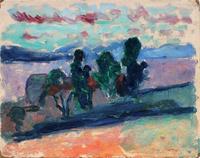
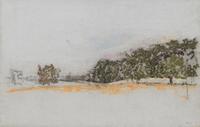
"Cagnes Landscape" by Pierre-Auguste Renoir is a significant work within the Impressionist movement, particularly from the artist's later years. As a landscape genre piece, it exemplifies the core Impressionist concerns with capturing the transient effects of light and color in the natural world. The painting's importance lies in its representation of Renoir's mature period, where his brushwork becomes increasingly free and his palette emphasizes warm, luminous tones that evoke the sun-drenched atmosphere of the French countryside. Within the context of Impressionism, this work demonstrates how Renoir continued to refine his approach to plein-air painting, focusing on the harmony between soft, diffused light and the vibrant, textured surface of the canvas. Its subject—the landscape of Cagnes—reflects his personal connection to the region, making the artwork a testament to the enduring Impressionist goal of conveying a sensory experience of place.