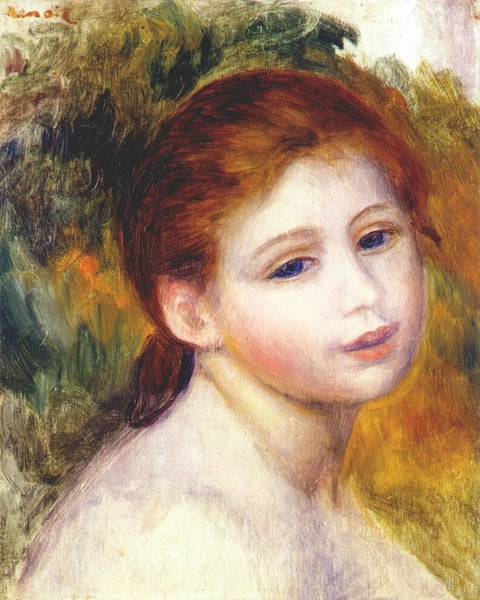
This artwork, Head of a woman by Pierre-Auguste Renoir, is significant as a portrait conceived during the artist’s Rejection of Impressionism period—a moment when he deliberately moved away from the spontaneous, loose brushwork and pure optical effects of his earlier Impressionist style. While the work still retains the Impressionist label in its execution (likely through luminous color and soft focus), its deeper importance lies in Renoir’s turn toward more structured, classical forms and defined contours. The portrait thus stands as a crucial transitional piece, embodying the tension between Impressionist lightness and a renewed emphasis on solid, timeless human presence—marking a key shift in Renoir’s artistic evolution.