
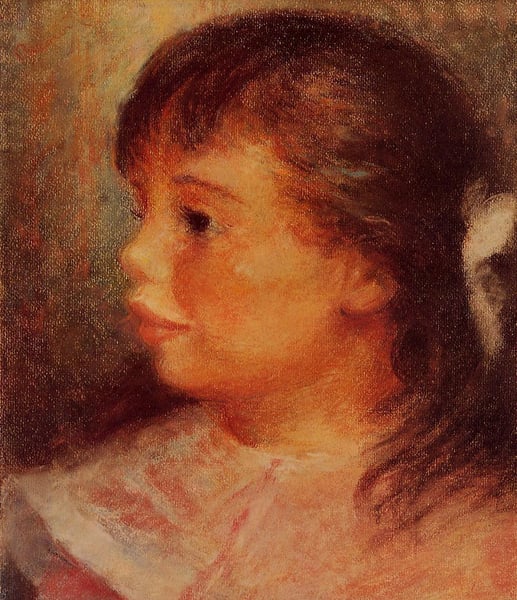
Expert analysis of Pierre-Auguste Renoir’s Portrait of a Girl
Style: Impressionism · Genre: portrait
Expert Analysis of "Portrait of a Girl" by Pierre-Auguste Renoir
As a defining work of Impressionist portraiture, Renoir’s Portrait of a Girl (c. 1870s–80s) exemplifies the revolutionary break from formal, highly finished academic portraiture that characterized the artist’s association with the Impressionist circle. The painting’s significance lies in three key aspects: its radical handling of light and color, its intimate naturalism, and its embodiment of Impressionism’s core ambition to capture a fleeting, lived moment.
1. Luminous, Broken Color and Soft Brushwork
Instead of using smooth, blended strokes to create a polished likeness, Renoir applies rapid, feathery touches of pigment that seem to shimmer. The girl’s skin is built from subtle modulations of pink, cream, and pale blue—suggesting the influence of light from an unseen window or outdoor setting. Her hair and dress are rendered with loose, directional strokes that prioritize the sensation of texture and atmosphere over precise detail. This technique, typical of Renoir’s mature Impressionist phase, makes the figure appear animated, as if caught mid-breath.
2. Rejecting Formality in Favor of Natural Presence
Traditional portraits of the era—especially those of children—often posed subjects stiffly, with symbolic props or formal attire. Here, the girl’s easy, slightly asymmetrical posture, soft gaze, and casual clothing (likely a simple cotton dress) reject that convention. Renoir focuses on her unselfconscious expression, perhaps a hint of a smile or quiet curiosity. This aligns with Impressionism’s broader move toward depicting everyday life and genuine human states, rather than idealized or staged scenes.
3. Capturing the Ephemeral: Atmosphere Over Anatomy
The blurred edges—especially around the hair and shoulders—create a halo effect, as if the figure is emerging from or dissolving into the surrounding light. This is not a flaw but a deliberate choice: Renoir prioritizes the optical impression of the moment over academic correctness. The background, only vaguely suggested, prevents any distracting narrative, forcing the viewer to engage solely with the girl’s presence. The result is a portrait that feels less like a permanent statement and more like a cherished memory.
Significance within Impressionism
Portrait of a Girl is a testament to Renoir’s unique gift within the Impressionist movement: merging the group’s technical innovations—broken color, plein-air luminosity, and painterly spontaneity—with a deeply human warmth. While Monet chased light in landscapes and Degas captured motion in ballet, Renoir brought Impressionist principles into the intimate realm of human connection. This painting, with its delicate balance of vitality and tenderness, stands as a quintessential example of how Impressionism transformed portraiture from a static record into a living, breathing encounter.
Museum / Gallery
Visually similar
20 works with related composition and palette
Jean Renoir
Pierre-Auguste Renoir
Portrait of a Young Girl
Pierre-Auguste Renoir
Girl
Joan Brull
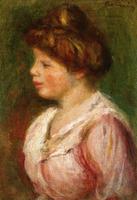
Portrait of a Young Woman
Pierre-Auguste Renoir
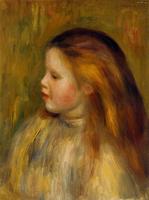
Head of a Little Girl in Profile
Pierre-Auguste Renoir
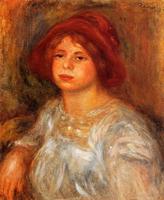
Young Girl Wearing a Red Hat
Pierre-Auguste Renoir
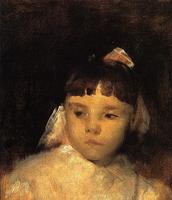
Violet Sargent
John Singer Sargent
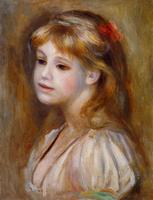
Little Girl with a Red Hair Knot
Pierre-Auguste Renoir
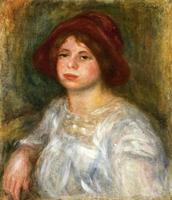
Girl in a Red Hat
Pierre-Auguste Renoir
Woman`s Head
Pierre-Auguste Renoir
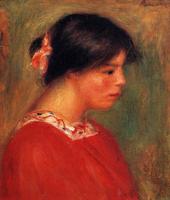
Head of a Woman in Red
Pierre-Auguste Renoir
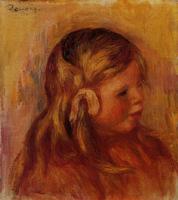
Portrait of Claude
Pierre-Auguste Renoir
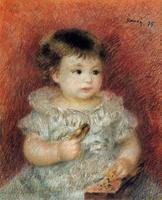
Portrait of Lucien Daudet
Pierre-Auguste Renoir
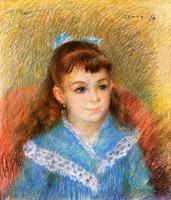
Portrait of a Young Girl (Elizabeth Maitre)
Pierre-Auguste Renoir

Girl
Vincenzo Caprile
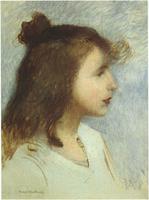
Sketch of a Young Girl
Henri Martin
Little girl
Noè Bordignon
Portrait of Coco
Pierre-Auguste Renoir
Lucienne
Pierre-Auguste Renoir
Portrait of Lucienne
Pierre-Auguste Renoir