
Expertenanalyse zu Pierre-Auguste Renoirs The Conversation
Stil: Impressionism · Genre: genre painting
Expert Analysis: "The Conversation" by Pierre-Auguste Renoir (Later Years)
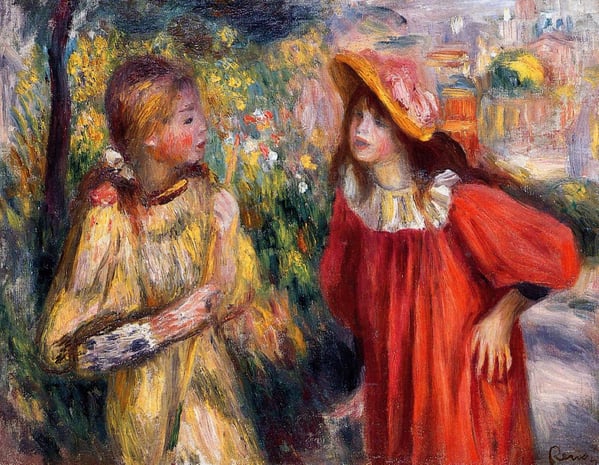
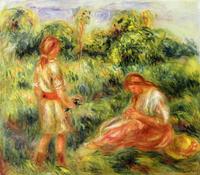
Pierre-Auguste Renoir’s “The Conversation” is a masterful example of his late-career shift within the Impressionist movement, merging the spontaneous luminosity of his earlier work with a newfound classical solidity. Painted during what scholars often call Renoir’s “Ingres period,” this genre scene captures a quiet, intimate moment between two figures—likely a couple engaged in a soft exchange—set against a loosely defined, sun-dappled background.
Significance within Impressionism:
While Impressionism is famed for capturing fleeting effects of light and atmosphere, Renoir’s later works like “The Conversation” expand the movement’s boundaries by prioritizing human connection and tactile form. The painting exemplifies his mature synthesis of Impressionist broken color—visible in the warm, vibrating strokes that model the faces and clothing—with a more disciplined, sculptural treatment of the figures. The woman’s elegant profile and the man’s relaxed posture are rendered with a soft focus that avoids sharp outlines, yet their bodies feel weighty and substantial, a hallmark of Renoir’s post-1880 style.
Thematic and Technical Focus:
As a genre painting, the work is deliberately unremarkable in subject—a hint of everyday social ritual—yet it is elevated by Renoir’s sensitivity to texture and intimacy. The brushwork is both fluid and deliberate: touches of rose, peach, and cool blue flicker across the canvas, creating a sense of ambient warmth and dappled shade. The title itself, “The Conversation,” directs attention not to narrative action but to the subtle psychological space between the two figures, a quiet communion that Renoir conveys through their inclined heads and softened gaze.
Context of Renoir’s Later Years:
By the 1890s–1900s, Renoir had rejected purely optical Impressionism in favor of a more decorative, lyrical realism. “The Conversation” reflects this evolution: the composition is balanced and formal (note the stable triangular arrangement of the sitters), yet the paint handling remains feathery and plein-air inspired. This duality makes the painting a bridge between Impressionist spontaneity and the impending modernism that would soon redefine figure painting.
Conclusion:
“The Conversation” is significant as a capstone of Renoir’s personal style—a fusion of the ephemeral and the enduring. It demonstrates that Impressionism, often associated with landscapes and urban leisure, could also yield deeply human, introspective scenes. The work stands as a testament to Renoir’s lifelong obsession with beauty, warmth, and the quiet poetry of everyday connection.
Museum / Gallery
Genre
Stil
Visuell ähnlich
20 Werke mit ähnlicher Komposition und Farbpalette
Two Girls in the Garden at Montmartre
Pierre-Auguste Renoir
Two Women in the Grass
Pierre-Auguste Renoir
Young Woman in a Garden
Pierre-Auguste Renoir
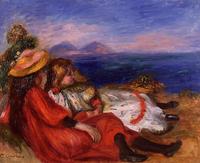
Two Little Girls on the Beach
Pierre-Auguste Renoir
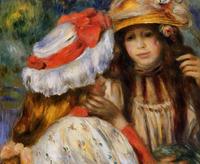
Two Sisters
Pierre-Auguste Renoir
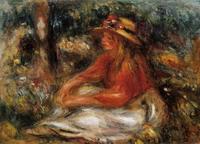
Young Woman Seated on the Grass
Pierre-Auguste Renoir
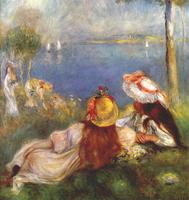
Girls on the seashore
Pierre-Auguste Renoir
Young Girl Seated in a Meadow
Pierre-Auguste Renoir
The Embroiderer (Woman Embroidering in a Garden)
Pierre-Auguste Renoir
Head of a Young Woman (Red Hat)
Pierre-Auguste Renoir
Young Girl in the Garden at Mezy
Pierre-Auguste Renoir
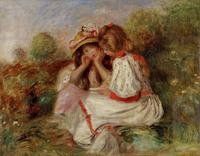
Two Little Girls
Pierre-Auguste Renoir
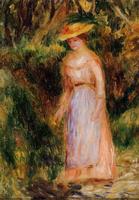
Young Woman Taking a Walk
Pierre-Auguste Renoir
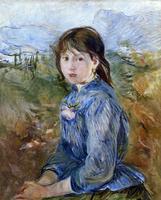
The Little Girl from Nice, Celestine
Berthe Morisot
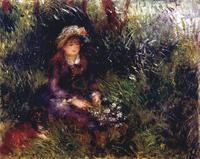
Aline Charigot with a Dog
Pierre-Auguste Renoir
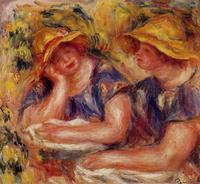
Two Women in Blue Blouses
Pierre-Auguste Renoir
Girls
Pierre-Auguste Renoir
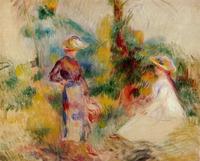
Two Women in a Garden
Pierre-Auguste Renoir
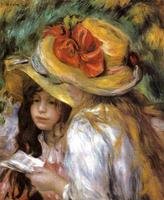
Two Young Girls Reading
Pierre-Auguste Renoir
Two Young Women in a Landscape
Pierre-Auguste Renoir